
Historical Overview of Women's Contributions to Nigerian Art Traditions
Foundations of Women's Artistic Roles in Nigerian Culture
Women have played vital roles in Nigerian art since ancient times.
They crafted textiles, pottery, and body adornments that showcased cultural identity.
Moreover, women often preserved artistic techniques through generations.
These contributions helped sustain rich local art traditions across ethnic groups.
For example, Yoruba women woven exquisite Aso-Oke fabrics by hand.
Similarly, Igbo women practiced intricate uli body painting and wall murals.
These art forms symbolized social status and spiritual beliefs.
Women as Guardians of Visual and Performing Arts
Additionally, women served as custodians of masquerade and dance traditions.
They designed costumes, masks, and decorative elements for festivals.
Such performances reinforced communal values and celebrated heritage.
Through these practices, women visibly shaped Nigeria's cultural narrative.
Impact of Colonialism and Modernization on Women's Artistic Expression
Furthermore, colonial rule altered traditional art production and roles.
Despite challenges, women adapted by integrating new materials and themes.
Women like Aina Onabolu began formal training and contributed to modern Nigerian art.
They combined indigenous motifs with contemporary styles in their work.
As a result, women's creative influence expanded during the 20th century.
Pioneering Female Artists and Their Legacies
Prominent artists such as Nike Davies-Okundaye elevated traditional textile art globally.
Her workshops trained hundreds of women in dyeing and weaving techniques.
Likewise, Amara Golden and Ebele Okeke gained recognition for printmaking innovations.
These leaders influenced younger generations to pursue arts professionally.
Their legacies firmly root women as key contributors to Nigerian art history.
Continuing Influence of Women in Contemporary Nigerian Art
Today, women continue shaping Nigerian art across diverse disciplines.
Innovators like Peju Alatise merge visual art with storytelling and activism.
Similarly, Toyin Ojih Odutola explores identity through complex portraiture.
Their work highlights evolving perspectives and global dialogues.
Consequently, women remain central to Nigeria's vibrant artistic landscape.
The Representation of Women in Traditional Nigerian Art and Symbolism
Depiction of Women in Sculpture and Masks
Traditional Nigerian art frequently depicts women through sculptures and masks.
These artworks highlight women's roles in society and family.
For instance, the Yoruba people's Ere Ibeji carvings celebrate twins.
Artists often make these carvings for women.
Explore Stunning African Digital Art Prints!
Bring the beauty of Nigeria and Africa into your space with high-quality HD digital prints. Browse our collection on Instagram, find what speaks to you, and own a masterpiece today! See something you love? Send us a message on Instagram!
View Collection on InstagramMoreover, masks used in rituals often embody female spirits and ancestors.
These representations emphasize fertility, motherhood, and femininity.
Therefore, artists honor women's vital contributions to community life.
Symbolism Associated with Women in Nigerian Art
Women in Nigerian art symbolize fertility, nurturing, and wisdom.
Artworks often include motifs representing these qualities.
For example, the Igbo uli designs showcase feminine beauty and spiritual protection.
Additionally, women's hair and clothing patterns in paintings reflect identity and status.
Symbols such as the kola nut relate to women's roles in hospitality and peace.
Thus, artists use rich symbolism to convey women's social and spiritual importance.
Women as Creators and Patrons of Art
Women not only appear in art but also create and support it.
The Hausa women have long traditions of textile weaving and dyeing.
These crafts often carry cultural stories and ancestral knowledge.
Moreover, women commission art objects for ceremonies and personal devotion.
Thus, they actively shape artistic expression and cultural preservation.
Influence of Female Deities and Figures
Nigerian traditional art often features powerful female deities.
These figures inspire respect and convey moral values.
The Yoruba goddess Osun represents love, fertility, and healing.
She appears extensively in sculptures, paintings, and festivals.
Likewise, other regional arts honor women who embody strength and guidance.
Consequently, such depictions reinforce women's spiritual significance.
Prominent Female Nigerian Artists and Their Influence on Contemporary Art Prints
Trailblazing Women in Nigerian Visual Arts
Several Nigerian women have pioneered modern art movements in the country.
Their innovative approaches have reshaped contemporary art prints uniquely.
Artists such as Amina Sadiq and Ifeoma Okoye have gained international recognition.
These women highlight diverse cultural narratives through their visual work.
Consequently, their influence inspires a new generation of Nigerian printmakers.
Distinctive Styles and Themes in Their Artwork
Female Nigerian artists often blend traditional motifs with modern aesthetics.
They explore themes of identity, feminism, heritage, and social justice.
For example, Amina Sadiq uses vibrant patterns reflecting northern Nigerian culture.
Ifeoma Okoye incorporates symbolic imagery to confront gender roles and politics.
Thus, their prints serve as powerful commentaries on contemporary society.
Explore Stunning African Digital Art Prints!
Bring the beauty of Nigeria and Africa into your space with high-quality HD digital prints. Browse our collection on Instagram, find what speaks to you, and own a masterpiece today! See something you love? Send us a message on Instagram!
View Collection on InstagramContribution to the Growth of Art Prints in Nigeria
Women artists have expanded the scope and popularity of printmaking.
They experiment with techniques like lino-cut, screen printing, and etching.
Many participate in workshops and collaborate to mentor emerging talents.
Such efforts have increased both local and global demand for Nigerian art prints.
Furthermore, female-led galleries and collectives promote increasing visibility.
Notable Female Artists Shaping Contemporary Trends
Besides Amina Sadiq and Ifeoma Okoye, Zainab Umar stands out for her intricate prints.
Her focus on environmental themes connects traditional craft with activism.
Likewise, Chika Nwosu utilizes digital printmaking techniques innovatively.
These artists contribute fresh perspectives, enriching Nigeria’s artistic landscape.
Their work often appears in exhibitions, publications, and public installations.
Organizations Supporting Women in Nigerian Art Prints
- The Lagos Art Collective fosters collaboration among women artists.
- Creatives United Nigeria offers grants specifically for female printmakers.
- Pulse Print Studio hosts residencies promoting gender diversity in art.
These institutions help amplify women’s voices and sustain their artistic careers.
Gain More Insights: The Business of Selling Nigerian Art Prints Ethically
The Impact of Cultural and Societal Roles of Women on Artistic Expression
Cultural Influence on Women’s Artistic Contributions
Women in Nigeria have historically held vital cultural roles within their communities.
These cultural responsibilities deeply influence their artistic creations.
For instance, traditional crafts often reflect women’s everyday experiences.
Moreover, cultural practices inspire specific motifs and patterns in their art.
Consequently, women use art to preserve and communicate indigenous values.
Artists like Ngozi Okoye exemplify this cultural engagement in their prints.
Therefore, cultural identity shapes both the style and substance of women’s art.
Societal Roles Shaping Artistic Expression
Nigerian society assigns diverse roles to women that affect their creativity.
These roles include caretakers, educators, and community leaders.
As a result, women’s art often centers on themes of family, resilience, and social harmony.
Furthermore, women artists address social issues relevant to their communities.
For example, testimonies of empowerment appear in the work of Chinwe Madueke.
Also, societal expectations sometimes challenge women to balance tradition and innovation.
However, they adapt by merging conventional techniques with contemporary themes.
Women as Cultural Custodians in Art
Women preserve folklore, rituals, and history through their artwork.
This custodial role ensures cultural continuity over generations.
They often incorporate symbolic elements specific to their ethnic groups.
Consequently, art prints become vehicles for cultural education and awareness.
Explore Stunning African Digital Art Prints!
Bring the beauty of Nigeria and Africa into your space with high-quality HD digital prints. Browse our collection on Instagram, find what speaks to you, and own a masterpiece today! See something you love? Send us a message on Instagram!
View Collection on InstagramArtists like Amina Suleiman use prints to celebrate Hausa traditions.
Thus, women contribute significantly to maintaining Nigeria’s rich artistic heritage.
Economic and Social Impact on Women’s Art
Economic roles provide women with opportunities to support themselves through art.
Many women artists participate in local and international art markets.
This participation elevates their societal status and empowers their creative voices.
Social changes have also broadened access to formal art education for women.
Institutions such as the Lagos School of Arts foster female artistic growth.
Therefore, economic and social factors continuously transform women’s artistic expression.
Challenges and Opportunities in Women’s Artistic Expression
Despite progress, women face challenges like limited exposure and gender bias.
Traditional expectations sometimes restrict women’s full artistic potential.
Nevertheless, innovative platforms empower women to showcase their art globally.
Digital media and art collectives like FemmeArt Nigeria offer vital support.
These opportunities enable women to redefine and expand their artistic narratives.
Consequently, women’s voices in Nigerian art continue to grow stronger and more diverse.
See Related Content: The Influence of Nigerian Mythology on Art Prints
Women as Creators and Preservers of Indigenous Textile and Craft Arts
Cultural Significance of Women’s Artistic Roles
Women have long played a vital role in Nigeria’s indigenous textile and craft arts.
They embody cultural values through their artistic creations.
Moreover, these arts serve as a medium to pass down traditions.
Furthermore, women’s involvement ensures the survival of unique cultural identities.
Through their work, they maintain historical continuity within communities.
Traditional Textile Creation
Women skillfully create traditional textiles such as Aso Oke and Adire fabrics.
They employ methods passed down from previous generations.
In addition, women hand-dye fabric using natural materials from their environment.
The dyeing processes require patience and expertise.
Consequently, these refined skills produce textiles recognized worldwide.
Preservation of Craft Arts Through Generations
Women actively teach younger family members indigenous craft techniques.
They create informal apprenticeships within their communities.
Also, women participate in workshops to promote craft skills to wider audiences.
This educational role fosters respect for cultural heritage among youth.
Therefore, their dedication strengthens community bonds and identity.
Explore Stunning African Digital Art Prints!
Bring the beauty of Nigeria and Africa into your space with high-quality HD digital prints. Browse our collection on Instagram, find what speaks to you, and own a masterpiece today! See something you love? Send us a message on Instagram!
View Collection on InstagramImpact on Economic Empowerment
Women have transformed traditional crafts into income-generating enterprises.
Artisans like Ifeoma Eze market handmade textiles and crafts locally and internationally.
Similarly, cooperatives led by women empower members economically.
These ventures boost local economies and encourage sustainable development.
Thus, women contribute significantly to both culture and livelihoods.
Challenges and Resilience in Preserving Indigenous Crafts
Despite modern pressures, women persist in preserving indigenous crafts.
Globalization and mass production challenge traditional practices.
Nevertheless, women adapt techniques while maintaining authenticity.
Support from cultural organizations enhances their efforts greatly.
Women’s resilience sustains Nigeria’s rich artistic heritage.
Gain More Insights: How African Art Prints Shape Global Fashion Trends
The Evolution of Female Representation in Nigerian Art Prints
Traditional Depictions of Women
Early Nigerian art prints often reflected traditional gender roles.
Women appeared mainly in domestic and communal settings.
Artists portrayed women as caregivers, mothers, and cultural bearers.
These depictions emphasized social harmony and communal values.
Additionally, women featured in spiritual and ritualistic contexts.
For example, in Yoruba prints, female deities symbolized fertility and protection.
Changes During the Colonial Era
The colonial period introduced new artistic influences in Nigeria.
Western techniques and themes started blending with indigenous art.
Female representation became more varied and complex during this time.
Artists like Aderemi Akande began exploring women’s roles beyond tradition.
They depicted women in education, trade, and urban life settings.
Consequently, this shift showed growing social changes affecting Nigerian women.
Post-Independence and Feminist Perspectives
After independence, Nigerian art prints embraced modernist and feminist ideas.
Women artists such as Bola Ojo began creating prints that challenged stereotypes.
They highlighted women’s struggles, empowerment, and political engagement.
Art became a platform to address gender inequality and cultural identity.
For example, prints illustrated women activists, professionals, and creative leaders.
Moreover, contemporary prints celebrate the diversity and strength of Nigerian women.
Contemporary Trends and Innovations
Today, Nigerian art prints showcase women in dynamic and multifaceted ways.
Explore Stunning African Digital Art Prints!
Bring the beauty of Nigeria and Africa into your space with high-quality HD digital prints. Browse our collection on Instagram, find what speaks to you, and own a masterpiece today! See something you love? Send us a message on Instagram!
View Collection on InstagramArtists like Ifeoma Okoye experiment with mixed media and digital techniques.
They portray women in leadership, technology, and global contexts.
These prints reflect Nigeria’s rapidly evolving society and women’s roles.
Consequently, themes of liberation, resilience, and cultural pride dominate.
Additionally, female perspectives increasingly shape the narrative of Nigerian art prints.
Impact of Female Artists and Collectives
Female artists have significantly influenced the direction of Nigerian art prints.
Groups like the Women Printmakers of Lagos provide support and visibility.
They organize exhibitions, workshops, and collaborations nationwide.
These efforts encourage young women to explore printmaking as an art form.
Furthermore, female artists often address intersections of gender, class, and ethnicity.
Their work challenges social norms and inspires cultural dialogue.
Significant Developments in Female Representation
- Traditional art focused on women’s domestic and spiritual roles.
- Colonial influences expanded female representation to urban life.
- Post-independence prints introduced feminist and political themes.
- Contemporary art showcases women’s diverse roles in society.
- Female artists and collectives foster innovation and activism.
Delve into the Subject: How Nigerian Art Prints Inspire African Fashion Trends
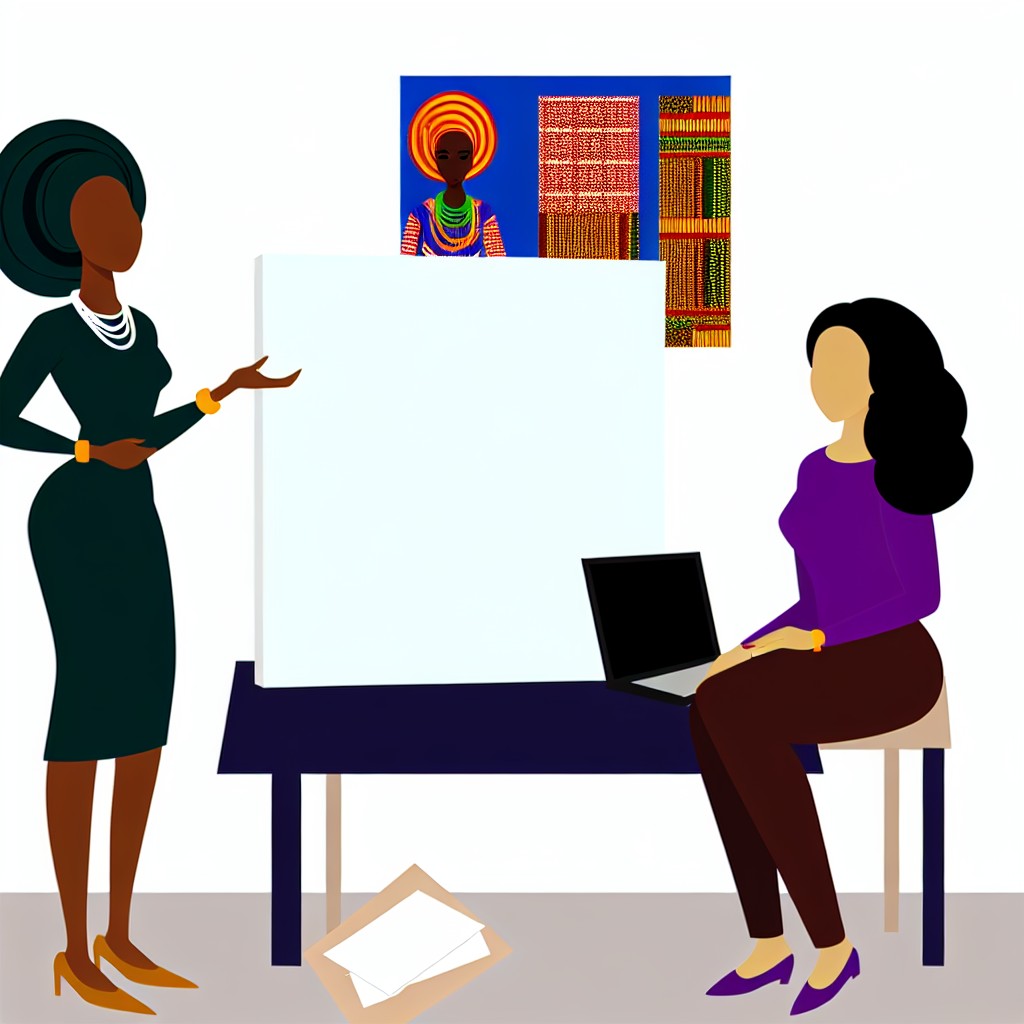
Challenges Faced by Nigerian Women Artists in the Art Market
Limited Access to Resources
Nigerian women artists often face restricted access to funding and materials.
Consequently, their ability to produce and showcase art becomes constrained.
Moreover, many galleries and institutions prioritize male artists for exhibitions.
This bias limits opportunities for women to gain visibility and sales.
Societal Expectations and Cultural Barriers
Traditional gender roles often discourage women from pursuing artistic careers full-time.
Additionally, some communities view art as a secondary activity for women.
These perceptions create hurdles for women seeking professional recognition.
Furthermore, balancing family responsibilities limits time available for art creation.
Market Visibility and Representation
Women artists struggle to establish networks with key art dealers and collectors.
Therefore, their works are less likely to be included in prominent art fairs.
Despite producing exceptional prints and paintings, many remain underrepresented.
Yet some galleries, like Lagos Contemporary, actively promote female talent.
Opportunities for Nigerian Women Artists in the Art Market
Growing Platforms and Exposure
Digital platforms enable women artists to showcase their work globally.
Social media sites such as Instagram amplify their reach and engagement.
Consequently, emerging artists like Ifeoma Nwosu gain followers and commissions online.
Moreover, virtual exhibitions provide cost-effective alternatives to physical galleries.
Support from Art Organizations
Non-profits like Women Create Africa fund and mentor female artists.
These programs provide valuable training in marketing and business skills.
Explore Stunning African Digital Art Prints!
Bring the beauty of Nigeria and Africa into your space with high-quality HD digital prints. Browse our collection on Instagram, find what speaks to you, and own a masterpiece today! See something you love? Send us a message on Instagram!
View Collection on InstagramIn addition, partnerships with collectors increase acquisition of women’s artworks.
Such initiatives foster growth and recognition within the competitive art sector.
Increasing Demand for Diverse Voices
Contemporary art buyers show interest in narratives from diverse perspectives.
Therefore, the unique cultural expressions of Nigerian women gain appreciation.
This interest drives higher valuation and demand for their art prints and originals.
Consequently, artists like Folake Akinola attract international art enthusiasts.
Strategies to Enhance Success for Nigerian Women Artists
Building Collaborative Networks
Women artists create collectives to share resources and opportunities.
For example, the Abuja Art Sisters group organizes joint exhibitions and sales.
Collaboration enhances bargaining power and visibility in the art market.
Leveraging Education and Skill Development
Continuous learning improves artistic techniques and marketing abilities.
Workshops by institutions like the Lagos School of Art provide relevant skills.
Thus, women artists increase their competitiveness and professionalism.
Engaging with Local and Global Audiences
Participating in international art fairs expands exposure beyond Nigerian borders.
Local community events foster grassroots support and authentic connections.
Combining global and local engagement strengthens artists’ reputations and sales.
The Role of Women in Promoting Nigerian Art Locally
Female Artists as Cultural Ambassadors
Women like Maduka Obi actively create artworks reflecting Nigerian heritage.
They preserve traditional techniques while innovating new artistic styles.
Moreover, these artists participate in local exhibitions to raise awareness of indigenous art.
Their efforts encourage cultural pride and identity within Nigerian communities.
Women as Curators and Gallery Owners
Entrepreneurs such as Amina Bello operate galleries showcasing Nigerian art prints.
They select diverse artworks appealing to both local and regional audiences.
Additionally, these curators support emerging female artists by providing exhibition space.
Therefore, their leadership fosters sustainable growth in the Nigerian art market.
Community Engagement and Art Education
Female educators organize workshops teaching traditional and contemporary art forms.
These initiatives involve rural and urban participants, inspiring new generations.
Besides teaching techniques, they emphasize the cultural significance of Nigerian art.
Consequently, women contribute to preserving artistic heritage through education.
Women Driving Nigerian Art Presence in Global Contexts
International Exhibitions and Representation
Women artists like Chidinma Ibekwe exhibit their prints in global art fairs.
Such exposure introduces Nigerian narratives to broader audiences worldwide.
They also collaborate with international galleries to reach collectors and critics.
Explore Stunning African Digital Art Prints!
Bring the beauty of Nigeria and Africa into your space with high-quality HD digital prints. Browse our collection on Instagram, find what speaks to you, and own a masterpiece today! See something you love? Send us a message on Instagram!
View Collection on InstagramThus, their participation elevates Nigeria’s art reputation abroad.
Networking and Cross-Cultural Collaborations
Female curators facilitate partnerships between Nigerian and foreign artists.
These alliances foster knowledge exchange and creative innovation.
Moreover, joint projects often blend diverse cultural elements in unique artworks.
This dynamic collaboration strengthens Nigeria’s artistic influence internationally.
Advocacy for Women Artists on Global Platforms
Nigerian women leaders campaign for equitable representation in international art circles.
They push for inclusion in major exhibitions and art publications.
Alongside advocacy, they mentor emerging female talents for global competitiveness.
Ultimately, these efforts promote gender equality within the art world.
Intersectionality in Nigerian Art
The Influence of Ethnicity on Women's Artistic Roles
Nigeria hosts over 250 ethnic groups.
Each group has unique cultural practices.
Ethnic background shapes the types of art women create and display.
For example, Yoruba women often engage in textile arts like adire printing.
Conversely, Igbo women are renowned for uli body and wall painting traditions.
Moreover, ethnic customs determine women's access to artistic training and resources.
Consequently, ethnicity plays a key role in the visibility and style of women's artwork.
Gender Expectations and Their Impact on Artistic Expression
Gender roles in Nigerian society influence how women participate in the arts.
Women frequently balance creative endeavors with domestic responsibilities.
Traditional expectations may limit women's freedom to explore unconventional art forms.
However, many female artists challenge these norms through innovative expression.
Artists like Amina Okoro embrace contemporary styles while honoring cultural heritage.
Therefore, gender norms both restrict and inspire women's artistic contributions.
The Role of Social Status in Shaping Artistic Opportunities
Social class affects women's ability to pursue art professionally or as a hobby.
Higher social status often grants access to education and art markets.
For instance, privileged women in Lagos attend art schools and exhibit internationally.
In contrast, rural women may produce art primarily for local community use.
Additionally, social networks influence opportunities for collaboration and recognition.
Thus, social status can either empower or constrain a woman's artistic journey.
Combined Effects of Ethnicity, Gender, and Social Status
The interaction of ethnicity, gender, and status creates diverse experiences for women artists.
Intersectionality reveals how these factors compound to shape artistic identity.
Explore Stunning African Digital Art Prints!
Bring the beauty of Nigeria and Africa into your space with high-quality HD digital prints. Browse our collection on Instagram, find what speaks to you, and own a masterpiece today! See something you love? Send us a message on Instagram!
View Collection on InstagramSome women navigate multiple layers of challenge to gain visibility in the art world.
For example, Fatima Abdullahi blends her Hausa heritage with feminist themes effectively.
Artistic communities increasingly recognize and celebrate these complex identities.
Ultimately, intersectionality enriches the narrative and diversity of Nigerian women's art.
The Influence of Modern Technology and Social Media on Women Artists and Art Print Distribution
Empowering Women Artists Through Technology
Modern technology has revolutionized how women artists create and share their work.
Digital tools such as graphic tablets enhance creativity and precision in art production.
Platforms like Procreate and Adobe Fresco allow flexible artistic experimentation.
Many Nigerian women artists including Ifeoma Okeke and Amaka Nnaji embrace these tools.
They use technology to blend traditional Nigerian motifs with contemporary digital styles.
This fusion attracts a global audience eager for unique art forms.
Technology also enables remote collaboration fostering connections between artists worldwide.
Through online workshops women artists continuously develop new skills and techniques.
Social Media as a Catalyst for Visibility
Social media platforms promote the visibility of women artists far beyond local galleries.
Instagram, Facebook, and Twitter serve as primary channels for showcasing artwork.
Artists like Chidinma Eze use Instagram to reach thousands of followers regularly.
These platforms facilitate direct communication with art enthusiasts and potential buyers.
Stories and live videos allow authentic engagement and storytelling.
Social media builds strong personal brands around individual artists.
Artists often share behind-the-scenes content humanizing their creative process.
Followers become loyal supporters and art collectors.
Innovations in Art Print Distribution
Technology has streamlined the distribution of art prints for women artists.
Online marketplaces such as ArtZania and LagosPrintHub specialize in African art prints.
These platforms offer secure purchase options and worldwide shipping services.
Print-on-demand services reduce financial risk associated with producing large print runs.
Artists upload high-resolution images and customers order prints as desired.
Digital catalogs increase accessibility for international buyers.
Social media ads target specific demographics improving sales efficiency.
Women artists achieve greater financial independence and market reach.
Collaborative Networks and Communities
Online groups and forums unite women artists for mutual support and exposure.
SustainableArtNG, an online collective led by artist Ngozi Balogun, exemplifies this trend.
Explore Stunning African Digital Art Prints!
Bring the beauty of Nigeria and Africa into your space with high-quality HD digital prints. Browse our collection on Instagram, find what speaks to you, and own a masterpiece today! See something you love? Send us a message on Instagram!
View Collection on InstagramMembers exchange resources, critique works, and organize virtual exhibitions.
These communities amplify voices often marginalized in mainstream art spaces.
Collaborations foster innovation and inspire confidence among emerging artists.
Social media events like #WomenInArtNigeria generate buzz around featured creators.
Such networks strengthen the overall presence of women in the Nigerian art scene.
Technology and social media continue to empower Nigerian women artists extensively.
Additional Resources
Clara Etso Ugbodaga-Ngu’s Many Roles in Nigeria’s Modernist Art …
How Private Spaces Are Reshaping Nigerian Art Philanthropy …