
Introduction to African Art Printing and Its Cultural Significance
Origins and Cultural Roots
African art printing originates from diverse traditional practices across the continent.
It embodies cultural stories and historical legacies of various ethnic groups.
Furthermore, its techniques vary significantly depending on the region and people.
For example, the Yoruba people of Nigeria use unique adire cloth dyeing methods.
Similarly, the Ashanti of Ghana incorporate symbolic patterns into their textiles.
These traditions highlight the connection between art and cultural identity.
Role in Community and Identity
Art printing serves as a medium for expressing social values and beliefs.
It often symbolizes community status, rites of passage, and spirituality.
Moreover, printed art can convey messages of unity and resistance.
Many prints carry ancestral symbols that preserve indigenous knowledge.
Therefore, the art becomes a form of cultural documentation and pride.
Modern Interpretations and Applications
Contemporary African artists blend tradition with modern printing technologies.
This fusion creates innovative designs that appeal globally.
Companies like Ashanti Heritage Prints promote sustainable printing methods based in Ghana.
Artists such as Amina Diop incorporate symbolic motifs into fashion and decor.
Consequently, African art printing thrives as a dynamic cultural expression.
It continues to educate and inspire new generations worldwide.
Overview of Traditional African Art Printing Techniques
Block Printing
Block printing remains one of the most cherished traditional techniques in African art.
Artisans carve intricate patterns into wooden blocks with great precision.
Then, they apply natural dyes onto the carved blocks carefully.
Subsequently, they press the blocks firmly onto fabric or paper.
This method produces bold, repetitive motifs full of cultural significance.
Moreover, practitioners like Kwame Mensah from Accra continuously preserve this craft.
Batik Technique
Batik involves applying wax to fabric before dyeing it.
Initially, artists draw detailed designs using melted beeswax or paraffin.
Then, they dip the cloth into natural dyes extracted from plants.
Afterwards, when the fabric dries, the wax is removed by boiling.
Consequently, the wax-resisted areas retain their original color.
Artists such as Amina Diallo from Senegal popularized this vibrant technique.
Stenciling
Stenciling involves cutting designs out of thin materials like leather or metal.
Explore Stunning African Digital Art Prints!
Bring the beauty of Nigeria and Africa into your space with high-quality HD digital prints. Browse our collection on Instagram, find what speaks to you, and own a masterpiece today! See something you love? Send us a message on Instagram!
View Collection on InstagramArtists place the stencil over fabric and spray or dab dye through the openings.
This method allows for quick reproduction of complex patterns.
Besides, it supports bold and geometric aesthetics common in African prints.
Master printers from Nigeria, including Chike Okafor, skillfully exploit stenciling.
Adinkra Printing
Adinkra printing originates from the Akan people of Ghana.
They carve symbolic stamps from calabash or wood representing proverbs and concepts.
These stamps are dipped into a black dye made from fermented tree bark.
They press these stamps repeatedly onto cloth to create meaningful patterns.
This printing technique conveys philosophy and heritage visually.
Practitioners like Efua Boateng uphold this cultural art form.
Materials and Dyes Used
Traditional African printing uses locally sourced materials for authenticity.
Natural dyes come from indigo plants, kola nuts, and tree barks.
Fabrics mainly include cotton and raffia woven by local weavers.
Artisans skillfully combine these materials to add depth and richness.
Furthermore, sustainable harvesting ensures long-term availability of resources.
Exploring the Materials and Tools Used in African Art Printing
Natural Materials for Printing
African art printing thrives on the use of natural and locally sourced materials.
Artists often select plant-based dyes extracted from leaves.
They also extract dyes from roots and bark.
These dyes produce vibrant and lasting colors for textiles and papers.
Additionally, clay and natural earth pigments add texture and depth to prints.
Moreover, fabrics such as cotton and raffia are popular canvases for many artworks.
These materials are pliable and hold dyes well.
This enhances the print’s quality.
Traditional Tools and Their Craftsmanship
Carved wooden blocks remain essential for creating intricate patterns in African printing.
Artisans like Malik Okoye specialize in crafting durable and detailed printing blocks.
The process involves careful hand-carving to achieve distinct symbolic motifs.
Besides blocks, handcrafted stamps made from calabash gourds serve various printing needs.
These tools contribute to the uniqueness and authenticity of each print.
Finally, brushes and comb-like tools help to apply dye evenly across surfaces.
Modern Influences on Materials and Techniques
In recent years, artists such as Amina Chikwado incorporate synthetic dyes to expand color ranges.
Explore Stunning African Digital Art Prints!
Bring the beauty of Nigeria and Africa into your space with high-quality HD digital prints. Browse our collection on Instagram, find what speaks to you, and own a masterpiece today! See something you love? Send us a message on Instagram!
View Collection on InstagramThis shift allows for brighter hues and quicker drying times in their work.
Furthermore, some craftsmen integrate screen printing techniques alongside traditional methods.
This fusion enhances production efficiency without sacrificing cultural expression.
Nevertheless, many artists still prioritize natural components to honor heritage.
They strike a balance between innovation and preservation throughout their creative processes.
Uncover the Details: The Influence of Nigerian Tribal Art on Modern Design
The Process of Block Printing in African Textile Art
Preparing the Materials
Artisans begin by selecting high-quality cotton or silk fabric for printing.
Next, they prepare wooden blocks carved with intricate traditional patterns.
These blocks often depict symbols or motifs with cultural significance.
Additionally, natural dyes made from plants and minerals are mixed carefully.
This step ensures the colors are vibrant and safe for the fabric.
Carving the Wooden Blocks
Skilled craftsmen use chisels and knives to carve designs into wood blocks.
The process requires patience to achieve precise and symmetrical patterns.
Each block represents a unique design element used repeatedly on fabric.
Furthermore, block carvers typically inherit techniques passed down through generations.
This heritage enriches the artistic value of each print.
Applying the Dye to the Blocks
Artisans soak the carved blocks into shallow trays filled with dye.
They ensure an even coating by pressing and lifting the block carefully.
At this stage, color consistency is crucial to avoid blotches or uneven prints.
Therefore, continuous practice and skill improve the application process.
Printing on the Fabric
Once the block is dyed, artisans press it firmly onto the fabric surface.
They repeat this process with careful alignment to form repeating patterns.
Moreover, this stamping technique creates a rhythmic, harmonious design.
Workers often use several blocks with different colors to add layers to the artwork.
Between impressions, the fabric may be dried briefly to prevent smudging.
Finishing and Drying the Printed Fabric
After printing, the fabric undergoes natural drying under the sun.
This process helps set the dyes firmly into the fabric fibers.
Next, artisans may steam or wash the cloth to enhance colorfastness.
Finally, the fabric becomes ready for tailoring or sale in local markets.
Cultural and Artistic Significance of Block Printing
Block printing reflects the rich storytelling traditions of African communities.
Explore Stunning African Digital Art Prints!
Bring the beauty of Nigeria and Africa into your space with high-quality HD digital prints. Browse our collection on Instagram, find what speaks to you, and own a masterpiece today! See something you love? Send us a message on Instagram!
View Collection on InstagramEach pattern often symbolizes identity, history, or social status.
Consequently, this technique preserves cultural heritage through artistic expression.
Block printing combines craftsmanship, creativity, and cultural meaning.
Discover More: How Nigerian Art Prints Are Used for Cultural Diplomacy
Understanding Batik and Wax-Resist Dyeing Methods
Introduction to Batik
Batik is a traditional technique used to create intricate patterns on fabric.
It involves applying wax to certain areas of cloth to resist dye penetration.
The method originated in various African cultures and remains popular worldwide.
Artists like Rashida Kamara have helped preserve this art form through modern interpretations.
Process of Wax-Resist Dyeing
The process begins with selecting a suitable fabric, commonly cotton or silk.
Next, artists use hot wax to draw designs on the fabric’s surface.
Once the wax cools, the fabric is dipped into dye baths for coloring.
Waxed areas resist absorbing the dye, creating contrasting patterns.
After dyeing, artisans boil or scrape off the wax to reveal the design underneath.
Tools and Materials Used in Batik
Certain tools are essential in wax-resist dyeing, such as the tjanting tool.
The tjanting allows artists to apply hot wax precisely on the fabric.
Brushes and stamps called cap also help in creating repetitive patterns.
Artists like Kwesi Ananse combine these tools to produce diverse effects.
Natural dyes, derived from plants like indigo and kola nuts, complement the wax technique.
Cultural Significance of Batik in African Art
Batik represents more than just fabric decoration within many African communities.
It conveys cultural stories, symbols, and social status through its designs.
Many women in Ghana and Nigeria use batik to express heritage and identity.
Furthermore, batik plays a role in ceremonies and traditional celebrations.
Organizations such as the Umoja Art Collective promote batik as a source of economic empowerment.
Gain More Insights: The Spiritual Meaning Behind Nigerian Art Print Symbols
Screen Printing and Its Adaptation in Contemporary African Art
Evolution of Screen Printing in African Art
Screen printing has a rich history that spans several continents and cultures.
In Africa, artists embraced it for its ability to produce vibrant, repeatable designs.
Initially, traditional patterns inspired early screen-printed works across West Africa.
Artists blended indigenous symbolism with modern technology to create unique prints.
Moreover, screen printing enabled mass production while preserving artistic integrity.
Consequently, this method empowered local artisans to reach broader audiences efficiently.
Explore Stunning African Digital Art Prints!
Bring the beauty of Nigeria and Africa into your space with high-quality HD digital prints. Browse our collection on Instagram, find what speaks to you, and own a masterpiece today! See something you love? Send us a message on Instagram!
View Collection on InstagramTechniques and Materials Used in African Screen Printing
Artists typically use mesh screens made from polyester or nylon fibers.
They apply emulsion substances to block out areas where ink should not pass.
Inks often consist of vibrant pigment-based colors adapted for textile and paper prints.
Additionally, natural dyes sometimes complement synthetic inks for a traditional feel.
The printing surface ranges from fabric to canvas and even unconventional materials.
Print makers carefully choose materials for durability and the desired visual effect.
Contemporary Applications and Innovations
Contemporary African artists like Amina N’Diaye have redefined screen printing’s role.
They incorporate digital elements to enhance detail and complexity in prints.
Furthermore, collaborations between artists and design studios have broadened creative possibilities.
For instance, the Lagos-based studio Kalungi Prints integrates handcraft with mechanized techniques.
Such adaptations help artists address modern themes of identity and social change.
They also experiment with layering and mixed media to deepen narrative expression.
Economic and Cultural Impact of Screen Printing on African Art Communities
Screen printing creates economic opportunities for many emerging African artists.
Workshops led by masters like Kwabena Bediako encourage skill sharing and mentorship.
In urban centers, communal print studios foster collaboration and innovation.
Moreover, screen printing contributes to preserving cultural heritage through visual storytelling.
It also facilitates cross-cultural exchange by showcasing African art globally.
Ultimately, this technique continues to shape the dynamic landscape of contemporary African art.
Gain More Insights: How Nigerian Artists Preserve Cultural Heritage Through Art
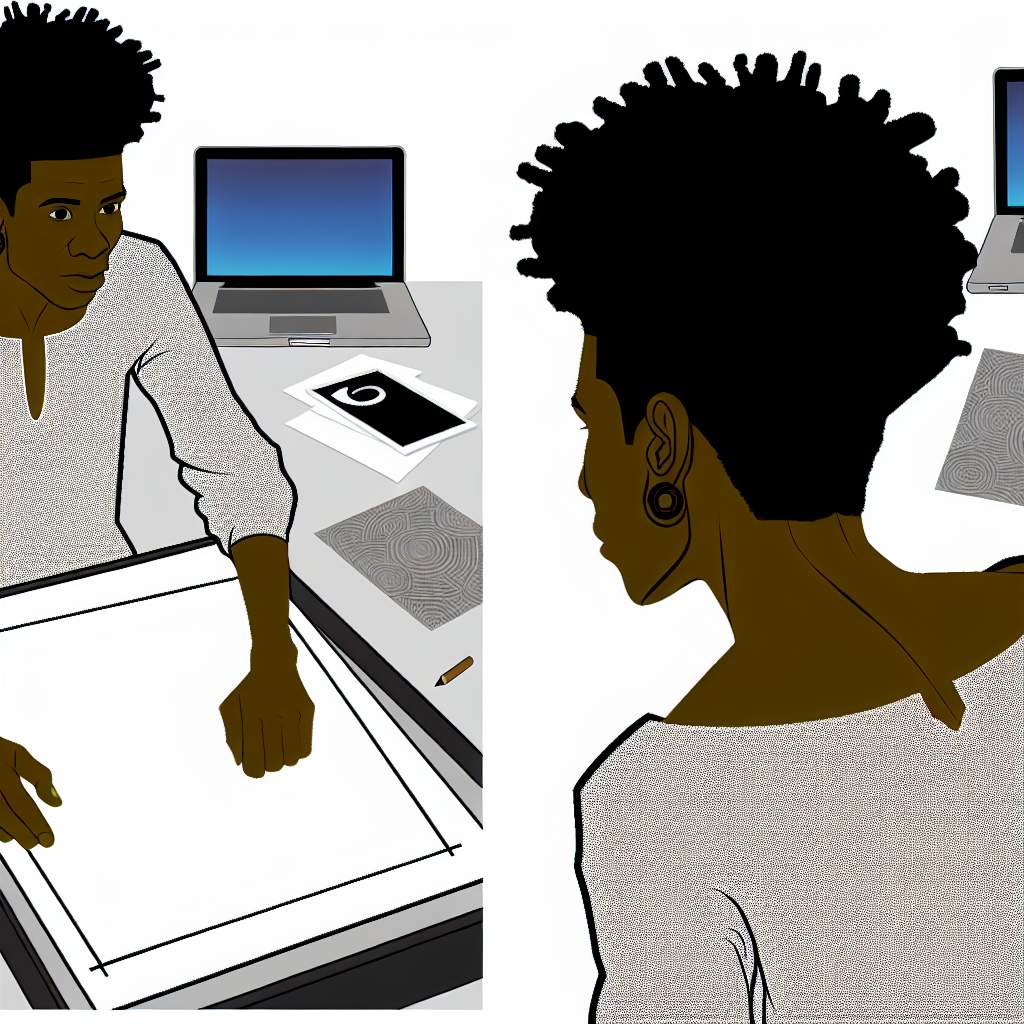
Digital Printing Innovations Influencing African Art Prints
Advancements in Printing Technology
Digital printing technologies have transformed the production of African art prints.
These innovations offer faster turnaround times without compromising quality.
Moreover, they enable artists to replicate intricate patterns with precise detail.
For example, high-resolution inkjet printers deliver vibrant color reproduction.
Additionally, UV-cured printing provides durability and resistance to fading.
Enhancing Artistic Expression Through Digital Methods
Digital tools allow artists to experiment with layering and texture digitally.
This flexibility encourages creative freedom beyond traditional printing limits.
Consequently, artists like Amina Tshabalala push conventional design boundaries.
Furthermore, customization options meet diverse consumer preferences effectively.
As a result, digital printing supports both mass production and exclusive editions.
Sustainability and Economic Impact
Digital printing reduces waste by using ink and materials more efficiently.
Explore Stunning African Digital Art Prints!
Bring the beauty of Nigeria and Africa into your space with high-quality HD digital prints. Browse our collection on Instagram, find what speaks to you, and own a masterpiece today! See something you love? Send us a message on Instagram!
View Collection on InstagramSmaller print runs minimize leftover stock, lowering environmental impact.
Tech companies such as Umoja Prints promote eco-friendly digital art services.
Therefore, artists gain access to sustainable production without sacrificing quality.
In addition, affordable digital setups empower local entrepreneurs and workshops.
Integration with Traditional African Art Forms
Innovators blend digital prints with hand-painted elements for unique creations.
This fusion preserves cultural heritage while embracing modern technology.
For instance, the Nairobi-based studio Kazi Arts combines digital and manual work.
Consequently, the art community appreciates the synergy of old and new methods.
Moreover, it opens new markets for authentic yet contemporary African artworks.
Future Trends Shaping African Art Printing
Artificial intelligence assists in pattern recognition and design automation.
Real-time digital previews allow artists to visualize outcomes instantly.
Collaborations between tech firms and artists like Kwame Okoye foster innovation.
Furthermore, interactive digital prints create immersive art experiences.
Thus, digital printing continues to redefine how African art reaches global audiences.
The Role of Symbolism and Storytelling in African Art Prints
Symbolism as a Cultural Language
African art prints use symbolism to communicate cultural values and beliefs.
Symbols serve as a visual language understood across various ethnic groups.
They convey meanings related to spirituality, history, and daily life.
For example, Adinkra symbols in West Africa represent proverbs and moral lessons.
Thus, symbolism enriches the artwork with deeper layers of interpretation.
Storytelling Through Visual Narratives
Storytelling is central to African art printing traditions.
Artists use prints to narrate myths, legends, and historical events.
These visual stories preserve community memory and heritage effectively.
Storytelling also helps pass wisdom from one generation to the next.
Consequently, prints function as both art and educational tools within communities.
Common Themes and Motifs
Artists often incorporate themes like ancestry, nature, and social values.
Prints depict animals, plants, and symbolic objects to represent ideas.
Additionally, abstract patterns can signify unity, strength, or fertility.
These motifs combine to form rich, meaningful compositions.
Viewers familiar with cultural contexts can decode these recurring elements easily.
Contemporary Practices and Innovations
Modern African printmakers blend traditional symbolism with contemporary issues.
Explore Stunning African Digital Art Prints!
Bring the beauty of Nigeria and Africa into your space with high-quality HD digital prints. Browse our collection on Instagram, find what speaks to you, and own a masterpiece today! See something you love? Send us a message on Instagram!
View Collection on InstagramThis fusion allows artists like Amina Balewa to address identity and politics.
Furthermore, storytelling adapts to urban and global audiences through new media.
Prints now engage with themes of migration, technology, and social change.
Therefore, symbolism and storytelling remain dynamic tools in African art printing.
Preservation and Challenges of Traditional African Printing Techniques
Importance of Preserving Traditional Printing
Traditional African printing techniques represent centuries of cultural heritage.
They connect modern communities with their ancestral identities and histories.
Furthermore, these techniques showcase the creativity and innovation of African artisans.
Preserving these methods ensures the continuation of unique artistic expressions.
Additionally, traditional prints support local economies and empower craftspeople.
Common Challenges Facing Traditional Techniques
One major challenge is the decline in skilled artisans practicing these crafts.
Many young people migrate to urban areas, leaving fewer successors to learn skills.
Moreover, synthetic and mass-produced fabrics overshadow handmade prints in markets.
This competition decreases demand for traditional methods and lowers artisan income.
Access to natural dyes and materials also becomes increasingly scarce.
Environmental degradation limits the availability of essential plants and minerals.
Consequently, artisans struggle to maintain authentic colors and textures.
Efforts to Safeguard Printing Traditions
Various organizations actively document techniques through research and publication.
For example, the African Textiles Initiative works with local communities to train youth.
International collaborations raise awareness and promote the value of handcrafted prints.
Additionally, museums and galleries exhibit traditional pieces to global audiences.
Workshops and festivals celebrate craftsmanship and encourage cultural pride.
Innovative Approaches to Support Sustainability
Some artisans blend traditional motifs with contemporary designs to attract markets.
Digital platforms help artists showcase and sell prints worldwide.
Furthermore, partnerships with fashion brands provide wider exposure.
This strategy creates new opportunities without compromising authenticity.
Eco-friendly farming for dye plants improves resource availability sustainably.
Training programs equip artisans with business skills to enhance profitability.
- Maintaining heritage through education and mentorship
- Promoting fair trade and ethical sourcing
- Adapting to modern demands with innovative techniques
Preserving traditional African printing requires combined community and global efforts.
Addressing challenges creatively ensures these artistic traditions endure future generations.
Impact of African Art Printing on Modern Design and Global Art Markets
Influence on Contemporary Design Trends
African art printing inspires many contemporary designers worldwide.
Explore Stunning African Digital Art Prints!
Bring the beauty of Nigeria and Africa into your space with high-quality HD digital prints. Browse our collection on Instagram, find what speaks to you, and own a masterpiece today! See something you love? Send us a message on Instagram!
View Collection on InstagramDesigners such as Oluwaseun Adeyemi incorporate traditional patterns creatively.
Moreover, these prints add vibrant color schemes to modern fashion and interiors.
Consequently, blending African motifs with current trends creates unique aesthetics.
This fusion encourages cross-cultural appreciation and innovative design solutions.
Expansion of Global Art Markets
African art printing has significantly expanded international art markets.
Galleries like Nyota Arts in Nairobi showcase printed artworks globally.
Additionally, auctions featuring African prints attract diverse collectors globally.
Art fairs in New York and Paris increasingly include African print exhibitions.
Therefore, African art printing broadens market opportunities for artists and dealers.
Economic Empowerment and Cultural Representation
The growth of African print art strengthens local economies.
Communities around Accra and Lagos benefit from increased art-related commerce.
Furthermore, these prints raise cultural awareness in global conversations.
Artists such as Amara Diouf emphasize heritage through their printed works.
Thus, art printing supports both financial growth and cultural pride internationally.
Role of Technology in Market Accessibility
Digital platforms like ArtConnect Africa promote African art printing worldwide.
These tools allow artists to reach buyers without geographical restrictions.
Consequently, technology facilitates direct artist-to-collector engagement.
This connectivity accelerates market growth and diversity in African art sales.
Hence, technological adoption plays a crucial role in the field’s expansion.