
Historical Intersections between Nigerian Art Prints and Indigenous Poetic Traditions
Rooted Origins of Artistic and Poetic Expressions
Nigerian art prints draw inspiration from rich indigenous artistic practices.
Indigenous poetry preserves oral traditions and cultural narratives.
Both forms have ancient roots that express communal identity and spirituality.
For instance, Yoruba adire textile patterns often symbolize mythological stories.
Yoruba oral poetry captures historical events and moral lessons.
Thus, these art forms have evolved alongside each other in Nigerian culture.
Shared Themes and Symbolism in Art Prints and Poetry
Both visual and poetic arts emphasize themes like destiny, nature, and social norms.
Symbols such as the ekuro leaf or the moon appear frequently in prints and poems.
These symbols convey complex ideas about life and cosmology to the community.
Artist Adebayo Oladipo used uli motifs to reference Igbo oral poetry traditions.
Furthermore, poetic verses often accompany art during festivals to reinforce messages.
Hence, a synergy exists in meaning between visual patterns and poetic words.
The Role of Colonial Influence in Shaping Interactions
Colonial-era print workshops introduced new techniques to Nigerian artists.
At the same time, indigenous poets adapted their work to written forms.
Missionary schools encouraged the documentation of oral poetry alongside visual art.
Artists like Chinelo Nnaji blended Western printmaking with traditional motifs.
As a result, a hybrid form of artistic and poetic expression emerged during this period.
This fusion allowed wider dissemination of cultural stories in innovative ways.
Collaborations Between Artists and Poets
Throughout history, Nigerian artists and poets have collaborated to enrich cultural output.
For example, the African Heritage Group integrated poetry into textile designs.
Poet Nkiruka Eze worked with printer Adeyemi Olufemi to produce illustrated poetry prints.
These collaborations highlight visual and verbal storytelling as complementary practices.
Moreover, joint exhibitions showcased the interwoven nature of Nigerian arts.
Such projects continue to inspire contemporary creators across disciplines.
Preserving Cultural Identity Through Combined Arts
Nigerian art prints and poetry serve as vital tools for preserving heritage.
They transmit ancestral wisdom and social values across generations.
Artists integrate proverbs and chants directly into print compositions.
Poets often visually describe scenes depicted on traditional cloth prints.
Consequently, the fusion of these forms strengthens cultural memory and pride.
This dynamic relationship remains central to Nigeria’s creative landscape.
Explore Stunning African Digital Art Prints!
Bring the beauty of Nigeria and Africa into your space with high-quality HD digital prints. Browse our collection on Instagram, find what speaks to you, and own a masterpiece today! See something you love? Send us a message on Instagram!
View Collection on InstagramHow Nigerian Visual Motifs in Art Prints Convey Poetic Narratives and Symbolism
Connection Between Visual Motifs and Storytelling
Nigerian art prints often use intricate visual motifs to tell compelling stories.
These designs convey complex narratives without relying on words.
Artists like Ifeanyi Okeke integrate folklore and daily life into their prints.
Consequently, viewers engage with art that feels both personal and collective.
Visual motifs serve as symbolic language that communicates cultural values.
Symbolism Rooted in Nigerian Traditions
Many motifs derive from indigenous symbols that carry multi-layered meanings.
For example, the “Uli” art form uses abstract patterns to reflect spirituality.
Similarly, Adinkra-inspired prints incorporate proverbs symbolizing wisdom.
These symbols function like poetic metaphors, evoking deep emotions.
Thus, the art transcends mere decoration to express philosophical ideas.
Interplay of Poetry and Visual Art in Prints
Nigerian artists collaborate with poets to create mixed-media pieces.
For instance, poet Amaka Obi’s words complement visual elements by Chinwe Eze.
Together, they reveal layered meanings through text and imagery fusion.
This synergy enriches the viewers’ sensory and intellectual experience.
Moreover, the rhythm of poetry parallels repetitive patterns in visual art.
Common Themes Explored Through Motifs and Poetry
Themes like identity, resilience, and community frequently emerge in art prints.
Visual symbols highlight ancestral heritage and socio-political struggles.
In tandem, poetic verses often question and celebrate Nigerian life.
Artists use motifs as metaphors to amplify the emotional tone of poems.
Hence, both art forms create a dialogue about cultural continuity and change.
Techniques Emphasizing Narrative and Symbolism
Layering colors and textures enhances the storytelling power of prints.
Repetition of motifs builds rhythm similar to poetic refrains.
Contrast between shapes draws attention to symbolic elements.
Artists employ negative space to suggest silence or hidden meanings.
These techniques invite viewers to interpret narratives actively.
Influence on Contemporary Nigerian Art Scene
Nigerian galleries increasingly showcase art prints featuring poetic symbolism.
Artisans like Kelechi Emmanuel gain recognition for blending visual and verbal storytelling.
This trend encourages preservation of indigenous lore through modern media.
Collectors appreciate the depth added by poetic layers in visual works.
Consequently, Nigerian art prints continue to evolve as rich cultural texts.
Explore Stunning African Digital Art Prints!
Bring the beauty of Nigeria and Africa into your space with high-quality HD digital prints. Browse our collection on Instagram, find what speaks to you, and own a masterpiece today! See something you love? Send us a message on Instagram!
View Collection on InstagramThe Role of Oral Poetry in Inspiring Themes and Styles in Nigerian Art Prints
Oral Poetry as a Cultural Foundation
Oral poetry holds a central place in Nigerian cultural expression.
It preserves history, traditions, and social values through storytelling.
Consequently, artists often draw upon these poetic traditions for inspiration.
Oral poetry’s rhythmic and symbolic nature profoundly shapes artistic creativity.
Therefore, it acts as a bridge between spoken word and visual art forms.
Inspiration of Themes from Oral Traditions
Many Nigerian art prints depict themes found in oral poetry narratives.
These themes include heroism, morality, community life, and spirituality.
Furthermore, oral poetry offers rich stories about ancestors and deities.
Artists translate these poetic themes into compelling visual representations.
As a result, art prints communicate cultural values deeply embedded in society.
Influence on Artistic Styles and Symbolism
Oral poetry’s expressive techniques influence the stylistic choices of printmakers.
Repetition, metaphor, and allegory in poetry find parallels in visual motifs.
For example, symbolic patterns in prints often mirror poetic imagery and rhythm.
Moreover, exaggerated forms in art prints echo the emphatic delivery of oral poetry.
Thus, style and symbolism in art prints reflect oral poetry’s performative essence.
Community and Performance as Shared Contexts
Oral poetry traditionally occurs within communal gatherings and performances.
Similarly, art prints often celebrate communal identity and collective memory.
Both forms engage audiences emotionally and culturally.
Consequently, printmakers and poets share a commitment to cultural continuity.
This mutual context strengthens the relationship between the two art forms.
Artists and Poets Collaborating Across Mediums
Some Nigerian artists collaborate directly with oral poets for creative projects.
These collaborations deepen the connection between visual and verbal artistry.
They produce works that integrate poetic verses with intricate print designs.
Such partnerships promote innovative expressions of Nigeria’s heritage.
In this way, oral poetry actively shapes modern artistic practices and narratives.
Delve into the Subject: The Importance of Ethical Art Collecting in Nigeria
Comparative Analysis of Thematic Elements in Nigerian Poetry and Art Prints
Cultural Identity and Heritage
Nigerian poetry and art prints both strongly emphasize cultural identity.
They vividly celebrate indigenous traditions and ancestral heritage.
Many poets like Ifeoma Okoye draw on folk tales and oral histories.
Similarly, artists such as Chijioke Nnamani depict traditional festivals and symbols.
Explore Stunning African Digital Art Prints!
Bring the beauty of Nigeria and Africa into your space with high-quality HD digital prints. Browse our collection on Instagram, find what speaks to you, and own a masterpiece today! See something you love? Send us a message on Instagram!
View Collection on InstagramThese works preserve and transmit cultural memories across generations.
As a result, poetry and art prints become vessels of Nigerian identity.
Social Commentary and Political Themes
Both artistic forms actively engage with social and political issues.
Poets like Adebayo Adekunle critique corruption and inequality through vivid imagery.
Correspondingly, art prints from studios like Lagos Creative Workshop expose societal challenges.
This dialogue raises public awareness and encourages critical reflection.
Moreover, the visual and verbal mediums complement each other’s messages.
Thus, they amplify calls for justice and reform in Nigerian society.
Nature and Environmental Connection
Nigerian poetry often celebrates nature’s beauty and spiritual essence.
Poets such as Ngozi Ijeoma explore themes of rivers, forests, and animals.
Similarly, prints by artists like Emeka Udeh depict lush landscapes and wildlife.
This shared focus reveals the country’s deep environmental bonds.
Consequently, both mediums inspire respect and care for natural surroundings.
Exploration of Personal and Collective Memory
Memory plays a vital role in Nigerian poetry and art prints alike.
Writers like Kemi Adetola evoke personal nostalgia and shared histories.
Likewise, printmakers such as Taribo Akande visualize past experiences and communal narratives.
This exploration fosters a sense of belonging and continuity.
Therefore, the thematic overlap enriches the cultural discourse.
Use of Symbolism and Metaphor
Symbolism forms a crucial link between poetry and art prints.
Poets employ metaphors to convey complex emotions and ideas.
For instance, Olufunmilayo Ojo uses river imagery to signify change.
In parallel, print artists embed symbolic motifs like masks and animals.
Hence, the interaction of symbols deepens interpretive layers.
Ultimately, these elements strengthen both artistic expressions.
You Might Also Like: The Role of Nigerian Art in Shaping National Identity
Collaborations Between Nigerian Poets and Visual Artists
Fusion of Literary and Visual Expressions
Nigerian poets and visual artists actively collaborate to create compelling art prints.
These collaborations merge the power of words with striking visual imagery.
Consequently, their work evokes deeper emotional responses from the audience.
Poets provide vivid narratives that inspire the artists’ creative process.
In turn, artists translate poetic themes into vibrant visual forms.
Explore Stunning African Digital Art Prints!
Bring the beauty of Nigeria and Africa into your space with high-quality HD digital prints. Browse our collection on Instagram, find what speaks to you, and own a masterpiece today! See something you love? Send us a message on Instagram!
View Collection on InstagramNotable Collaborative Projects and Initiatives
Collaborative projects often showcase both poetry and art prints side by side.
For example, the Lagos Art Poetry Collective brings together diverse talents regularly.
This collective encourages cross-disciplinary experimentation for richer cultural output.
Furthermore, the “Voices on Canvas” exhibit in Abuja featured paired works of poem and print.
Such events highlight how collaboration enhances artistic meaning and reach.
Prominent Figures in Nigerian Poetry and Visual Arts Cooperation
Poet Chinedu Nwosu and artist Funmilayo Adeoye exemplify fruitful partnerships.
They co-created limited-edition prints inspired by Nwosu’s poetry collections.
Similarly, poet Amina Suleiman and painter Tunde Balogun blend calligraphy with abstract art.
These partnerships showcase unique interpretations of Nigeria’s diverse cultural heritage.
Artists and poets often work closely to ensure their visions align perfectly.
Techniques and Approaches in Collaborative Creations
Collaborators experiment with layering poetry text onto printed images to unify media.
Some artists incorporate handwritten verses directly into their art prints.
Others use vibrant color schemes that reflect the tone of poetic moods.
Meanwhile, poets adapt their lines visually to complement shapes and textures.
This dynamic exchange fosters innovative, multidimensional art prints.
Impact of Cross-Disciplinary Collaborations on Nigerian Art and Literature
These partnerships expand audience engagement across literary and art communities.
They also provide poets and artists with broader exposure opportunities.
Moreover, collaborations stimulate creative growth by challenging traditional boundaries.
They foster dialogue about cultural identity, social issues, and personal experiences.
Ultimately, such collaborations enrich Nigeria’s contemporary art and literature scenes.
Find Out More: The Influence of Nigerian Calligraphy on Modern Art Prints
The use of language and script in Nigerian art prints as a poetic device
Language as Visual Expression
Nigerian art prints often integrate language to enhance visual storytelling.
Artists like Olumide Adebayo skillfully combine indigenous languages within their designs.
They use Yoruba, Igbo, and Hausa scripts to create layered meanings.
Consequently, these scripts serve as more than text; they become imagery and rhythm.
Moreover, the calligraphic styles mimic poetic cadences that appeal to viewers.
Symbolism and Cultural Identity in Scripts
Scripts in art prints symbolize cultural identity and historical narratives.
For example, Nsibidi symbols appear in prints to connect audiences to ancient traditions.
These symbols communicate indirectly, much like metaphor in poetry.
Therefore, the script enriches the art with cultural depth and significance.
Explore Stunning African Digital Art Prints!
Bring the beauty of Nigeria and Africa into your space with high-quality HD digital prints. Browse our collection on Instagram, find what speaks to you, and own a masterpiece today! See something you love? Send us a message on Instagram!
View Collection on InstagramAdditionally, artists use these elements to celebrate Nigerian heritage and diversity.
Interplay between Text and Imagery
Text and imagery in Nigerian prints interact to produce poetic effects.
Visual elements complement written words to evoke emotional responses.
For instance, calligraphic curves mirror natural forms and rhythms in poetry.
Thus, the composition follows a rhythmic flow similar to verse.
In turn, the viewer experiences a multilayered narrative combining sight and language.
Incorporation of Contemporary Language Styles
Contemporary Nigerian print artists experiment with mixed languages and urban slangs.
This mix reflects the dynamic nature of modern Nigerian poetry and speech.
Artists such as Yetunde Okoro incorporate Pidgin English for accessibility and cultural flavor.
Consequently, their prints resonate with a broader audience across generations.
Furthermore, the integration of street language enhances the poetic appeal of prints.
Techniques for Emphasizing Poetic Features
Artists utilize repetition of words and patterns as poetic devices in their prints.
They also play with font size and placement to create visual rhythm.
For example, staggered text can mimic the cadence of spoken poetry.
Similarly, color contrasts highlight key phrases and emotional tones.
All these techniques work together to transform language into a visual poem.
Explore Further: The Influence of African Masks on Nigerian Art Print Designs
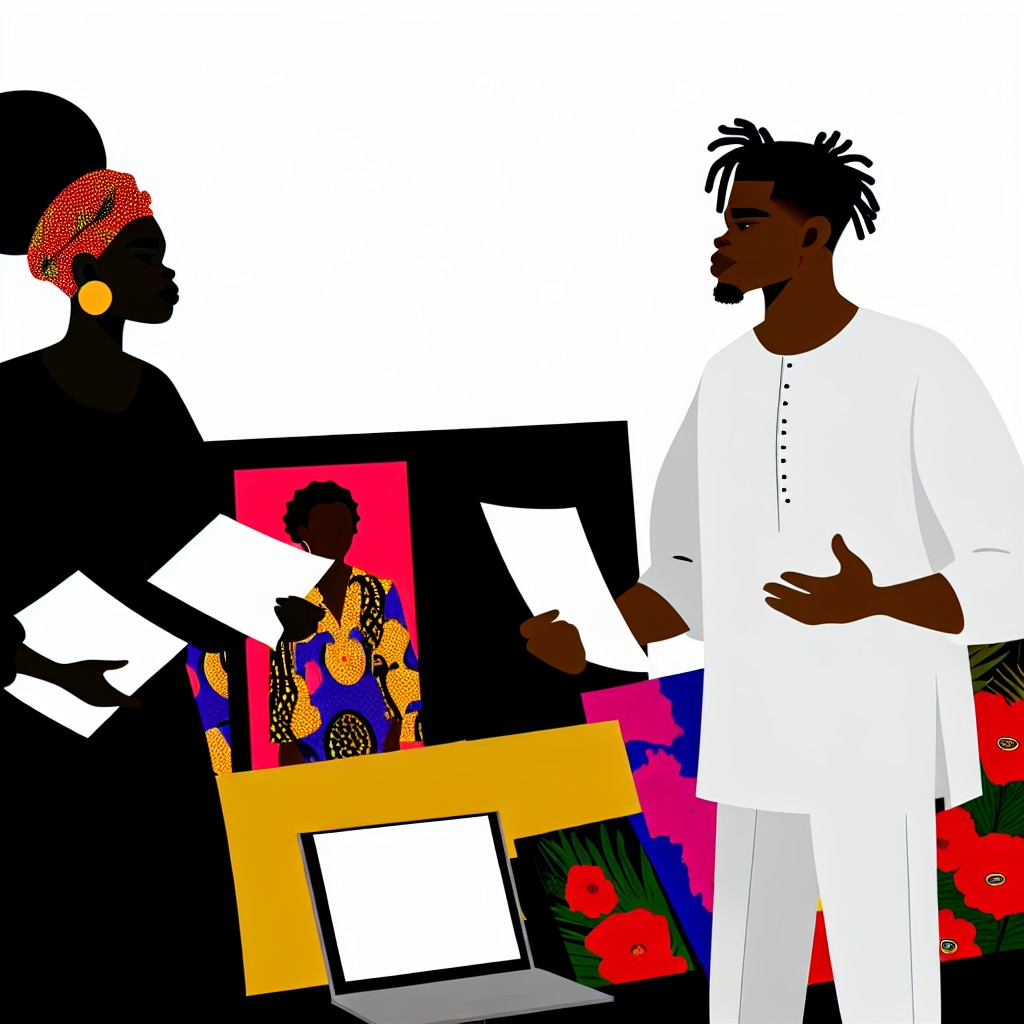
Cultural Storytelling through the Fusion of Poetry and Art Prints in Nigerian Festivals
Role of Art Prints in Nigerian Festivals
Nigerian festivals prominently feature vibrant art prints that capture cultural symbols.
These prints visually narrate stories passed down across generations.
Moreover, they highlight significant events, myths, and ancestral heritage.
Artists like Chinedu Okoro create detailed prints that resonate with community identity.
The designs often incorporate traditional motifs and local color palettes.
Consequently, art prints serve as a visual anchor during festival celebrations.
Integration of Poetry in Festival Narratives
Poetry seamlessly blends with visual art to enrich festival storytelling.
Poets such as Amaka Eze perform verses that complement the themes in prints.
These poetic expressions emphasize emotions behind historical and cultural events.
Furthermore, poetry offers an oral dimension that connects the audience to ancestral voices.
It provides rhythm and cadence that enhance festival atmosphere.
Therefore, poetry deepens the emotional impact of the art prints displayed.
Synergy between Poetry and Art Prints
The fusion of poetry and art prints creates a multisensory cultural experience.
Explore Stunning African Digital Art Prints!
Bring the beauty of Nigeria and Africa into your space with high-quality HD digital prints. Browse our collection on Instagram, find what speaks to you, and own a masterpiece today! See something you love? Send us a message on Instagram!
View Collection on InstagramDuring festivals, attendees engage with visuals while absorbing lyrical storytelling.
This combination encourages reflection on cultural values and communal memory.
For instance, the Eyo Festival in Lagos features both artistic prints and recited poetry.
Event organizers such as Folashade Ajayi prioritize this harmony to preserve tradition.
Consequently, the dual art forms reinforce cultural pride and identity among participants.
Community Involvement and Preservation
Local communities actively participate in producing both poetry and art prints.
Workshops led by practitioners like Emeka Nwosu foster creative expression.
These gatherings encourage younger generations to learn storytelling techniques.
Community involvement ensures cultural continuity through immersive participation.
Moreover, it supports local economies by showcasing indigenous talent.
Thus, festivals become platforms for sustaining Nigerian cultural heritage effectively.
Modern Reinterpretations of Nigerian Poetry Within Contemporary Art Print Designs
Emergence of Poetic Themes in Visual Art
Contemporary Nigerian artists actively incorporate poetry into their art prints.
They draw inspiration from both traditional and modern poetic expressions.
This blend enriches the visual storytelling of their works.
Moreover, poetry’s rhythms influence the patterns and textures seen in prints.
For example, artist Chika Okafor integrates lines from modern poets like Jumoke Adeyemi.
This approach brings new emotional depth to traditional motifs and styles.
Techniques for Embedding Poetry in Print Designs
Designers employ various methods to include poetry in their artworks.
Some use calligraphy to visually represent poetic verses within prints.
Others overlay textual elements on abstract or figurative imagery for impact.
Additionally, printmakers experiment with layered textures to suggest poetic rhythm.
Companies like Imade Studios collaborate with poets such as Emeka Onwukhala.
Together, they create collections that merge written word and visual forms seamlessly.
Impact on Cultural and Artistic Identity
This fusion fosters a renewed appreciation for Nigerian heritage and language.
Artists and poets together challenge conventional artistic boundaries.
Consequently, audiences engage with Nigerian culture on multiple sensory levels.
Furthermore, these collaborations enhance the global visibility of Nigerian art.
Consequently, they support emerging talent in both literary and visual disciplines.
Examples of Notable Collaborations
- “Echoes of Verse” by Amina Bala and poet Ifeanyi Udo: merges calligraphy with folk poetry.
- “City Songs” from Nkiru Designs featuring poems by Lara Eze: explores urban life through mixed media.
- “Roots and Rhymes” by Tunde Alade with poems by Chioma Nnamdi: celebrates indigenous languages visually.
These projects highlight how contemporary prints reimagine poetry effectively.
Impact of Nigerian Art Prints on the Global Appreciation of African Poetic Heritage
Nigerian Art Prints as Cultural Ambassadors
Nigerian art prints showcase vibrant imagery that captures African stories and traditions.
Explore Stunning African Digital Art Prints!
Bring the beauty of Nigeria and Africa into your space with high-quality HD digital prints. Browse our collection on Instagram, find what speaks to you, and own a masterpiece today! See something you love? Send us a message on Instagram!
View Collection on InstagramThey act as cultural ambassadors by visually representing poetic themes and narratives.
Consequently, global audiences gain insight into the continent’s rich poetic heritage.
Artists like Chidi Okonkwo and Amaka Obi have gained international recognition through their prints.
Therefore, these prints enhance the global dialogue about African poetry and culture.
Visual Storytelling Enhances Poetic Expressions
Art prints translate complex poetic ideas into accessible visual formats.
This visual storytelling deepens the understanding of African poetic motifs and symbolism.
Moreover, it bridges language barriers that often limit poetry’s international reach.
For example, themes of resilience and identity are vividly portrayed in these prints.
Thus, they enrich the emotional and intellectual appreciation of African poetry worldwide.
Collaborations Between Visual Artists and Poets
Collaborations foster creative synergies that amplify African poetic voices.
Artists like Kehinde Afolayan and poet Amara Nnamdi collaborate on projects combining prints and poetry.
Their joint efforts produce multidimensional artworks that attract diverse audiences.
Additionally, galleries such as Lagos Contemporary Art Center promote these collaborative exhibitions globally.
As a result, Nigerian art prints help expand the influence of African poetic heritage abroad.
Promotion Through International Exhibitions and Festivals
International exhibitions spotlight Nigerian art prints alongside African poetry readings.
Events like the Abuja Art Festival celebrate the fusion of visual art and poetry.
Such platforms increase exposure, attracting collectors and enthusiasts worldwide.
Furthermore, multimedia showcases enhance the sensory experience of African poetic traditions.
Subsequently, these efforts solidify Nigerian prints as vital contributors to global arts and letters.
Educating New Audiences and Inspiring Creativity
Museums and cultural centers use Nigerian art prints to educate visitors on African poetry.
Workshops led by artists and poets encourage creative engagement with these art forms.
Students and emerging artists find inspiration in the vibrant interplay of words and images.
This educational outreach cultivates appreciation and preserves African poetic heritage.
Ultimately, Nigerian art prints sustain a living legacy that continues to captivate global audiences.
The Influence of Traditional Nigerian Poetry Rhythms and Structures on Visual Composition in Art Prints
Role of Rhythmic Patterns in Visual Design
Traditional Nigerian poetry features unique rhythmic patterns passed down through generations.
These rhythms create a natural flow that artists often mimic visually.
Consequently, rhythm in poetry translates into repeated motifs and patterns in art prints.
Artists like Ifeanyi Okoro use these rhythmic repetitions to guide the viewer’s eye smoothly.
Therefore, the cadence of poetry shapes the pacing and movement within the composition.
Structural Elements Shared Between Poetry and Prints
Traditional Nigerian poetry emphasizes structure through stanza forms and call-and-response techniques.
Explore Stunning African Digital Art Prints!
Bring the beauty of Nigeria and Africa into your space with high-quality HD digital prints. Browse our collection on Instagram, find what speaks to you, and own a masterpiece today! See something you love? Send us a message on Instagram!
View Collection on InstagramArtists incorporate similar structural divisions by creating segmented spaces within prints.
Moreover, call-and-response elements inspire contrasting shapes and colors placed in visual dialogue.
This approach adds dynamic tension and balance to the artwork without overwhelming the viewer.
For instance, Lekan Alabi’s prints reveal deliberate symmetry reflecting poetic structure.
Symbolism and Thematic Resonance
Poetry often conveys cultural values and stories using symbols and allegories.
Visual artists adopt these symbolic themes to enrich their prints with deeper meaning.
Thus, the imagery in art prints becomes a visual poem that complements the spoken word.
Communities recognize motifs, strengthening connections between poetic tradition and visual art.
Artists like Amaka Eze highlight themes of heritage inspired by traditional poetic expressions.
Techniques Enhancing Poetic Influence
Printmakers apply layering and texturing techniques to reflect poetic depth and complexity.
Additionally, repetition of lines and shapes mimic the refrain-like qualities in poetry.
Color contrasts and gradations also parallel shifts in rhythm and tone found in spoken verse.
Such techniques invite viewers to experience the artwork as they would a rich poetic recitation.
For example, Chinedu Nwosu’s layered prints evoke the multisensory rhythm of oral poetry.
Contemporary Impact of Traditional Poetry on Nigerian Art
Modern Nigerian artists continue drawing inspiration from traditional poetry’s formal qualities.
They innovate by blending time-honored rhythms with current visual art trends.
This fusion fosters cultural preservation while pushing creative boundaries in prints.
Art institutions like Lagos Visual Arts Guild actively promote such interdisciplinary explorations.
Ultimately, this synergy strengthens Nigeria’s artistic identity globally and locally.
Additional Resources
‘I have always been a person of two worlds’ | Routed Magazine