
Historical Overview of Nigerian Art and Music and Their Intertwined Origins
Roots of Nigerian Art Traditions
Nigerian art dates back thousands of years.
It holds rich cultural significance.
The art includes forms such as sculpture, textiles, pottery, and painting.
The Nok culture produced some of West Africa’s earliest terracotta figures.
These artworks communicated social, religious, and political ideas within communities.
Moreover, visual art became a key medium to document historical narratives.
The Origins of Nigerian Music
Nigerian music originates from oral and ritualistic practices among ethnic groups.
Drumming, chanting, and dancing played crucial roles in ceremonies and festivities.
For instance, the Yoruba used talking drums to convey messages across distances.
Furthermore, music expressed emotions and strengthened communal bonds.
This strong musical heritage passed down through generations orally and experientially.
Interconnection Between Art and Music
Historically, Nigerian art and music evolved side by side in cultural contexts.
Artists often created masks and sculptures used in musical performances.
Such objects enhanced the spiritual and aesthetic dimensions of musical events.
Additionally, musical rhythms inspired patterns and motifs in visual artworks.
This synergy reinforced cultural identity and social cohesion among Nigerian peoples.
Ethnic Influences on Artistic and Musical Practices
The Yoruba, Igbo, Hausa, and other groups contributed distinct styles and sounds.
For example, Yoruba masquerades feature elaborate costumes linked to music.
Igbo art includes uli paintings reflecting symbolic meanings corresponding to songs.
Similarly, Hausa music incorporates stringed instruments complementing visual performances.
These diverse expressions illustrate how art and music are inseparable in Nigerian culture.
Transmission Through Generations
Traditional skills in art and music transfer from elders to younger generations.
Master craftsmen and musicians mentor apprentices through apprenticeships.
They emphasize both technique and cultural significance in their teachings.
As a result, these traditions remain vibrant despite modernization challenges.
New Nigerian artists and musicians still draw inspiration from ancient foundations.
Influence of Traditional Nigerian Music Genres on Visual Art Styles
Integration of Rhythmic Patterns into Visual Arts
Traditional Nigerian music deeply influences the rhythm of visual artworks.
Artists like Ifeoma Okoye purposely incorporate musical beats into their painting strokes.
Moreover, the syncopation found in genres such as Afrobeat inspires dynamic brushwork.
This creates a sense of movement within static images.
Explore Stunning African Digital Art Prints!
Bring the beauty of Nigeria and Africa into your space with high-quality HD digital prints. Browse our collection on Instagram, find what speaks to you, and own a masterpiece today! See something you love? Send us a message on Instagram!
View Collection on InstagramTherefore, rhythm serves as a bridge connecting sound and sight.
Symbolism Derived from Musical Themes
Many visual artists draw on the cultural stories told in Nigerian folk songs.
For example, the Talking Drum narratives inspire symbolic motifs in sculpture and textiles.
Consequently, visual art often reflects the social and historical contexts presented in these songs.
This shared symbolism enriches both art forms, highlighting communal values.
Color Usage Influenced by Musical Expressions
Traditional music’s vibrancy also informs the palette choices of painters and designers.
Specifically, genres like Juju music, with its lively tempo, encourage bright and warm colors.
In contrast, more somber musical styles inspire subdued, earth-toned aesthetics.
Thus, musical moods directly translate into visual emotional tones.
Collaborations Between Musicians and Visual Artists
Collaborative projects between Nigerian painters and musicians foster cross-disciplinary creativity.
Sometimes, artists create album covers that visually echo the music’s spirit.
For instance, Lagos-based illustrator Chinedu Eze designed covers for the Afrobeat band Igi Roots.
Such partnerships highlight the ongoing dialogue between music and visual representation.
Traditional Instruments as Artistic Subjects
Besides thematic influence, traditional instruments themselves become central artistic subjects.
Carvers replicate talking drums and shekeres with intricate detail in wood and bronze.
These representations celebrate musical heritage through material culture.
Consequently, the music’s form and function inspire physical artistic creations.
Regional Variations Reflecting Distinct Genres
Diverse Nigerian regions infuse their specific musical genres into local art styles.
For example, Yoruba areas reflect the complex percussion patterns of Bata drums in their carvings.
Meanwhile, Igbo artists incorporate melodic elements from highlife music into textile patterns.
Therefore, regional music traditions help shape unique visual identities across Nigeria.
Role of Nigerian Festivals in Blending Art and Music for Cultural Expression
Celebration of Heritage Through Festivals
Nigerian festivals serve as vibrant celebrations of cultural heritage.
They bring communities together to honor shared traditions.
Moreover, festivals showcase diverse ethnic identities across the country.
Artists and musicians collaborate closely during these events.
This collaboration creates a rich fusion of visual art and musical rhythm.
Consequently, festivals act as living museums highlighting Nigeria’s rich culture.
The Integration of Visual Art in Festival Music
Visual art plays an integral role in enhancing musical performances.
Artists design costumes, masks, and decorations that reflect tribal symbols.
These visual elements deepen the audience’s connection to the music.
Explore Stunning African Digital Art Prints!
Bring the beauty of Nigeria and Africa into your space with high-quality HD digital prints. Browse our collection on Instagram, find what speaks to you, and own a masterpiece today! See something you love? Send us a message on Instagram!
View Collection on InstagramFor instance, the Osun-Osogbo festival features intricate sculptures and vibrant paintings.
At the same time, drummers and singers produce rhythms that echo ancestral stories.
Together, these art forms create a multisensory cultural experience.
Music as a Medium for Storytelling
Music at Nigerian festivals conveys historical and spiritual narratives.
Singers use melodies and lyrics to pass down oral traditions.
In addition, musical instruments symbolize specific cultural meanings.
Drums, flutes, and string instruments accompany dancers adorned in vivid artworks.
This synergy amplifies the cultural messages for festival attendees.
Therefore, music and art harmonize to sustain communal memory.
Fostering Creativity and Innovation
Festivals encourage local artists and musicians to innovate within tradition.
Younger generations reinterpret classic art forms and musical styles.
This process preserves culture while making it relevant today.
Consequently, Nigerian festivals continually renew artistic expressions.
For example, artists like Chinedu Eze fuse traditional motifs with contemporary art.
Similarly, musicians blend Afrobeat with traditional festival rhythms.
Impact on Community Identity and Social Unity
Nigerian festivals strengthen community bonds through shared cultural practices.
Art and music unite people regardless of age or background.
Festive participation fosters pride and belonging among attendees.
Additionally, these events promote social cohesion within diverse communities.
Local leaders often emphasize cultural values through festival performances.
Ultimately, festivals serve as platforms to affirm communal identity creatively.
Delve into the Subject: Understanding African Art Symbols and Their Meanings
Representation of Musical Themes and Instruments in Nigerian Paintings and Sculptures
Depiction of Traditional Musical Instruments
Nigerian artists often highlight traditional instruments in their works.
For instance, drums appear frequently in both paintings and sculptures.
Drums symbolize communication, celebration, and spirituality across many cultures.
Besides drums, stringed instruments like the ogene and igba are common visual motifs.
These instruments often indicate cultural identity and social status in artworks.
Moreover, artists use vibrant colors and patterns to emphasize the instruments’ significance.
Musical Themes in Visual Storytelling
Many Nigerian artworks tell stories through musical themes.
Artists portray musicians engaging in communal performances or ritual ceremonies.
Explore Stunning African Digital Art Prints!
Bring the beauty of Nigeria and Africa into your space with high-quality HD digital prints. Browse our collection on Instagram, find what speaks to you, and own a masterpiece today! See something you love? Send us a message on Instagram!
View Collection on InstagramSuch paintings and sculptures reflect the social role of music in Nigerian life.
Consequently, rhythm and movement are visually suggested through dynamic compositions.
This approach immerses viewers into the energy and atmosphere of musical events.
Furthermore, artists like Chinedu Eze capture the emotional connection between music and community.
Symbolism and Cultural Expression Through Music
Music symbolism in Nigerian art often conveys deeper cultural meanings.
Symbols such as the talking drum represent communication and negotiation.
Similarly, masquerade performances in sculptures link music to spiritual beliefs.
Artists like Amaka Okoye incorporate these themes to preserve cultural heritage.
Therefore, musical elements become vehicles for expressing history and values.
Additionally, the integration of music and art highlights Nigeria’s diverse ethnic traditions.
Impact of Contemporary Artists on Musical Representation
Contemporary Nigerian artists blend traditional and modern musical elements.
For example, painter Ikenna Nnamdi fuses Afrobeat motifs with abstract forms.
This fusion revitalizes musical themes through fresh visual interpretations.
Moreover, contemporary sculptors experiment with mixed media to depict instruments.
These innovations expand the dialogue between music and visual art in Nigeria.
Thus, current artists continue to celebrate music’s integral role in Nigerian culture.
See Related Content: The Role of Art in Nigerian Resistance and Liberation Movements
The Impact of Contemporary Nigerian Music on Modern Art Forms and Printmaking
Influence of Nigerian Music Genres on Visual Art
Contemporary Nigerian music genres inspire many visual artists across the country.
Afrobeats, hip hop, and Afro-fusion blend cultural narratives into exciting visual expressions.
Artists like Tunde Okonkwo create prints that reflect the rhythm and energy of music.
Moreover, the vibrant beats of Nigerian music stimulate bold color choices in artworks.
Consequently, visual art often mirrors the themes present in song lyrics and melodies.
Integration of Music Themes into Printmaking
Printmakers incorporate musical elements to deepen storytelling within their pieces.
Nigerian printmaking studios such as Idowu Visual Arts merge sound and image effectively.
For instance, prints showcasing traditional instruments emphasize cultural pride and heritage.
Additionally, the layering techniques in printmaking mimic musical composition structures.
As a result, prints evoke the dynamic flow and movement found in Nigerian music.
Collaborations Between Musicians and Visual Artists
Collaborations create innovative cross-disciplinary projects that excite diverse audiences.
Visual artist Funmi Ajayi partners with musician Emeka Ojo for combined exhibitions.
They explore themes of identity and urban experiences through both sound and visuals.
Explore Stunning African Digital Art Prints!
Bring the beauty of Nigeria and Africa into your space with high-quality HD digital prints. Browse our collection on Instagram, find what speaks to you, and own a masterpiece today! See something you love? Send us a message on Instagram!
View Collection on InstagramSuch partnerships enhance the visibility of both art forms nationally and internationally.
Furthermore, they foster creative dialogues that challenge traditional artistic boundaries.
Use of Print Media in Music Promotion
Printmaking plays a vital role in promoting contemporary Nigerian music.
Album covers, posters, and merchandise often feature unique print designs from local artists.
Creative studios like Lagos Print Hub produce limited edition visuals that attract collectors.
These print materials visually represent the music’s spirit and cultural context.
Thus, printmaking amplifies the marketing reach and artistic value of music projects.
Emerging Trends in Art and Music Synergy
Emerging technologies encourage more interactive and multimedia collaborations.
Artists explore digital printmaking combined with sound installations for immersive experiences.
Upcoming talents such as Ifeoma Obi integrate augmented reality with traditional prints and beats.
This innovation attracts younger audiences eager for fresh artistic encounters.
Contemporary Nigerian music continues to shape and invigorate modern art forms.
Discover More: Understanding the Techniques Behind African Art Printing
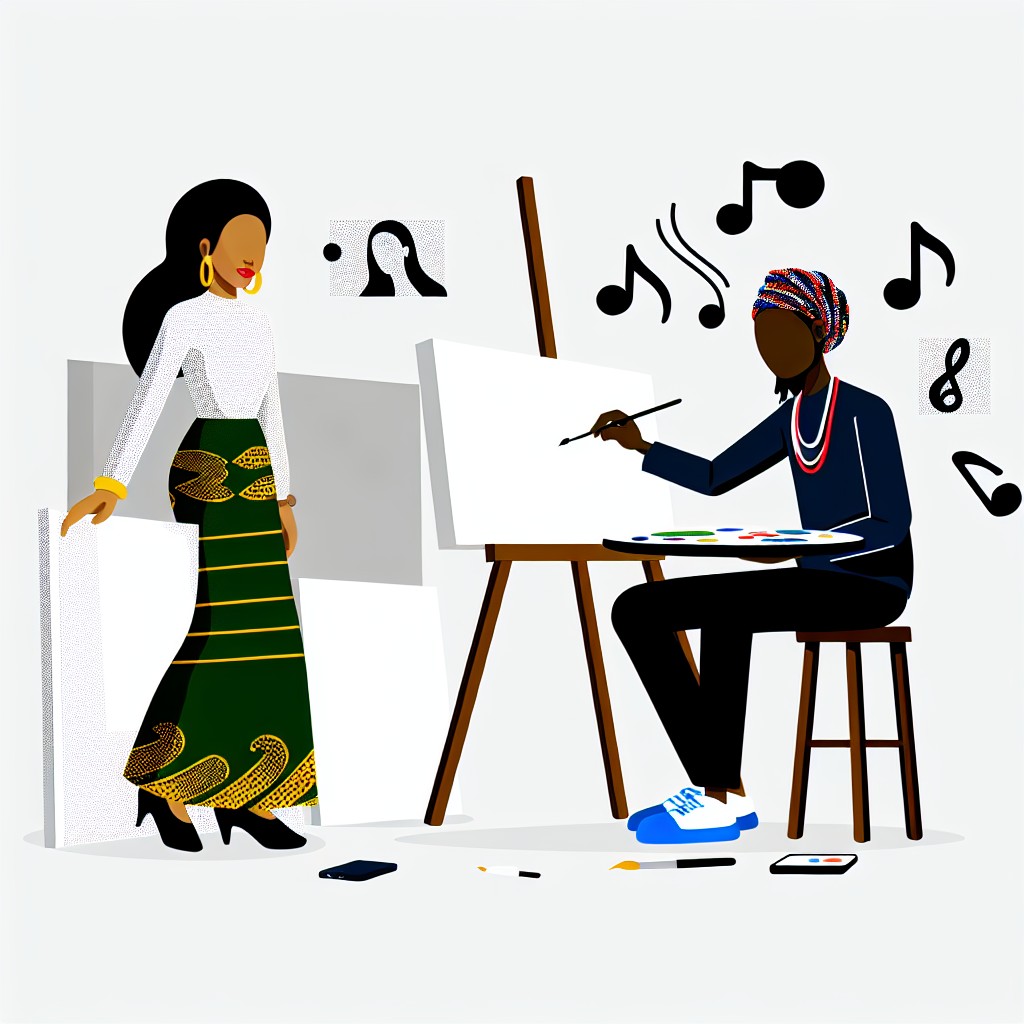
Collaboration in Multimedia Projects
Fusion of Visual Art and Music
Nigerian musicians often collaborate with visual artists to create immersive multimedia experiences.
These collaborations blend sound and visuals to captivate diverse audiences.
Furthermore, they allow artists to express cultural narratives through multiple mediums.
For example, Afrobeat artists team up with painters and graphic designers.
They develop compelling album covers and music videos together.
Notable Collaborations and Projects
One standout project involved singer Amara Okoye and visual artist Chika Eze combining music with animation.
Their work showcased traditional motifs alongside contemporary beats.
This combination enhanced storytelling techniques effectively.
Additionally, producer Tunde Bakare partnered with sculptor Emeka Nwosu for a live audiovisual performance.
This event fused experimental sounds with dynamic installations to engage spectators.
Impact on Nigerian Creative Industry
These partnerships foster innovation by encouraging experimentation across different art forms.
Moreover, collaborations increase visibility for emerging talents in music and visual arts.
Consequently, multimedia projects contribute to the global appreciation of Nigerian culture.
They also open new revenue streams by attracting international exhibitions and festivals.
Technological Advancements Supporting Collaboration
New digital tools have facilitated seamless integration of visual and musical elements.
Artists now utilize software to synchronize animations with live performances effectively.
Virtual reality and augmented reality platforms offer immersive ways to experience multimedia art.
Explore Stunning African Digital Art Prints!
Bring the beauty of Nigeria and Africa into your space with high-quality HD digital prints. Browse our collection on Instagram, find what speaks to you, and own a masterpiece today! See something you love? Send us a message on Instagram!
View Collection on InstagramTherefore, technology continues to expand creative possibilities for Nigerian musicians and visual artists.
Organizations Encouraging Cross-Disciplinary Work
Cultural hubs like Lagos Arts Collective actively promote collaborations between musicians and visual artists.
They organize workshops, exhibitions, and residencies that nurture cross-disciplinary projects.
Similarly, music festivals such as Harmattan Collaborations feature multimedia performances regularly.
These platforms help build networks that strengthen Nigeria’s artistic ecosystem.
Explore Further: The Influence of Nigerian Tribal Art on Modern Design
How Nigerian Art Prints Celebrate and Preserve Musical Heritage and Icons
Artistic Tribute to Legendary Musicians
Nigerian art prints vividly immortalize the country's musical legends.
They capture the essence of icons such as Fela Kuti, King Sunny Adé, and Asa.
Consequently, these visuals keep their legacies alive for newer generations.
Renowned artists like Emeka Obi skillfully portray these personalities with vibrant colors.
Moreover, the prints evoke the spirit and cultural significance of Nigerian music.
Symbolism and Storytelling in Art Prints
Artists incorporate symbolic elements reflecting distinct musical genres.
For example, Afrobeat, Juju, and Highlife styles inspire specific motifs.
Such symbolism helps communicate the stories behind the songs and artists.
Additionally, storytelling through art educates people about Nigeria's rich soundscape.
Thus, viewers connect visual art with auditory traditions seamlessly.
Preserving Cultural Identity Through Visuals
Art prints serve as cultural archives preserving Nigeria's musical heritage.
They document the evolution of Nigerian music over decades.
Hence, they support cultural pride and historical awareness simultaneously.
Institutions like Lagos Art House promote exhibitions of such musical art prints.
This exposure ensures sustained recognition of important musical contributions.
Art Prints as Inspirational Tools for Youth
Youth artists and musicians find motivation in these inspiring artworks.
They study how visual art celebrates local musical achievements.
Consequently, this inspires creative cross-pollination of music and art.
Workshops by artists such as Tope Adebayo foster this artistic exchange.
Therefore, art prints nurture future generations' engagement with indigenous culture.
Commercial Value and Global Reach
Nigerian art prints showcasing musical icons attract local and international buyers.
Galleries in cities like Abuja and New York feature these unique pieces.
This commercial success helps fund art preservation initiatives.
Furthermore, global interest spreads knowledge of Nigeria's musical culture worldwide.
Explore Stunning African Digital Art Prints!
Bring the beauty of Nigeria and Africa into your space with high-quality HD digital prints. Browse our collection on Instagram, find what speaks to you, and own a masterpiece today! See something you love? Send us a message on Instagram!
View Collection on InstagramThus, art prints become cultural ambassadors that transcend borders.
Analysis of the Symbolism of Rhythm and Sound in Nigerian Artistic Motifs
Rhythm as a Visual Language
Nigerian artists use rhythm to create patterns that evoke musical beats.
These visual rhythms mimic the flow and repetition found in traditional music.
Consequently, viewers experience a sense of movement and energy within the art.
Artists such as Olumide Balogun skillfully integrate rhythmic patterns into their carvings.
The repetition of shapes and lines often symbolizes drumbeats and vocal chants.
As a result, rhythm serves as a bridge between visual and auditory art forms.
Sound Symbols Embedded in Art
Sound motifs appear frequently in Nigerian masks and textiles.
For example, the use of spiral and wave patterns represents the echo of musical sounds.
Similarly, animal motifs often symbolize specific instruments and tonal qualities.
In particular, the talking drum inspires designs featuring fluid and dynamic curves.
These motifs express the importance of communication through music and art.
Moreover, sound symbolism reflects the spiritual connection between music and visual culture.
Interplay Between Art and Music in Cultural Expression
Nigerian communities use both art and music to narrate history and tell stories.
This interplay strengthens cultural identity and fosters communal unity.
Artists like Chiamaka Okoro create works inspired by traditional chants and rhythms.
Therefore, their artistic motifs embody not just sound but collective memory.
Additionally, festivals blend visual art with live music to engage all senses.
Thus, the symbolism of rhythm and sound transcends medium and unites diverse forms.
Techniques That Highlight Rhythm and Sound
Techniques such as carving, weaving, and painting emphasize rhythmic elements.
Artists carefully layer textures to replicate sound waves visually.
For instance, Alhaji Musa incorporates repeating geometric forms to denote percussion.
Lighting and shadow effects also enhance the illusion of musical vibration.
Furthermore, color choices often reflect tonal contrasts found in musical scales.
These methods ensure the audience feels the presence of rhythm and sound visually.
Significance of Rhythm and Sound in Contemporary Nigerian Art
Contemporary artists continue to explore rhythm and sound as core themes.
They fuse traditional motifs with modern styles to create innovative expressions.
Artists such as Ifeoma Chukwu draw from both musical heritage and global trends.
Their work highlights rhythm’s evolving role within Nigerian cultural narratives.
This approach keeps artistic traditions alive and relevant today.
Explore Stunning African Digital Art Prints!
Bring the beauty of Nigeria and Africa into your space with high-quality HD digital prints. Browse our collection on Instagram, find what speaks to you, and own a masterpiece today! See something you love? Send us a message on Instagram!
View Collection on InstagramFurthermore, it invites international audiences to appreciate Nigeria’s rich sensory legacy.
Additional Resources
An Appraisal of the Evolution of Western Art Music in Nigeria