
Introduction to Nigerian Woodblock Prints and Their Cultural Significance
Origins and Artistic Tradition
Nigerian woodblock prints originate from rich traditional art forms.
They combine carving, printing, and storytelling techniques.
Significantly, artisans such as Olumide Adebayo have advanced this craft.
The prints often showcase intricate patterns and vibrant imagery.
Moreover, they capture the diversity of Nigerian ethnic groups.
Role within Nigerian Society
Nigerian woodblock prints serve as visual narratives for communities.
Artists express cultural values, social norms, and historical events through these prints.
Additionally, they play an essential role in festivals and ceremonial displays.
For instance, the Yoruba and Igbo peoples utilize these prints in storytelling.
This art form also supports local economies by providing livelihoods.
Symbolism Embedded in the Prints
The prints consist of symbols representing spirituality, power, and nature.
Animals, plants, and geometric shapes convey multiple layers of meaning.
For example, the crocodile symbolizes strength and adaptability.
Similarly, the kola nut represents hospitality and unity.
Consequently, understanding these symbols offers insight into Nigerian worldview.
Modern Expressions and Preservation Efforts
Today, artists like Ifeoma Nwosu blend tradition with modern designs.
Woodblock prints maintain relevance in fashion, home decor, and exhibitions.
Also, workshops and galleries promote awareness of this heritage.
Organizations such as the Lagos Art Collective actively preserve these prints.
Therefore, Nigerian woodblock prints continue to inspire both local and global audiences.
Historical Background of Woodblock Printing in Nigeria
Origins and Early Development
Woodblock printing in Nigeria has deep cultural roots that date back centuries.
Communities used carved wooden blocks to create intricate textile and decorative patterns.
Initially, the technique was applied mainly to fabric.
It was especially common in Yoruba and Igbo regions.
These early prints symbolized social status.
The prints also represented spirituality and community identity.
Moreover, artisans passed down skills through generations.
This practice kept the tradition alive.
Regional Significance and Practices
The Yoruba people popularized wuya prints.
They used motifs with symbolic meanings.
Explore Stunning African Digital Art Prints!
Bring the beauty of Nigeria and Africa into your space with high-quality HD digital prints. Browse our collection on Instagram, find what speaks to you, and own a masterpiece today! See something you love? Send us a message on Instagram!
View Collection on InstagramLikewise, the Igbo communities incorporated woodblock prints in ceremonial clothing.
In addition, the Hausa engaged in wooden stamp printing for traditional purposes.
These regional variations highlight the craft’s diverse cultural applications.
Colonial Influence and Evolution
During the colonial era, woodblock printing gained exposure to new markets.
Colonial trade introduced different dyes and fabrics.
This development enhanced print quality.
Consequently, the prints evolved to blend indigenous symbols with modern aesthetics.
Some printmakers began creating works for commercial sale beyond local use.
Furthermore, this period marked increased recognition of Nigerian woodblock art internationally.
Contemporary Revival and Innovation
Today, artists like Adebayo Olumide innovate traditional woodblock printing techniques.
Modern practitioners integrate symbolic storytelling with contemporary themes.
Workshops and cultural centers have emerged to teach these artisanal skills anew.
Thus, woodblock printing remains a vital part of Nigeria’s artistic heritage and identity.
Common Symbols and Motifs Found in Nigerian Woodblock Prints
Spiritual and Religious Symbols
Nigerian woodblock prints often feature spiritual elements significant to local cultures.
For example, the Yoruba deity Orunmila symbolizes wisdom and divination.
Artists depict this symbol to convey guidance and knowledge.
Additionally, ancestral figures appear frequently, honoring family heritage.
These motifs emphasize respect for ancestors and spiritual protection.
As a result, viewers can connect deeply with the cultural and religious heritage.
Nature-Inspired Motifs
Nature plays a vital role in Nigerian woodblock art.
Common motifs include animals such as elephants, birds, and snakes.
Each animal carries unique meanings; for example, the elephant represents strength.
Birds often signify freedom and communication between worlds.
Similarly, snakes symbolize transformation and rebirth in many traditions.
Through these motifs, artists celebrate the natural environment and its rhythms.
Geometric Patterns and Abstract Designs
Geometric patterns appear frequently in these prints, adding visual rhythm.
Triangles, circles, and zigzag lines create dynamic compositions.
Such shapes often symbolize unity, continuity, and the cycle of life.
Moreover, abstract designs emphasize artistic creativity and interpretation.
These patterns contribute to the overall meaning and aesthetic balance.
Explore Stunning African Digital Art Prints!
Bring the beauty of Nigeria and Africa into your space with high-quality HD digital prints. Browse our collection on Instagram, find what speaks to you, and own a masterpiece today! See something you love? Send us a message on Instagram!
View Collection on InstagramSocial and Historical Themes
Woodblock prints reflect social life and historical events vividly.
Scenes of market activities highlight community interactions and economic life.
Artists also portray traditional ceremonies to preserve cultural practices.
Furthermore, some prints reference colonial history and resistance movements.
Thus, these motifs preserve collective memory and identity strongly.
Colors as Symbolic Elements
Colors in woodblock prints carry symbolic weight beyond decoration.
For instance, red often denotes vitality, power, or danger.
White symbolizes purity and spiritual cleansing in many Nigerian cultures.
Green typically represents growth, fertility, and the land.
Consequently, color choices enhance the narrative and emotional impact.
Explore Further: The Cultural Heritage of Nigerian Traditional Art Prints
The Role of Religion and Spirituality in the Symbolism of Woodblock Prints
Spiritual Beliefs Embedded in Artistic Expression
Religion and spirituality serve as fundamental influences in Nigerian woodblock prints.
Artists often incorporate symbols reflecting traditional beliefs and religious practices.
These symbols convey deeper meanings beyond their visual appeal.
Moreover, spiritual themes link the artworks to ancestral wisdom and divine forces.
Communities use these prints to narrate stories of gods, ancestors, and spiritual encounters.
Common Religious Symbols and Their Significance
Certain motifs appear frequently in woodblock prints due to their spiritual importance.
For instance, the image of the kola nut signifies hospitality and unity.
Similarly, depictions of the cock symbolize vigilance and spiritual awakening.
Other symbols include the sacred python, representing protection and fertility.
Collectively, these icons guide viewers to interpret the prints through the lens of spirituality.
Woodblock Prints as Tools for Ritual and Worship
Artists create prints to be used in religious ceremonies and rituals.
These artworks often function as visual prayers or offerings to deities.
Furthermore, woodblock prints decorate shrines and sacred spaces to enhance their potency.
Through their symbolic power, they invite blessings and spiritual protection for the community.
The Influence of Indigenous Religions and Christianity
Indigenous African religions strongly influence the symbolism found in these prints.
Yet, Christian themes increasingly appear, reflecting Nigeria's religious diversity.
The fusion of spiritual systems enriches the visual language of the art form.
Artists like Emeka Nnamdi blend symbols from multiple faiths to express cultural identity.
Preserving Cultural Identity Through Spiritual Symbolism
Woodblock prints serve as a medium to preserve religious heritage.
Explore Stunning African Digital Art Prints!
Bring the beauty of Nigeria and Africa into your space with high-quality HD digital prints. Browse our collection on Instagram, find what speaks to you, and own a masterpiece today! See something you love? Send us a message on Instagram!
View Collection on InstagramThey educate younger generations about spiritual values and history.
Additionally, these prints foster communal bonds by sharing collective spirituality.
As a result, the symbolism supports both artistic expression and cultural continuity.
Learn More: The Evolution of Digital Art in Nigerian Art Prints
Representation of Social Status and Community Identity through Woodblock Art
Social Status Depicted in Nigerian Woodblock Prints
Nigerian woodblock prints vividly showcase social hierarchies within communities.
Artists emphasize clothing, accessories, and posture to indicate status.
For example, elaborate robes often signify nobility or chieftaincy.
Conversely, simpler attire represents common citizens or laborers.
Moreover, symbolic items like staffs and beads demonstrate power and respect.
Local artist Chinedu Okoro highlights these distinctions in his creations.
His works communicate social roles clearly through visual elements.
Community Identity Expressed through Symbolism
Woodblock prints serve as cultural mirrors reflecting communal values and beliefs.
Common motifs include animals, patterns, and historical events significant to the group.
Thus, they reinforce a shared sense of identity and heritage.
Artists from the Yoruba and Igbo ethnic groups incorporate distinct symbols.
These symbols differentiate each group’s traditions and stories.
Furthermore, communal ceremonies and festivals inspire many woodblock designs.
For instance, Adebayo Alabi captures the Egungun festival’s vibrancy in his prints.
Role of Woodblock Prints in Social Communication
Woodblock art functions as a visual language within Nigerian societies.
It conveys messages about status, roles, and community belonging.
Additionally, it helps educate younger generations on cultural norms.
Artisans like Funmi Adeyemi deliberately embed these lessons in their work.
The prints also strengthen communal bonds through shared symbolism.
Therefore, woodblock prints are vital to cultural continuity and social cohesion.
Examples of Symbolism Highlighting Social and Community Aspects
Common symbols in prints include the talking drum and kola nut.
These elements represent communication and hospitality respectively.
Moreover, the depiction of market scenes illustrates economic roles.
Scenes of elders in council emphasize wisdom and leadership.
Such imagery connects the viewer with the social fabric of the community.
Artists like Emeka Nwosu use these motifs to celebrate and preserve culture.
Explore Stunning African Digital Art Prints!
Bring the beauty of Nigeria and Africa into your space with high-quality HD digital prints. Browse our collection on Instagram, find what speaks to you, and own a masterpiece today! See something you love? Send us a message on Instagram!
View Collection on Instagram- Clothing and regalia indicate rank and respect.
- Animal motifs symbolize traits admired in society.
- Historical scenes foster collective memory and pride.
- Festival imagery showcases communal unity and spirituality.
See Related Content: The Connection Between Nigerian Art Prints and Architecture
Techniques and Materials Used in Creating Symbolic Woodblock Prints
Choice of Materials
Artists in Nigeria carefully select wood types based on texture and durability.
Commonly used woods include iroko and mahogany for their strength and smooth grain.
The smoothness of wood affects the clarity of carved symbols in prints.
Additionally, artists use eco-friendly inks derived from natural pigments and dyes.
These inks help preserve traditional colors and provide longevity to the prints.
Carving Techniques
Skilled carvers use specialized tools like gouges and chisels to create detailed imagery.
They first sketch symbolic patterns directly onto the wood before carving.
Careful control of depth determines how much ink the carved area will hold.
Artists emphasize precision to maintain the integrity of cultural symbols.
The carving process involves repeated refinement to achieve sharp and clean edges.
Printing Methods
After carving, artists apply ink evenly to the raised surface of the woodblock.
They use hand-pressing techniques or simple rollers to transfer images onto paper or fabric.
Prints often require multiple layers, each adding color or detail separately.
Alignment during printing is crucial to preserve the symbolic meaning and visual balance.
Finally, prints are dried properly to prevent smudging and fading over time.
Symbol Integration and Design Considerations
Artists integrate symbols carefully to convey cultural narratives and beliefs.
The choice of symbols depends on the regional traditions and historical context.
Designs balance aesthetics with the clarity of symbolic messages.
Repeated motifs express themes like community, spirituality, and identity.
The combination of materials and techniques ensures meaningful and lasting artworks.
Discover More: The Role of Nigerian Art Prints in Cultural Festivals
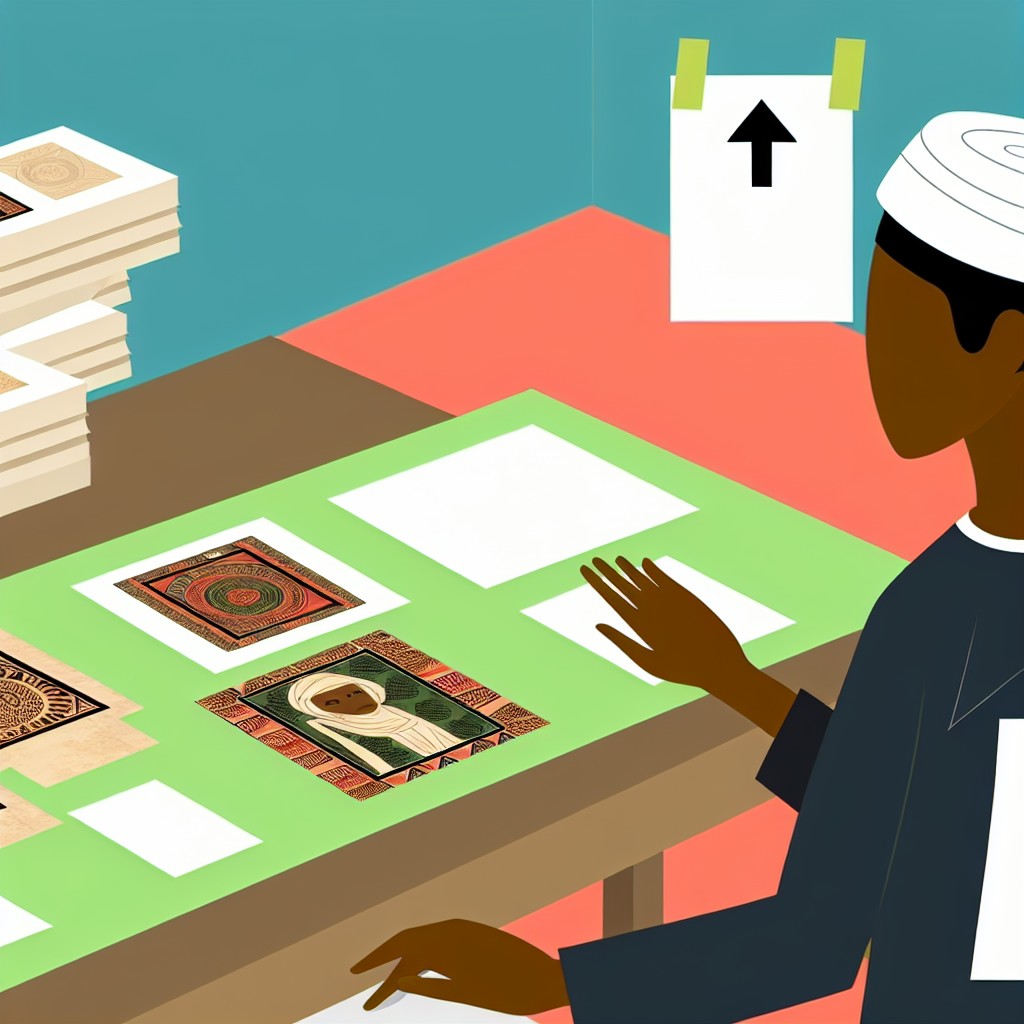
Regional Variations in Symbolism Across Different Nigerian Ethnic Groups
Yoruba Symbolism in Woodblock Prints
The Yoruba people use woodblock prints to represent spiritual and societal themes.
Symbols often include animals like the tortoise.
The tortoise signifies wisdom and cunning.
Additionally, motifs featuring the talking drum highlight communication and tradition.
Moreover, elements such as kola nuts emphasize hospitality and respect.
Artists like Adeola Afolabi integrate these symbols vividly in their craft.
Igbo Symbolism and Cultural Significance
Igbo woodblock prints prominently feature symbols related to fertility and community.
The elephant is a recurrent motif.
Explore Stunning African Digital Art Prints!
Bring the beauty of Nigeria and Africa into your space with high-quality HD digital prints. Browse our collection on Instagram, find what speaks to you, and own a masterpiece today! See something you love? Send us a message on Instagram!
View Collection on InstagramThe elephant embodies strength and leadership.
Furthermore, uli patterns often adorn prints to express feminine beauty and spirituality.
Prints created by Chibuzo Okeke showcase these traditional elements effectively.
Thus, Igbo symbolism preserves cultural identity through visual storytelling.
Hausa Symbolism and Its Unique Expressions
The Hausa ethnic group incorporates Islamic influences into their woodblock prints.
Geometric patterns dominate.
These patterns symbolize order and divine harmony.
Common symbols include calligraphic elements referring to faith and knowledge.
Notably, artisan Fatima Sani fuses traditional Hausa motifs with contemporary design.
Consequently, these prints illustrate a blend of religious devotion and cultural heritage.
Cross-Ethnic Symbolic Elements
Despite regional differences, certain symbols unite various Nigerian groups.
The sun often represents life and renewal across many ethnic designs.
Moreover, patterns depicting community gatherings indicate social unity and cooperation.
Artists such as Kelechi Nwosu emphasize these shared themes to foster national identity.
Therefore, woodblock prints serve as a bridge among Nigeria’s diverse cultures.
- Yoruba: Tortoise, talking drum, kola nut
- Igbo: Elephant, uli patterns, fertility symbols
- Hausa: Geometric patterns, calligraphy, Islamic motifs
- Shared: Sun, community gatherings, social unity
The influence of colonialism and modernity on woodblock print symbolism
Impact of Colonialism on Symbolism
Colonialism introduced new cultural dynamics to Nigerian woodblock prints.
European powers imposed their values and visuals on local art forms.
Artists began incorporating colonial motifs alongside traditional symbols.
This fusion created layered meanings within the prints.
Moreover, colonial rule affected the portrayal of power and identity.
Woodblock prints served as subtle reactions to colonial oppression.
They expressed resistance, adaptation, and cultural survival.
Likewise, some prints documented the social changes during this era.
Role of Modernity in Evolving Symbolism
Modernity brought increased urbanization and technological advances in Nigeria.
Artists adapted their symbols to reflect contemporary life and ideas.
Industrialization inspired motifs related to progress and innovation.
Additionally, modern communication introduced global influences to artists.
This exposure expanded visual vocabulary in woodblock print symbolism.
Furthermore, symbols related to nationalism and independence became prominent.
Artists celebrated Nigerian heritage while embracing a modern future.
Explore Stunning African Digital Art Prints!
Bring the beauty of Nigeria and Africa into your space with high-quality HD digital prints. Browse our collection on Instagram, find what speaks to you, and own a masterpiece today! See something you love? Send us a message on Instagram!
View Collection on InstagramWoodblock prints thus illustrate the tension between tradition and modernity.
Blending Traditional and New Symbols
Artists like Olumide Adeyemi merged ancient motifs with contemporary elements.
For example, traditional animal symbols appeared alongside industrial imagery.
This combination reflected the dual identity of Nigerians during transition.
Moreover, religious and spiritual symbols persisted despite external influences.
These served as anchors for cultural continuity within evolving contexts.
Artists balanced respect for ancestors with optimism for progress.
Consequently, woodblock prints became rich narratives of change and resilience.
Themes Emerging from Colonialism and Modernity Influence
- Identity and cultural pride amidst colonization
- Resistance and adaptation to external power
- Negotiation between traditional values and modern ideals
- Celebration of independence and national unity
- Social commentary on urbanization and industrial growth
Through these themes, woodblock prints offer profound insights.
They capture Nigeria’s complex history and evolving social fabric.
Interpreting Animal and Nature Imagery in Nigerian Woodblock Prints
Significance of Animal Symbols
Animals hold deep symbolic meanings in Nigerian woodblock prints.
Artists use animal imagery to convey cultural values and beliefs.
For example, the leopard often represents courage and strength.
Furthermore, the tortoise symbolizes wisdom and cunning in many stories.
Birds frequently stand for freedom and spiritual connection.
These symbols offer insight into the community’s worldview and traditions.
Representation of Nature Elements
Nigeria’s rich nature is prominently depicted in woodblock art.
Trees, rivers, and mountains carry spiritual and life-giving meanings.
The baobab tree, for instance, symbolizes longevity and community.
Rivers often represent fertility and the source of sustenance.
Moreover, plants like kola nuts stand for hospitality and friendship.
Thus, nature imagery deepens the narrative embedded in each print.
Connecting Symbolism to Local Stories
Animals and nature in prints often link to folklore and oral traditions.
Woodblock artists frequently draw inspiration from local myths.
These stories teach moral lessons using symbolic characters and settings.
Therefore, the prints serve as visual storytelling tools for communities.
They preserve cultural heritage and educate younger generations.
Consequently, understanding these symbols unlocks richer meanings in the art.
Common Animal and Nature Motifs in Nigerian Prints
- Elephant: Symbolizes power, wisdom, and leadership.
- Snake: Represents transformation and healing.
- Fish: Denotes abundance and adaptability.
- Sun: Signifies life and energy.
- Mandrill: Embodies protection and vigilance.
These motifs frequently appear in various regions with slight local differences.
The Role of Color and Composition in Symbolism
Colors enhance the meaning of animal and nature imagery in prints.
Explore Stunning African Digital Art Prints!
Bring the beauty of Nigeria and Africa into your space with high-quality HD digital prints. Browse our collection on Instagram, find what speaks to you, and own a masterpiece today! See something you love? Send us a message on Instagram!
View Collection on InstagramBright colors often emphasize vitality and positive traits.
In contrast, darker tones can highlight mystery or caution.
The composition guides the viewer’s attention to important symbols.
Skillful arrangements amplify the narrative and emotional impact.
Artists like Chinedu Okafor expertly blend these elements to tell vivid stories.
Contemporary Relevance of Symbolic Meanings in Modern Prints
Connection Between Tradition and Modernity
Nigerian woodblock prints continue to preserve ancient symbolic meanings in contemporary art.
Artists like Ifeoma Okoro blend traditional motifs with modern themes.
Consequently, these prints bridge cultural heritage and current societal issues.
Moreover, symbolic imagery provides a language that resonates across generations.
This connection sustains the cultural identity within an evolving artistic landscape.
Representation of Social and Political Themes
Modern prints often incorporate symbols to comment on social justice and governance.
For instance, Emeka Bassey uses traditional patterns to highlight human rights concerns.
In addition, these artworks stimulate meaningful dialogue on national unity and progress.
Thus, symbolism remains a powerful tool for advocacy and reflection in Nigerian printmaking.
Preservation Efforts for Symbolic Meanings in Woodblock Prints
Role of Artists and Collectors
Artists actively preserve symbolism by maintaining authentic techniques in their work.
Collectors like Adaeze Chukwu also support cultural preservation through dedicated acquisitions.
They promote awareness and appreciation by showcasing prints in exhibitions.
Therefore, collaboration between creators and collectors strengthens the art’s legacy.
Educational and Community Programs
Organizations such as the Lagos Printmakers Collective offer workshops on symbolic traditions.
These programs teach young artists about the meanings behind common motifs.
Furthermore, community events encourage public engagement with cultural heritage.
Consequently, educational initiatives help sustain symbolic knowledge for future generations.
Technological Innovations in Preservation
Digital archives document woodblock prints with detailed descriptions of their symbolism.
For example, Heritage Arts Hub provides online access to rare collections.
This accessibility supports research and global appreciation of Nigerian prints.
Ultimately, technology complements traditional methods in preserving these cultural treasures.
Additional Resources
Black Orpheus: Jacob Lawrence and the Mbari Club | News – Uche …