
Historical Origins of Geometric Patterns in Nigerian Art Prints
Early Cultural Influences
Nigerian art prints have deep roots in ancient cultural practices.
Early communities used symbolic geometric shapes to convey spiritual meanings.
These patterns often represented nature, ancestral stories, and societal roles.
Moreover, ethnic groups like the Yoruba and Igbo developed distinct geometric motifs.
For example, the Yoruba incorporated interlocking lines symbolizing unity and continuity.
Similarly, the Igbo crafted zigzag patterns to depict water and life energy.
Traditional Textile Practices
Textiles played a crucial role in transmitting geometric designs across generations.
Adire cloth, made by Yoruba women, features resist-dye patterns with geometric shapes.
These patterns often emerge from dots, lines, and circles arranged in repetitive sequences.
Furthermore, Hausa handwoven fabrics display grids and diamond patterns that reflect social status.
The practice of applying geometric patterns in fabrics strengthened cultural identity.
Consequently, art prints today continue to draw inspiration from these traditional textiles.
Role of Craftsmanship and Symbolism
Craftsmen historically passed down knowledge of geometric designs through apprenticeships.
They emphasized precision and balance, essential elements of striking geometric art.
Additionally, geometric patterns often carried symbolic meanings indicating protection or power.
For instance, the use of concentric circles signified spiritual wholeness among many communities.
These symbolic meanings enriched the visual appeal and cultural relevance of patterns.
Understanding these origins helps appreciate the rich heritage behind Nigerian prints.
Symbolism and Meanings Behind Common Geometric Shapes in Nigerian Designs
Triangles and Their Significance
Triangles represent strength and resilience in many Nigerian artistic traditions.
They often symbolize the connection between the physical and spiritual worlds.
Moreover, triangles indicate harmony and balance in community life.
Artists like Tope Adebayo frequently use this shape to convey protection.
Circles as a Symbol of Unity
Circles commonly signify unity and wholeness in Nigerian geometric patterns.
This shape embodies continuity and the cycle of life.
Consequently, it reflects the interconnectedness of individuals within society.
For instance, the Yoruba people use circles to represent eternity and completeness.
Squares and Their Cultural Interpretations
Squares often stand for stability and order in Nigerian art prints.
They suggest groundedness and the clarity of structure.
Therefore, squares highlight the importance of tradition and discipline.
Craftsmen such as Chuka Nwosu incorporate squares to emphasize community foundations.
Explore Stunning African Digital Art Prints!
Bring the beauty of Nigeria and Africa into your space with high-quality HD digital prints. Browse our collection on Instagram, find what speaks to you, and own a masterpiece today! See something you love? Send us a message on Instagram!
View Collection on InstagramLines and Their Varied Meanings
Lines play a dynamic role in conveying movement and direction.
Vertical lines often express growth and aspiration.
Meanwhile, horizontal lines suggest calmness and stability.
Curved lines reflect fluidity and the natural world.
Artists like Bisi Adeyemi use lines to narrate stories and transitions.
Combining Shapes to Enhance Symbolism
Designers combine geometric shapes to create complex narratives.
For example, overlapping circles and triangles represent unity in diversity.
Such combinations highlight cultural values like cooperation and strength.
This technique enriches the visual language and symbolic depth.
Consequently, Nigerian art prints communicate profound meanings through patterns.
Colors Amplifying Geometric Meanings
Colors often enhance the symbolism of geometric shapes.
Red typically conveys energy and vitality alongside triangles.
Blue accompanies circles to symbolize peace and spirituality.
Green blends with squares to represent growth and fertility.
These color-shape pairings deepen emotional and cultural resonance.
Regional Variations in Geometric Pattern Usage Across Nigeria’s Ethnic Groups
Geometric Patterns Among the Yoruba People
The Yoruba people emphasize symmetrical patterns in their art prints.
They often use interconnected circles and zigzag lines to convey unity.
Moreover, these shapes symbolize spiritual beliefs and social status.
Artists from Ibadan and Osogbo integrate repetitive triangles in textiles.
Additionally, color contrasts enhance the geometric designs’ vibrancy.
Distinctive Patterns Found in Hausa Art Prints
The Hausa artists favor linear and angular geometric motifs.
Squares and diamonds frequently appear in their cloth designs.
These shapes often represent protection and community strength.
In Kano, artisans incorporate layered geometric arrangements to depict hierarchy.
Furthermore, their use of earthy tones grounds the patterns culturally.
Geometric Motifs in Igbo Artistic Traditions
The Igbo people highly value complex, interwoven geometric patterns.
They commonly feature spirals and mesh-like grids in their prints.
These designs reflect ancestral connections and storytelling.
Enugu artisans are known for combining curves with sharp angles elegantly.
In addition, red and black colors symbolize power and fertility in their art.
Explore Stunning African Digital Art Prints!
Bring the beauty of Nigeria and Africa into your space with high-quality HD digital prints. Browse our collection on Instagram, find what speaks to you, and own a masterpiece today! See something you love? Send us a message on Instagram!
View Collection on InstagramPatterns Among the Tiv and Other Minority Groups
The Tiv community uses checkerboard and concentric circle motifs prominently.
These patterns often signify agricultural cycles and social roles.
Artists in Benue State blend geometric shapes with natural imagery skillfully.
Likewise, other minority groups incorporate angular motifs in ceremonial attire.
They use contrasting colors to highlight the geometric designs effectively.
Shared Influences and Contemporary Adaptations
Despite regional differences, many Nigerian groups share geometric visual language.
Trade and migration have influenced the diffusion of motifs across regions.
Contemporary artists like Olajide Adebowale merge traditional patterns with modern styles.
Similarly, design firms in Lagos create prints inspired by multiple ethnic patterns.
Thus, geometric art continues evolving while honoring regional heritage.
Uncover the Details: The Role of Nigerian Art in African Identity Politics
Techniques and Materials Used in Creating Geometric Patterns on Nigerian Textiles
Traditional Techniques in Pattern Making
Artisans in Nigeria use several traditional methods to create geometric patterns on textiles.
One popular technique is adire, which involves resist-dyeing with indigo to form patterns.
Additionally, batik is widely used; it incorporates wax to resist dye in specific areas.
These methods employ manual skills passed down through generations of craftsmen.
Moreover, tie-dyeing creates intricate geometric motifs using tied sections of fabric before dyeing.
Furthermore, embroidery adds details by stitching patterns directly onto the cloth.
Modern Techniques Enhancing Traditional Practices
Contemporary Nigerian textile artists increasingly blend traditional techniques with modern technology.
Screen printing allows precise repetition of geometric patterns on larger fabric surfaces.
Digital textile printing offers vibrant colors and complex designs with accuracy and speed.
Some workshops combine hand-dyeing with machine embroidery for unique textural effects.
These innovations help preserve heritage while appealing to modern markets.
Materials Commonly Used for Nigerian Geometric Textiles
Cotton is the most commonly used fabric for geometric Nigerian textiles.
Cotton’s durability and absorbency make it ideal for various dyeing techniques.
Linen occasionally appears, prized for its natural texture and strength.
Natural indigo dye remains a cornerstone in coloring, giving textiles their signature deep blues.
Other vegetal dyes extracted from leaves and roots provide a range of earth tones.
Wax, used in batik, is a key material for creating resist patterns efficiently.
Tools Utilized by Nigerian Textile Artists
Adire craftsmen use wooden stamps with carved geometric designs for pattern creation.
Hand-carved calabash stamps help produce repeated motifs on the fabric.
Explore Stunning African Digital Art Prints!
Bring the beauty of Nigeria and Africa into your space with high-quality HD digital prints. Browse our collection on Instagram, find what speaks to you, and own a masterpiece today! See something you love? Send us a message on Instagram!
View Collection on InstagramSpecial brushes apply wax carefully in batik, ensuring clear geometric lines.
Needles and threads for hand embroidery allow fine detailing and color contrasts.
Modern workshops use screen mesh and squeegees for consistent print application.
Cultural Significance of Materials and Techniques
The choice of technique often reflects regional heritage and social practices.
For example, Yoruba adire textiles symbolize status and cultural identity in their communities.
Materials like indigo dye carry spiritual and historical importance in many Nigerian societies.
Artisans honor these traditions by respecting original methods while adapting creative innovations.
Explore Further: The Spiritual and Ritualistic Elements of African Art
The Role of Geometric Patterns in Conveying Cultural Identity and Social Status
Expression of Cultural Identity through Patterns
Geometric patterns serve as a vital medium for expressing Nigerian cultural identity.
Artists incorporate distinct motifs that symbolize specific ethnic groups and traditions.
In Yoruba art, for example, patterns often reflect spiritual beliefs and historical narratives.
Additionally, these designs preserve cultural heritage by passing stories across generations.
Communities recognize and celebrate their uniqueness through these carefully crafted shapes.
Moreover, geometric patterns provide a visual language that transcends spoken dialects.
Consequently, they foster a sense of belonging and pride within diverse Nigerian societies.
Signaling Social Status and Hierarchy
Beyond identity, geometric patterns indicate social status and rank in many Nigerian cultures.
Certain patterns are reserved exclusively for royalty, chiefs, or respected elders.
These designs communicate power, prestige, and social responsibility at a glance.
For instance, intricate patterns crafted by master artisans distinguish nobility from commoners.
Also, textiles and art prints featuring specific motifs often denote membership in elite groups.
Social ceremonies utilize these patterns to reinforce hierarchy and societal roles effectively.
Therefore, geometric motifs become a subtle yet powerful symbol of authority and respect.
Symbolism and Meaning Embedded in Designs
Each geometric shape carries symbolic meaning rooted in cultural philosophy.
Triangles may represent strength and resilience across multiple Nigerian communities.
Circles often denote unity, eternity, or spiritual completeness in various traditions.
Patterns combine these shapes to tell complex stories about ancestry and values.
Artists like Chinedu Okafor integrate such symbolism into their contemporary prints thoughtfully.
In this way, geometric art bridges past and present cultural expressions dynamically.
Ultimately, these designs enrich Nigerian art by embedding identity and social messages within them.
You Might Also Like: The Use of Nature Motifs in Nigerian and African Art
Explore Stunning African Digital Art Prints!
Bring the beauty of Nigeria and Africa into your space with high-quality HD digital prints. Browse our collection on Instagram, find what speaks to you, and own a masterpiece today! See something you love? Send us a message on Instagram!
View Collection on InstagramIntegration of Geometric Patterns with Other Artistic Motifs in Nigerian Prints
Harmonizing Geometric Patterns and Traditional Symbols
Nigerian artists skillfully combine geometric patterns with traditional symbols to enrich their prints.
This fusion creates unique designs that convey cultural meanings effectively.
Moreover, it preserves the heritage embedded in indigenous artistic expressions.
For example, Adanna Okoro integrates indigo-dyed geometric shapes with symbolic motifs in her Lagos-based studio.
Her work demonstrates how patterns and symbols coexist harmoniously in visual storytelling.
Use of Color to Enhance Pattern Integration
Bright and contrasting colors highlight the complexity of geometric arrangements in Nigerian prints.
Color choices emphasize both geometric forms and other artistic motifs simultaneously.
Consequently, viewers experience a vibrant and dynamic aesthetic appeal.
Renowned textile artist Femi Ajayi uses earth tones alongside sharp geometric lines to balance tradition and modernity.
Incorporation of Nature-Inspired Elements
Nigerian prints often feature geometric designs intertwined with flora and fauna representations.
This approach reflects the close relationship between culture and the natural environment.
It also adds layers of symbolism and narrative depth to printed fabrics.
Artist Ngozi Eze beautifully merges angular patterns with leaf motifs, creating intricate and meaningful textiles.
Functional and Decorative Purposes
Geometric patterns enhance both the functionality and decorative nature of Nigerian prints.
They provide rhythm and structure, guiding the eye across various motifs.
Additionally, these designs serve ritualistic and social identity functions within communities.
Tailor and designer Sola Adeboye crafts prints where geometric patterns signify lineage and status.
Techniques for Seamless Pattern Integration
- Repeating geometric units that complement other motifs
- Overlaying translucent shapes to blend patterns distinctively
- Balancing scale between geometric and figurative elements
- Using symmetry and asymmetry strategically for visual interest
These techniques ensure a fluid and cohesive visual flow in Nigerian prints.
Uncover the Details: The Impact of Colonialism on African Art Styles
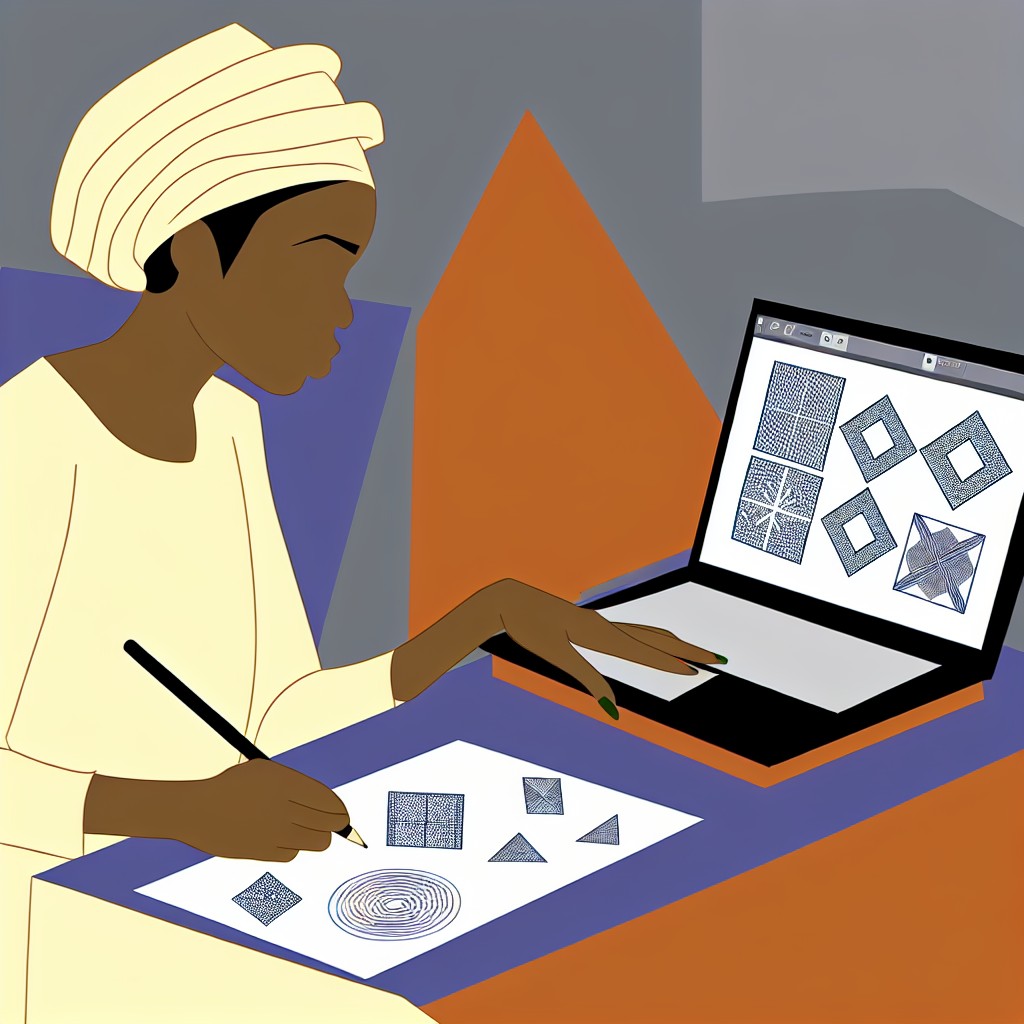
Modern Reinterpretations of Traditional Geometric Patterns by Contemporary Nigerian Artists
Blending Heritage with Innovation
Contemporary Nigerian artists actively draw inspiration from traditional geometric patterns.
They transform these patterns through new materials and techniques.
For example, painter Amina Oladipo integrates adire motifs into abstract compositions.
Similarly, sculptor Kelechi Nwosu reimagines Uli designs using metal and wood.
Consequently, these artists preserve cultural identity while embracing modernity.
Use of Technology in Artistic Expression
Many artists employ digital tools to enhance traditional patterns.
Graphic designer Funke Ayodele uses software to create vibrant print designs.
Moreover, her collections showcase layered geometric shapes inspired by Yoruba textiles.
Digital technology allows greater experimentation with scale and color.
Thus, the fusion of tradition and technology appeals to global audiences.
Symbolism and Contemporary Themes
Modern artists infuse traditional patterns with new symbolic meanings.
Explore Stunning African Digital Art Prints!
Bring the beauty of Nigeria and Africa into your space with high-quality HD digital prints. Browse our collection on Instagram, find what speaks to you, and own a masterpiece today! See something you love? Send us a message on Instagram!
View Collection on InstagramFor instance, multimedia artist Chima Eze explores urban life through geometric motifs.
His prints reflect social change while honoring ancestral aesthetics.
Additionally, textile artist Bolaji Adekunle adapts patterns to comment on environmental issues.
Therefore, geometric patterns serve as a versatile language connecting past to present.
Collaborations and Cultural Revival
Several Nigerian artists collaborate with local artisans to revive craftsmanship.
Workshops led by Tunde Salawu help merge traditional pattern making with contemporary styles.
These partnerships promote cultural heritage and support indigenous communities.
Furthermore, art collectives like Nia Prints facilitate exhibitions showcasing modernized motifs.
The revitalization fosters national pride and encourages creative innovation.
Popular Geometric Motifs and Their Reinterpretations
Farmers and traders inspired the repetitive diamond and zigzag shapes.
Contemporary artists adapt these motifs with vibrant color palettes and dynamic forms.
For example, textile designer Ifeanyi Okoye modernizes stripes and chevron patterns.
Her pieces combine asymmetry with traditional symmetry, creating fresh visual impact.
Such reinvention honors roots while pushing creative boundaries.
Influence of Geometric Patterns in Nigerian Art on African and Global Art Scenes
Impact on African Artistic Traditions
Geometric patterns in Nigerian art have shaped numerous African artistic traditions.
These patterns often carry symbolic meanings related to culture and identity.
Consequently, other African artists integrate similar motifs into their work.
This practice helps preserve cultural heritage across diverse communities.
Furthermore, geometric designs strengthen visual storytelling in African art.
They also inspire contemporary African artists to explore abstract expression.
Notably, textile and pottery makers incorporate geometric patterns extensively.
Thus, Nigerian art influences both traditional and modern African art forms.
Global Recognition and Adaptation
Nigerian geometric patterns have attracted attention from the global art community.
International galleries increasingly showcase works inspired by these designs.
This exposure elevates the appreciation of African aesthetics worldwide.
Also, designers and fashion houses adopt these patterns in clothing collections.
For example, renowned designer Ifeoma Nnaji uses Nigerian motifs in her prints.
Such adaptations help bridge cultural gaps through visual language.
Moreover, global artists collaborate with Nigerian artisans to merge techniques.
These partnerships promote cross-cultural creativity and innovation.
Explore Stunning African Digital Art Prints!
Bring the beauty of Nigeria and Africa into your space with high-quality HD digital prints. Browse our collection on Instagram, find what speaks to you, and own a masterpiece today! See something you love? Send us a message on Instagram!
View Collection on InstagramContribution to Contemporary and Urban Art Movements
Geometric patterns from Nigerian art influence urban art across continents.
Street artists in cities like Lagos and Johannesburg incorporate these elements.
Subsequently, this style spreads to international mural and graffiti scenes.
The bold lines and shapes appeal to audiences seeking vibrant narratives.
Besides, graphic designers use these motifs in branding and advertising.
This trend demonstrates the patterns’ adaptability beyond traditional media.
Artists like Emeka Anozie inspire younger creatives with this geometric legacy.
Consequently, Nigerian geometric art remains relevant and evolving in global contexts.
Cultural Exchange and Artistic Innovation
The use of geometric patterns fosters a rich cultural exchange among artists.
Workshops and exhibitions highlight common themes between Nigerian and global art.
These events encourage experimentation with patterns and materials.
Artists gain new perspectives by blending local and international styles.
For instance, fashion label Okechukwu & Sons collaborates with European designers.
Such collaborations produce innovative art prints with hybrid influences.
Therefore, geometric patterns drive both preservation and transformation of arts.
They celebrate diversity while connecting visual languages worldwide.
Geometric Patterns as a Storytelling Medium in Nigerian Visual Culture
Cultural Significance of Geometric Patterns
Geometric patterns carry deep meanings in Nigerian art prints.
They often symbolize historical events, beliefs, and social values.
Artists use shapes and lines to communicate stories across generations.
Therefore, these patterns serve not only decoration but also narrative purposes.
Notably, they connect viewers to ancestral wisdom and identity.
Visual Language and Symbolism
Each pattern represents specific symbols familiar to Nigerian communities.
Triangles, circles, and zigzags each convey different emotions and concepts.
For instance, zigzags can illustrate the journey of life and its challenges.
Circles often depict unity, wholeness, or cycles in nature.
Thus, understanding these motifs reveals deeper layers of meaning in prints.
Role in Preserving Oral Traditions
Geometric designs help preserve stories traditionally passed by word of mouth.
Visual motifs act as mnemonic devices for storytellers and learners.
As a result, these patterns maintain cultural heritage in changing times.
They bridge generational gaps when oral narratives fade or evolve.
Explore Stunning African Digital Art Prints!
Bring the beauty of Nigeria and Africa into your space with high-quality HD digital prints. Browse our collection on Instagram, find what speaks to you, and own a masterpiece today! See something you love? Send us a message on Instagram!
View Collection on InstagramConsequently, art prints become vital archives of communal histories.
Artisans as Cultural Storytellers
Artisans like Olumide Adetola skillfully encode narratives in their works.
They integrate traditional symbols with modern aesthetics.
By doing so, they keep stories alive in contemporary contexts.
Furthermore, artists educate both local and global audiences through their patterns.
Thus, Nigerian art prints promote cultural pride and understanding worldwide.
Common Themes in Geometric Storytelling
- Spiritual beliefs and cosmology
- Community values and social hierarchy
- Life cycles such as birth, growth, and death
- Historical achievements and heroic tales
These themes frequently appear in geometric compositions across regions.
Therefore, the patterns reflect the diversity and richness of Nigerian culture.
Challenges and Preservation Efforts Related to Traditional Geometric Designs in Art Prints
Threats to Traditional Geometric Designs
Traditional geometric designs in Nigerian art prints face numerous challenges today.
Modernization has caused a decline in the use of indigenous patterns.
Many young artists favor contemporary styles over traditional motifs.
Consequently, the transmission of these designs to new generations weakens.
Moreover, mass-produced prints often dilute the authenticity of geometric patterns.
Environmental factors also threaten original hand-crafted artworks.
Humidity and exposure to sunlight accelerate damage to printed fabric.
Similarly, economic constraints limit artisans’ ability to sustain traditional methods.
Efforts to Preserve Traditional Geometric Patterns
Various organizations actively work to preserve these cultural designs.
The Oyekan Art Collective offers workshops teaching traditional printing techniques.
They collaborate with local artists such as Amina Balogun to revive original patterns.
Additionally, the Institute of Nigerian Art focuses on documentation and archiving.
They collect samples and record stories behind important geometric designs.
Furthermore, digital technology assists in preserving and sharing these patterns worldwide.
Recent projects led by designers like Chinedu Eze promote these prints internationally.
Consequently, demand for authentic Nigerian geometric art prints is increasing.
Community Involvement and Education
Community programs educate youth about the importance of traditional art forms.
Local schools integrate cultural art lessons to inspire appreciation.
Workshops encourage young people to learn and create using geometric designs.
Involving elders, like artisans from the Ife region, ensures knowledge transfer.
Communities also hold annual festivals showcasing these artistic traditions.
These events boost pride and encourage preservation efforts on a wider scale.
Explore Stunning African Digital Art Prints!
Bring the beauty of Nigeria and Africa into your space with high-quality HD digital prints. Browse our collection on Instagram, find what speaks to you, and own a masterpiece today! See something you love? Send us a message on Instagram!
View Collection on InstagramCollaborative approaches strengthen the survival of traditional patterns.
Additional Resources
Onaism: An Artistic Model of Yoruba Civilization in Nigeria (Pp. 234 …