
Historical Evolution of Nigerian Sculpture
Origins and Early Traditions
Nigerian sculpture began thousands of years ago.
It rooted in indigenous cultural practices.
Ancient communities crafted sculptures using wood.
They also used terracotta and bronze.
These sculptures often represented deities.
They also portrayed ancestors and royal figures.
The sculptures served religious and social functions.
This occurred within various ethnic groups.
The Nok culture is known for terracotta figures.
It dates back to 500 BCE.
Likewise, the Ife and Benin kingdoms advanced metalworking.
They produced detailed bronzes.
Styles and Symbolism
Nigerian sculptures emphasize stylized human and animal forms.
They use symbolism to convey power.
Additionally, they express spirituality and community values.
For example, Benin bronzes portray the Oba’s authority.
They also document history.
Furthermore, sculptures often include intricate patterns.
They feature various motifs.
These artistic choices reflect spiritual beliefs.
They are central to Nigerian societies.
Transmission Through Generations
Artisans passed down sculpting techniques by apprenticeships.
Family lineages also played a key role.
This ensured continuity of style and cultural significance.
The process lasted over centuries.
Moreover, sculpture became a vital part of Nigerian identity.
Traditional festivals continue to incorporate sculptural artworks.
Influence on Contemporary Art Prints
Inspiration from Traditional Forms
Contemporary Nigerian artists draw inspiration from traditional sculptures.
They borrow shapes and themes for their work.
Artists reinterpret ancient motifs using modern printmaking.
Explore Stunning African Digital Art Prints!
Bring the beauty of Nigeria and Africa into your space with high-quality HD digital prints. Browse our collection on Instagram, find what speaks to you, and own a masterpiece today! See something you love? Send us a message on Instagram!
View Collection on InstagramFor instance, Oluwaseun Adeyemi incorporates Benin bronze patterns.
He uses them in his silkscreens.
This fusion highlights connections between heritage and innovation.
Symbolism and Narrative Techniques
Artists apply symbolism from sculptures to deepen narratives.
The prints often explore identity and history.
They also address social issues.
Consequently, they create a visual dialogue between past and present.
Tradition informs content.
Printmaking broadens artistic reach.
Techniques and Material Experimentation
Printmakers experiment with textures similar to carved surfaces.
They replicate wood grain and metal patinas.
This occurs through etching and embossing.
Additionally, this approach enhances tactile experiences.
Such techniques bridge physical sculpture and two-dimensional art.
Prominent Artists and Studios
Many Nigerian printmakers actively embrace sculptural heritage.
Notable artists like Adaobi Eze integrate Yoruba sculpture in screenprints.
Studios such as Lagos Print Collective encourage cultural exchange.
They provide platforms for emerging talents.
These platforms help explore connections between sculpture and printmaking.
Global Reception and Cultural Impact
Nigerian-inspired prints gain recognition internationally.
Collectors appreciate the blend of ancestral art and contemporary practice.
This trend promotes Nigerian cultural narratives worldwide.
Ultimately, it secures the relevance of sculpture in modern art discourse.
Key Materials and Techniques Shared Between Traditional Sculpture and Art Prints
Common Materials Used in Both Art Forms
Artists in Nigeria often select natural materials for their sculptures.
Wood remains a primary material for traditional Nigerian sculptures.
Similarly, art prints frequently utilize woodblocks for carving designs.
Moreover, clay plays an essential role in sculptural creations.
Some printmakers experiment with clay plates for unique textures.
Metal, especially bronze, is common in sculptures from Benin Kingdom.
Additionally, metal plates serve as bases for etching in printmaking.
Explore Stunning African Digital Art Prints!
Bring the beauty of Nigeria and Africa into your space with high-quality HD digital prints. Browse our collection on Instagram, find what speaks to you, and own a masterpiece today! See something you love? Send us a message on Instagram!
View Collection on InstagramNatural dyes and pigments link both crafts through vibrant color application.
For example, indigo and kola nut extracts provide rich hues in sculptures and prints alike.
Shared Techniques That Bridge Sculpture and Printmaking
Carving and Incising
Carving is fundamental in shaping Nigerian sculptures.
Artists use chisels to reveal intricate patterns on wood and stone.
Likewise, printmakers carve detailed images into woodblocks or linoleum sheets.
This shared approach creates bold, graphic expressions in both forms.
Relief and Intaglio Methods
Relief techniques raise surface designs above the background.
Traditional Yoruba carvings often emphasize relief to create depth.
Printmakers use relief printing to transfer these raised designs onto paper.
Intaglio involves incising lines below the surface, capturing fine details.
Metal sculptors use intaglio-inspired methods to add etchings on surfaces.
Surface Texturing and Patterning
Texturing enhances the tactile quality of sculptures and prints.
Artists imprint patterns using stamps or hand tools on sculpture surfaces.
Similarly, printmakers create repeating patterns with carved blocks or plates.
This technique preserves cultural motifs and symbolism across both media.
Use of Natural Pigments and Inks
Natural pigments provide authentic coloring for sculptures and prints.
Nigerian artisans prepare inks from plant extracts for printmaking.
Applying these pigments requires precise layering and drying times.
The careful process ensures longevity and vibrancy in finished artworks.
Collaborative Workshops and Knowledge Exchange
Many Nigerian artists engage in workshops blending sculpture and print techniques.
These events foster the sharing of materials and innovative methods.
Artisans like Musa Adamu emphasize experimentation across disciplines.
Workshops encourage preserving traditional skills while exploring modern applications.
Thus, they form a dynamic creative community enriching both sculpture and printmaking.
The Role of Symbolism and Motifs from Nigerian Sculpture in Art Print Designs
Cultural Significance of Nigerian Sculptural Symbols
Nigerian sculptures often carry deep cultural meanings and spiritual significance.
These symbols represent beliefs, traditions, and historical narratives of various ethnic groups.
For instance, the Yoruba and Benin peoples use motifs that embody power and protection.
Consequently, artists integrate these motifs into art prints to preserve heritage visually.
Translating Sculptural Motifs into Art Prints
Artists study traditional sculptures to capture their symbolic language accurately.
They then adapt the three-dimensional forms into two-dimensional print designs.
Explore Stunning African Digital Art Prints!
Bring the beauty of Nigeria and Africa into your space with high-quality HD digital prints. Browse our collection on Instagram, find what speaks to you, and own a masterpiece today! See something you love? Send us a message on Instagram!
View Collection on InstagramThis process involves simplifying complex shapes while maintaining symbolic essence.
Moreover, printmakers use patterns and repetition to echo the rhythm found in sculptures.
Common Symbolic Motifs and Their Meanings
- The elephant symbolizes strength and leadership across many communities.
- The snake represents transformation and rebirth, a common spiritual theme.
- Geometric patterns often denote social order and cosmic balance.
- Human figures express ancestral reverence and community identity.
Influence on Contemporary Art and Design Firms
Print studios like Lagos Artisan Press embrace these motifs in modern designs.
They collaborate with local sculptors to ensure authenticity and respect for tradition.
Therefore, their art prints resonate with both cultural pride and contemporary aesthetics.
As a result, they promote wider global appreciation of Nigerian artistry.
You Might Also Like: The Intersection of Modern and Traditional Nigerian Art
How Art Prints Preserve and Reinterpret the Cultural Narratives Found in Sculptures
Preserving Traditional Stories Through Visual Art
Artists use art prints to capture the essence of Nigerian sculptures.
These sculptures embody rich cultural stories passed down through generations.
Consequently, art prints help document these narratives in accessible forms.
Moreover, prints allow wider audiences to engage with traditional symbols and meanings.
For instance, the work of Olufemi Adewale highlights such preservation through printmaking.
Reinterpreting Sculptural Themes with Contemporary Techniques
Printmakers often reinterpret sculptural themes using modern styles and colors.
This approach breathes new life into ancient motifs while respecting original meanings.
Additionally, it connects past cultural expressions with present-day artistic conversations.
Thus, artists like Ifeoma Nkem blend traditional imagery with contemporary aesthetics effectively.
Expanding Cultural Dialogue Through Art Prints
Art prints broaden the dialogue by making cultural stories globally visible.
They invite diverse audiences to learn about Nigerian heritage and symbolism.
Furthermore, prints stimulate discussions on identity, history, and artistic innovation.
Consequently, galleries such as Lagos Art House promote works that narrate these cultural connections.
Techniques That Enhance Storytelling in Prints
Printmakers use various techniques like etching, screen printing, and woodcut.
These methods emphasize detail and texture found in sculptures.
Moreover, layering colors and patterns enriches the narrative quality of prints.
Artists carefully choose materials to maintain the authenticity of original stories.
Role of Collaboration in Cultural Preservation
Sculptors and printmakers often collaborate to share knowledge and skills.
Such partnerships help maintain the integrity of cultural narratives during reinterpretation.
They also encourage innovation while honoring the roots of traditional forms.
For example, the collaboration between Adeola Akinyemi and Amaka Okafor resulted in compelling printed editions.
Learn More: The Use of Geometric Patterns in Nigerian Art Prints
Prominent Nigerian Sculptors Whose Works Inspire Modern Art Prints
Uchechukwu Okoro: Bridging Tradition and Contemporary Art
Uchechukwu Okoro emphasizes traditional Igbo motifs in his sculptures.
Explore Stunning African Digital Art Prints!
Bring the beauty of Nigeria and Africa into your space with high-quality HD digital prints. Browse our collection on Instagram, find what speaks to you, and own a masterpiece today! See something you love? Send us a message on Instagram!
View Collection on InstagramHis expressive forms translate beautifully into modern art prints.
Consequently, many print artists incorporate his organic shapes and textures.
This blend captures cultural heritage while appealing to current aesthetics.
Funmi Adewale: Innovator of Symbolic and Abstract Forms
Funmi Adewale creates symbolic sculptures rooted in Yoruba mythology.
Her work inspires vibrant, symbolic motifs in contemporary prints.
Moreover, her distinctive use of negative space influences print composition.
Artists frequently adapt her storytelling techniques into print media.
Emeka Nwosu: Exploring Identity Through Sculptural Forms
Emeka Nwosu explores African identity via figurative sculpture.
His dynamic figures provide bold imagery for modern print artworks.
Subsequently, printmakers echo his themes of resilience and culture.
They often replicate his textured surfaces using layered printing techniques.
Essien Etim: Fusion of Traditional Craft with Modern Expression
Essien Etim integrates traditional craft skills into his contemporary sculptures.
This fusion translates well into intricate patterns for art prints.
Because of this, print artists emulate his detailed textures and forms.
Ultimately, his work bridges craft heritage and graphic art innovation.
Influence of Nigerian Sculpture on Contemporary Art Prints
Nigerian sculptors inspire print artists by offering rich visual language.
Their focus on cultural symbols enriches print design narratives.
Print artists benefit from adapting three-dimensional motifs into two-dimensional forms.
This adaptation introduces new depths and meanings to contemporary art prints.
- Use of traditional patterns in bold print colors
- Adoption of symbolic shapes to convey stories visually
- Translation of tactile textures into visual textures for prints
Discover More: The Role of Nigerian Art in African Identity Politics
The Impact of Regional Sculptural Styles on the Diversity of Nigerian Art Prints
Influence of Indigenous Sculptural Traditions
Regional sculptural styles strongly influence the themes found in Nigerian art prints.
The intricate forms of Yoruba bronzes inspire detailed patterns in many prints.
Moreover, the bold lines of Igbo wooden carvings shape the graphic elements artists use.
Consequently, these regional traditions enrich printmaking with unique cultural narratives.
Distinct Characteristics from Major Artistic Regions
The Benin Kingdom’s sculptural heritage adds historical depth to contemporary prints.
Likewise, the Nupe’s geometric motifs bring abstract and symbolic qualities to the medium.
Furthermore, the Tiv’s sculptural aesthetics contribute rhythmic and repetitive designs.
These diverse styles combine to make Nigerian art prints vibrant and varied.
Transmission of Sculptural Motifs into Printmaking
Artists study local sculptures to extract meaningful motifs for their prints.
They often adapt three-dimensional forms into two-dimensional visual language.
Explore Stunning African Digital Art Prints!
Bring the beauty of Nigeria and Africa into your space with high-quality HD digital prints. Browse our collection on Instagram, find what speaks to you, and own a masterpiece today! See something you love? Send us a message on Instagram!
View Collection on InstagramThus, sculptural elements serve as a bridge connecting past and present artistic expressions.
Examples of Sculptural Influence in Contemporary Prints
Chinedu Eze’s prints frequently showcase patterns inspired by Igbo masks.
Similarly, Amaka Okonkwo incorporates Yoruba sculptural symmetry into her compositions.
Additionally, prints from Lagos-based studio Kemi Artworks highlight Benin royal iconography.
These cases illustrate how sculptural heritage enhances print diversity and cultural expression.
Cultural Significance of Regional Diversity
Nigeria’s multiple ethnic groups contribute to a rich artistic ecosystem.
Therefore, regional sculptural styles encourage printmakers to explore varied visual vocabularies.
This diversity helps preserve cultural identities through contemporary media.
Ultimately, regional sculptural influence makes Nigerian art prints a dynamic cultural dialogue.
See Related Content: The Spiritual and Ritualistic Elements of African Art
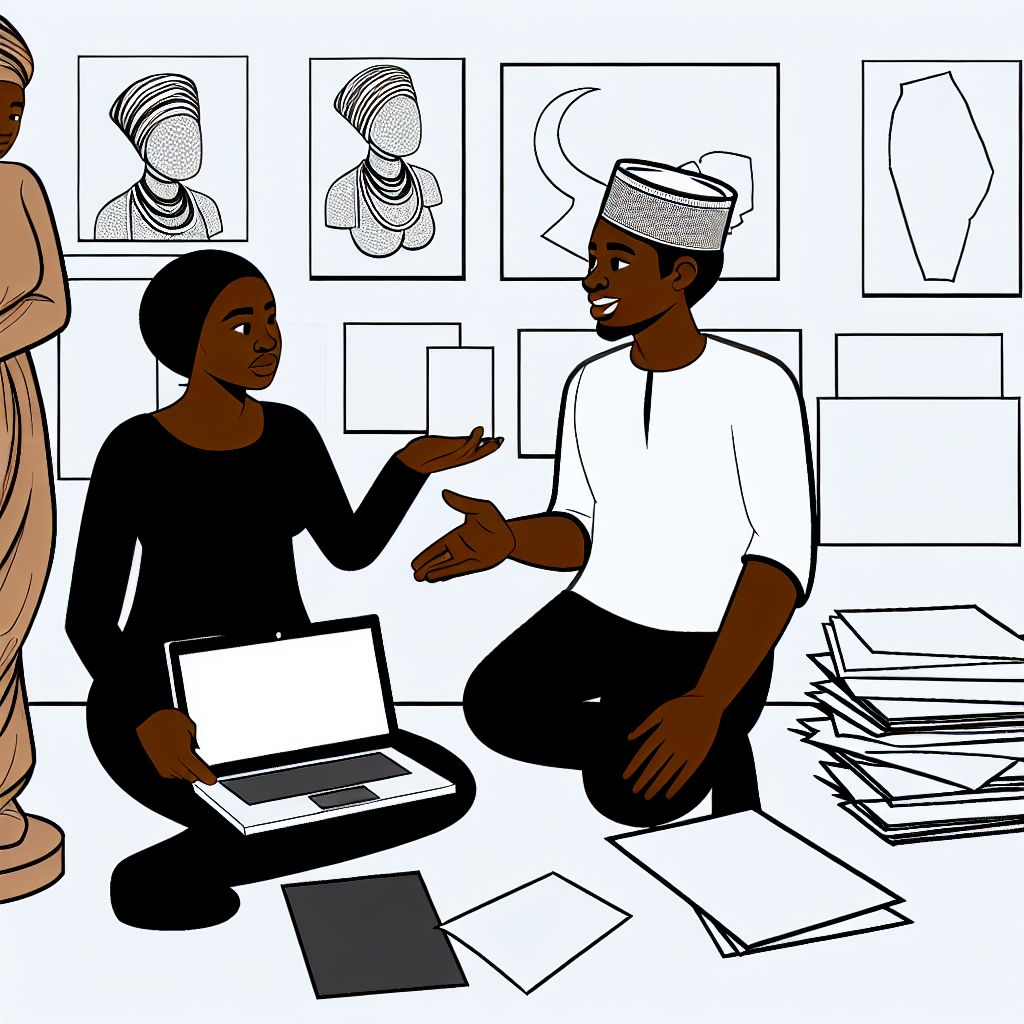
The Integration of Three-Dimensional Sculptural Elements into Two-Dimensional Prints
Exploring the Influence of Nigerian Sculpture on Printmaking
Nigerian sculpture inspires printmakers to rethink traditional two-dimensional approaches.
Artists study the tactile qualities of sculpture and translate them into printed textures.
Through this, they capture a sense of depth and volume on flat surfaces.
Moreover, this blending expands the visual vocabulary of contemporary print art.
Techniques Leveraging Sculptural Forms in Prints
Relief printing techniques often mimic the raised surfaces found in sculptures.
Printmakers like Chinedu Okeke utilize carved blocks to replicate sculptural lines.
These blocks produce shadows and highlights that evoke a three-dimensional effect.
Additionally, embossing techniques add physical texture to paper prints.
Combined, these methods create illusions of form and solidity.
Material Choices Enhancing Sculptural Qualities
Artists select thick papers and mixed media to support dimensional impressions.
For example, Ifeoma Arinze incorporates fabric and collage into print layers.
This approach strengthens the sculptural illusion within the two-dimensional work.
Furthermore, natural pigments and textured inks enrich the sensory experience.
The Role of Conceptual Integration
Many Nigerian printmakers embed cultural symbolism found in traditional sculpture.
This connection highlights spiritual and communal narratives in their art.
By doing so, prints transcend simple imagery and invite deeper reflection.
Hence, sculptural concepts expand the expressive potential of printmaking.
Contemporary Collaborations and Innovations
Studios like Lagos Art Collective foster exchanges between sculptors and printmakers.
Artists experiment jointly to merge dimensionality and printed imagery.
These collaborations spark new forms that challenge artistic boundaries.
Explore Stunning African Digital Art Prints!
Bring the beauty of Nigeria and Africa into your space with high-quality HD digital prints. Browse our collection on Instagram, find what speaks to you, and own a masterpiece today! See something you love? Send us a message on Instagram!
View Collection on InstagramConsequently, Nigerian art continues evolving through this interdisciplinary dialogue.
Cultural Significance of Sculpture in Nigerian Societies and Its Reflection in Printmaking
Role of Sculpture in Nigerian Cultural Traditions
Nigerian sculptures embody the spiritual and social values of many ethnic groups.
For instance, the Yoruba people use sculptures to represent deities and ancestors.
Moreover, the Igbo society creates masks and statues for rituals and festivals.
These sculptures often convey stories, beliefs, and histories passed down orally.
Thus, sculpture serves as a vital link between past and present generations.
Additionally, it reinforces communal identity and spiritual connection.
Symbolism and Themes in Traditional Nigerian Sculpture
Traditional sculptures contain richly layered symbols related to power, fertility, and protection.
The use of specific animals or patterns expresses cultural values and cosmology.
Furthermore, human figures often display idealized traits to embody virtues.
This symbolic language allows artists to communicate complex ideas visually.
Consequently, these sculptures function as more than decorative objects; they educate and inspire.
Printmaking as a Modern Reflection of Sculptural Heritage
Contemporary Nigerian printmakers draw inspiration from traditional sculpture motifs.
Artists like Amina Oladipo incorporate sculptural elements into their prints.
They adapt forms and symbols to express current social and political themes.
Moreover, prints offer a reproducible medium to spread cultural narratives widely.
This transition demonstrates how art evolves while preserving heritage.
Printmaking also encourages dialogue between traditional and urban art scenes.
Techniques Linking Sculpture and Printmaking
Sculptural forms influence the textures and compositions found in Nigerian prints.
For example, relief printing mimics carving methods used in wood or ivory sculptures.
Artists use layered patterns to simulate three-dimensional effects on flat surfaces.
Additionally, the tactile quality of sculptures inspires the use of bold lines in prints.
These technical overlaps create visual continuity across different media.
Impact of Cultural Significance on Contemporary Nigerian Artists
Many contemporary artists express pride in their sculptural roots through prints.
They reaffirm cultural identity by blending traditional and modern aesthetics.
Prints thus become a platform for cultural preservation and innovation.
Gallery owners like Tunde Oladiran champion artists who explore this connection.
This recognition helps elevate Nigerian art on international stages.
Comparative Analysis of Aesthetic Principles in Nigerian Sculpture and Art Prints
Use of Form and Shape
Nigerian sculpture emphasizes organic and fluid forms.
Artists often incorporate abstracted human and animal figures.
Explore Stunning African Digital Art Prints!
Bring the beauty of Nigeria and Africa into your space with high-quality HD digital prints. Browse our collection on Instagram, find what speaks to you, and own a masterpiece today! See something you love? Send us a message on Instagram!
View Collection on InstagramIn contrast, art prints tend to feature more geometric and defined shapes.
Both art forms value expressive contours that convey meaning.
Consequently, these shapes create a dynamic visual rhythm in the artwork.
Color and Texture
Nigerian sculptures use natural materials to produce earthy textures.
Wood and bronze surfaces exhibit tactile depth and character.
Meanwhile, art prints employ vibrant colors and flat textures.
This contrast allows prints to explore bold visual narratives effectively.
Nonetheless, both embrace color symbolism to communicate cultural stories.
Symbolism and Cultural Significance
Nigerian sculptures often carry spiritual and ancestral symbolism.
They represent social status, mythology, and community values.
Similarly, art prints incorporate symbolic imagery drawn from folklore.
Printmakers use repeated motifs to highlight cultural heritage.
Thus, both art forms serve as vital expressions of identity and tradition.
Composition and Balance
Sculptors carefully balance asymmetry to evoke movement and life.
This balance contrasts with the symmetrical compositions common in prints.
Prints often employ deliberate repetition to create harmony.
Artists achieve equilibrium to engage the viewer’s eye in both cases.
Therefore, composition plays a crucial role in the effectiveness of both.
Integration of Tradition and Innovation
Nigerian sculptors blend ancestral techniques with contemporary influences.
They innovate while respecting cultural and historical frameworks.
Similarly, printmakers merge classic styles with modern digital methods.
Both approaches result in artworks that bridge past and present.
Consequently, this fusion enriches the aesthetic appeal of their work.
Contemporary Artists Bridging Sculpture and Print Media
Innovative Approaches in Nigerian Art
Nigerian artists increasingly combine sculpture and printmaking to push creative boundaries.
This fusion allows them to explore new visual and tactile experiences.
Notably, artists like Adebayo Ogunleye and Ifeoma Chukwu integrate carved forms with layered prints.
Consequently, their works challenge traditional separations between two-dimensional and three-dimensional art.
Moreover, this approach enriches Nigeria’s art scene by blending heritage and modernity.
Techniques That Link Sculpture and Prints
Several techniques enable artists to merge these distinct media effectively.
For instance, relief printing often draws on sculptural textures for impression.
Explore Stunning African Digital Art Prints!
Bring the beauty of Nigeria and Africa into your space with high-quality HD digital prints. Browse our collection on Instagram, find what speaks to you, and own a masterpiece today! See something you love? Send us a message on Instagram!
View Collection on InstagramSimilarly, embossing and etching replicate the depth found in sculptures.
Furthermore, mixed media pieces use sculptural materials alongside print elements.
These methods create a dynamic dialogue between form and surface.
Influence on the Nigerian Art Landscape
These innovations open fresh opportunities for emerging Nigerian artists.
They attract broader audiences eager to experience multidimensional art.
Gallery spaces, such as Lagos’ Terra Kulture, actively promote such interdisciplinary works.
As a result, Nigerian art gains international recognition for its inventive spirit.
Ultimately, the blend of sculpture and printmaking forms a vibrant creative expression.
Additional Resources
BMA Debuts New Suite of Paintings by Acclaimed Artist Njideka …