
Historical Origins and Cultural Significance of African Masks
Roots and Traditions of African Mask-Making
African masks originate from diverse ethnic groups across the continent.
Their creation dates back centuries and reflects rich cultural histories.
Traditionally, these masks serve ritualistic, spiritual, and ceremonial purposes.
For example, the Dogon people of Mali craft masks for funeral rites.
Similarly, the Yoruba use masks to honor ancestors and deities.
Moreover, the Baule of Ivory Coast incorporate masks in harvest festivals.
Mask-making often involves skilled artisans using natural materials like wood and fibers.
Consequently, each mask embodies community values, beliefs, and cosmology.
Functions and Meanings Embedded in Masks
African masks symbolize connections between the physical and spiritual worlds.
They often represent spirits, animals, or mythical beings pivotal to local lore.
During ceremonies, masks facilitate communication with ancestors and spirits.
Additionally, they serve social functions such as enforcing laws or teaching morals.
In some cultures, masks protect communities from evil or misfortune.
Furthermore, masks can mark significant life events like initiations or marriages.
Thus, their use extends beyond aesthetics to social cohesion and identity.
Regional Variations and Characteristics
Africa’s vast geography produces a wide variety of mask styles and designs.
West African masks often feature bold geometric patterns and symbolic colors.
For instance, the Bamileke masks of Cameroon display elaborate feather decorations.
Central African masks, such as those from the Fang tribe, emphasize expressive facial features.
Meanwhile, East African masks tend to be less common but hold unique tribal significance.
Despite differences, most masks share a strong link to ancestral reverence.
Consequently, each region’s masks reflect specific cultural narratives and artistic techniques.
Preserving Mask Traditions in Contemporary Times
Many African communities actively preserve mask-making traditions today.
Museum curators like Amina Diawara advocate for authentic cultural representation.
They emphasize the importance of traditional methods over mass production.
Artisans pass down skills through generations to sustain cultural heritage.
Moreover, festivals celebrating masks attract global interest and tourism.
However, modernization and globalization pose challenges to these customs.
Therefore, initiatives support education and cultural pride to safeguard these arts.
Symbolism and Meanings Behind Traditional African Mask Designs
Cultural Significance of African Masks
African masks represent spiritual and societal values within many communities.
Explore Stunning African Digital Art Prints!
Bring the beauty of Nigeria and Africa into your space with high-quality HD digital prints. Browse our collection on Instagram, find what speaks to you, and own a masterpiece today! See something you love? Send us a message on Instagram!
View Collection on InstagramThey often symbolize ancestors, spirits, or mythological beings important to tribes.
Consequently, these masks serve as bridges between the physical and spiritual realms.
Many cultures use masks during rituals to communicate with supernatural forces.
This tradition reinforces the community’s connection with their heritage and beliefs.
Common Symbols and Their Interpretations
Traditional mask designs include geometric patterns that hold specific meanings.
For example, zigzag lines often depict water, energy, or a life force.
Similarly, spiral motifs can symbolize growth, transformation, or spiritual journeys.
Animal traits on masks convey qualities such as strength, wisdom, or protection.
Thus, the choice of symbols communicates a deeper story beyond the mask’s appearance.
Materials and Their Symbolic Roles
Mask makers select materials based on their cultural and spiritual significance.
Wood is the most common material and represents life and growth.
Metals like brass or copper often denote wealth, power, or divine connection.
Fibers and fabrics may symbolize fertility, femininity, or seasonal cycles.
Furthermore, the process of creating a mask carries its own symbolic meaning of transformation.
Regional Variations in Mask Symbolism
Different African regions emphasize unique symbols tailored to local beliefs.
West African masks frequently highlight social hierarchy and moral values.
Central African masks often focus on ancestral worship and initiation rites.
East African designs may incorporate themes of fertility and protection from evil spirits.
These regional distinctions enrich the diversity and depth of African mask symbolism.
Role of Masks in Storytelling and Communication
African masks act as visual storytelling tools within oral traditions.
They embody characters from folktales, historical events, and myths.
Through dance and performance, masks convey lessons and cultural morals.
This usage preserves history and educates younger generations effectively.
As a result, masks are vital to maintaining cultural continuity across time.
The Role of African Masks in Rituals, Ceremonies, and Storytelling
Significance of Masks in Rituals
African masks serve as sacred objects during various rituals.
They help connect communities to spiritual forces and ancestors.
Ritual leaders often wear masks to embody supernatural beings.
Through masks, people express collective beliefs and values.
Moreover, masks channel energy believed to influence events and nature.
Use of Masks in Ceremonial Practices
Ceremonies incorporate masks to mark important life stages.
Explore Stunning African Digital Art Prints!
Bring the beauty of Nigeria and Africa into your space with high-quality HD digital prints. Browse our collection on Instagram, find what speaks to you, and own a masterpiece today! See something you love? Send us a message on Instagram!
View Collection on InstagramFor instance, initiation rites use masks to symbolize transformation.
Harvest festivals also feature masks to celebrate abundance and fertility.
Community members participate actively, wearing masks during dances.
These performances strengthen social bonds and cultural identity.
Masks as Tools for Storytelling
Masks play a vital role in oral traditions and storytelling.
They visually represent characters from myths and legends.
Storytellers use masks to captivate audiences and convey morals.
This method preserves history and educates younger generations effectively.
Consequently, masks enrich the cultural heritage through vivid narratives.
Common Types of African Masks Used in These Contexts
- Spirit masks embody ancestors and deities.
- Animal masks symbolize traits like strength or wisdom.
- Figurative masks depict human faces or abstract forms.
- Geometric masks employ shapes to convey symbolic meanings.
Each mask type has distinct roles in rituals, ceremonies, or stories.
Uncover the Details: The History of Nigerian Textile Art and Printmaking
Early Western Exposure to African Masks and Their Art
Introduction to African Masks in Europe
In the early 20th century, European artists first encountered African masks during colonial exhibitions.
These artifacts fascinated artists and collectors who sought new sources of inspiration.
Consequently, African masks gained attention beyond ethnographic circles and entered the art world.
Major cities like Paris and London hosted displays featuring African art objects from diverse regions.
As a result, artists began to explore the formal qualities and symbolic meanings of these masks.
Influence on Prominent Western Artists
Pablo Picasso was among the earliest artists to incorporate African mask aesthetics into his work.
His visit to the Musée d’Ethnographie du Trocadéro exposed him to many African masks and sculptures.
Following this, Picasso’s Cubist phase showed clear inspiration from the geometric and abstract designs.
Similarly, German expressionist Ernst Ludwig Kirchner admired the emotive power of African masks.
Henri Matisse also collected African art, which influenced his use of simplified shapes and vivid colors.
Art Exhibitions and Publications Promoting African Masks
The 1910s and 1920s witnessed several influential exhibitions showcasing African masks in Europe.
Galerie Barbazanges-Hodebert in Paris played a pivotal role in introducing African art to modernist audiences.
Art critics like Guillaume Apollinaire wrote extensively about the radical impact of African aesthetics.
Furthermore, illustrated journals helped disseminate images and interpretations of African masks widely.
This growing exposure encouraged artists to reconsider their approaches to form and representation.
Impact on Art Movements and Printmaking
The abstraction and stylization found in African masks inspired developments in Cubism and Fauvism.
Modern printmakers incorporated these visual elements into linocuts, woodcuts, and etchings.
Artists such as Diego Rivera blended African motifs with other indigenous influences in their prints.
Consequently, the synthesis of African mask aesthetics advanced the experimentation in modern art prints.
Explore Stunning African Digital Art Prints!
Bring the beauty of Nigeria and Africa into your space with high-quality HD digital prints. Browse our collection on Instagram, find what speaks to you, and own a masterpiece today! See something you love? Send us a message on Instagram!
View Collection on InstagramThese encounters broadened Western conceptions of artistic expression and cultural value.
Find Out More: The Process of Making Handcrafted Nigerian Art Prints
Influence of African Mask Aesthetics on Key Modern Art Movements
Impact on Cubism
African masks inspired many Cubist artists throughout the early twentieth century.
Artists like Pablo Picasso and Georges Braque studied mask forms closely.
They admired the geometric shapes and abstract qualities of these masks.
Consequently, these elements shaped Cubism’s fragmented and multi-perspective style.
Picasso’s famous work, Les Demoiselles d’Avignon, reflects this influence strongly.
The mask-like faces in the painting reveal clear inspiration from African tribal art.
Therefore, African masks helped Cubists break from classical Western representation.
Role in Surrealism
Surrealists found African mask aesthetics deeply fascinating and evocative.
These masks represented mysticism, spirituality, and the unconscious mind to them.
Artists such as Max Ernst and André Masson incorporated mask-inspired imagery in their prints and paintings.
The abstract and symbolic nature of African masks fueled Surrealism’s dreamlike qualities.
Moreover, the masks’ emphasis on transformation resonated with surrealistic themes.
Thus, African masks enriched Surrealism by introducing powerful visual metaphors.
Shared Aesthetic Features Adopted
Both Cubism and Surrealism embraced simplified and abstracted facial features from masks.
They also valued bold lines and stylized geometric patterns common in African art.
Another shared element was an emphasis on expressive, rather than realistic, representation.
Artists borrowed the mask’s ability to convey multiple meanings simultaneously.
This approach challenged traditional European artistic values and perspectives.
Notable Artists Influenced by African Masks
Pablo Picasso examined African masks extensively and integrated their forms.
Georges Braque adapted mask-like fragmentation in his Cubist prints.
Henri Matisse collected African art and reflected its influence in his color choices.
Max Ernst incorporated mask motifs to explore subconscious imagery.
André Masson used African-inspired forms to evoke primal instincts.
Lasting Legacy in Modern Art Prints
African mask aesthetics continue to inspire printmakers and contemporary artists.
They offer dynamic visual language that blends abstraction and symbolism.
Contemporary print artists incorporate mask-inspired geometry to challenge perspectives.
Hence, African masks remain a vital source of creativity and innovation.
Learn More: How Art Prints Influence Nigerian Political and Social Movements
Incorporation of African Mask Motifs in Contemporary Art Prints and Graphic Design
Revitalizing Cultural Heritage through Modern Design
African mask motifs have significantly inspired contemporary artists and designers worldwide.
These motifs bring a unique blend of history, symbolism, and aesthetic appeal to modern creations.
Graphic designers integrate these motifs to communicate cultural narratives effectively.
Moreover, these elements infuse authenticity and depth into art prints and digital media.
Art studios like Mirembe Creative Blend in Nairobi actively incorporate traditional mask patterns.
Explore Stunning African Digital Art Prints!
Bring the beauty of Nigeria and Africa into your space with high-quality HD digital prints. Browse our collection on Instagram, find what speaks to you, and own a masterpiece today! See something you love? Send us a message on Instagram!
View Collection on InstagramAs a result, their work resonates with both local and global audiences.
Techniques Used to Adapt Mask Elements in Graphic Design
Designers often abstract key features from African masks to suit contemporary styles.
They use bold lines, geometric shapes, and vibrant color schemes inspired by mask artistry.
Software tools like Adobe Illustrator facilitate the transformation of these motifs into digital formats.
Furthermore, layering and texture techniques mimic the tactile qualities of original masks.
Collaborations between artists like Amina Kouyate and printmakers enhance cross-cultural aesthetics.
These partnerships promote innovation while honoring traditional craftsmanship.
Applications in Modern Art Prints
Contemporary art prints featuring African mask motifs often explore themes of identity and spirituality.
Gallery exhibitions by Carlos Mbayo showcase prints blending mask symbolism with urban visuals.
Limited edition prints appeal to collectors interested in culturally rich and contemporary expressions.
Art print companies, such as Nia Prints in Accra, specialize in producing these culturally inspired pieces.
They also experiment with mixed media to create dynamic visual experiences.
This fusion attracts a diverse audience keen on authentic yet modern artwork.
Impact on Branding and Commercial Graphic Design
Brands increasingly incorporate African mask designs to emphasize heritage and uniqueness.
For instance, Umoja Apparel uses mask motifs in logos and packaging design.
This strategy builds strong brand identities rooted in African cultural pride.
Additionally, mask elements help brands differentiate themselves in competitive markets.
Advertising campaigns by firms like Kente Creative Agency highlight these motifs to evoke emotion.
Consequently, design choices inspired by African masks boost consumer engagement and loyalty.
Challenges and Ethical Considerations in Using African Mask Motifs
Designers must respect the cultural significance of African masks to avoid misappropriation.
Collaborating with local artisans ensures authentic representation and benefit sharing.
Companies like Theba Art Collective promote ethical partnerships and fair compensation.
Transparency in sourcing and creative credits fosters trust within artistic communities.
These practices encourage sustainable use of cultural symbols in modern art and design.
Discover More: How Nigerian Art Prints Preserve Indigenous Languages
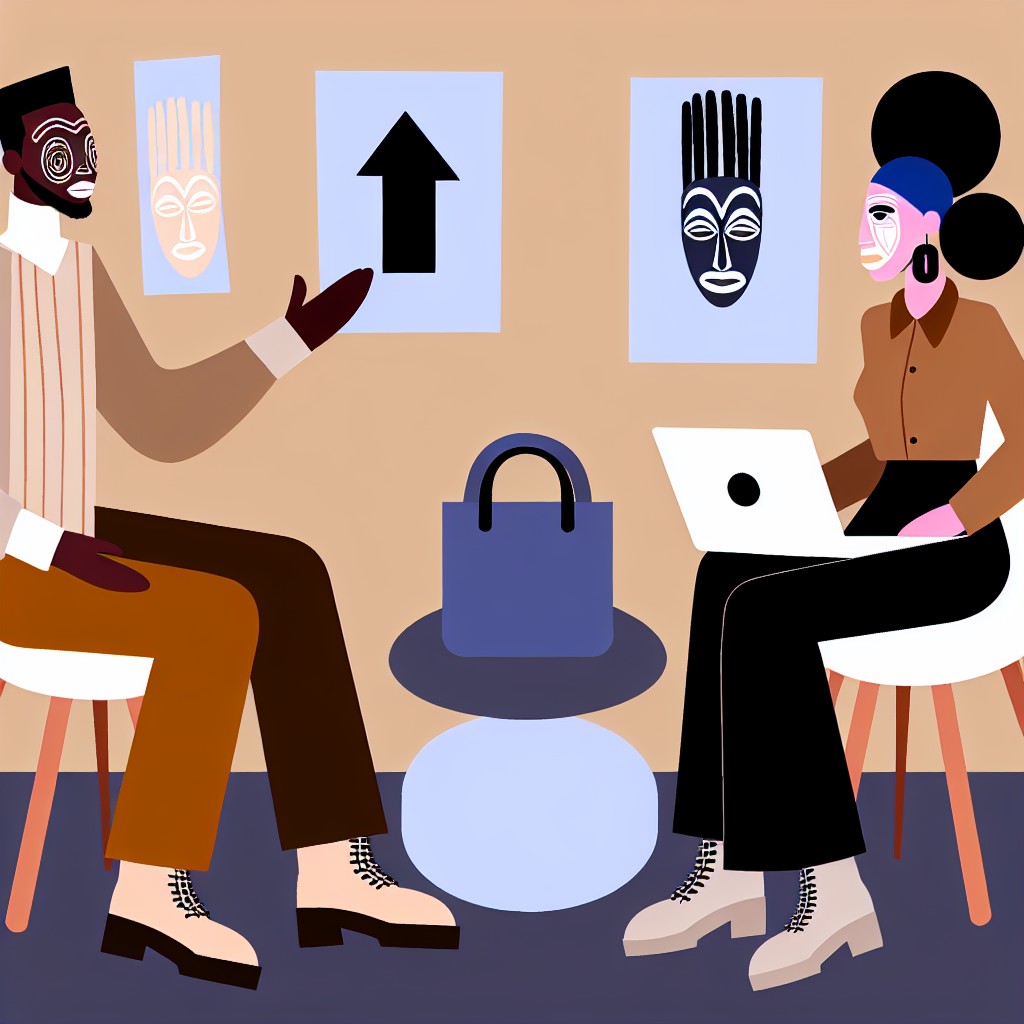
Techniques and Materials in African Mask-Making Reflected in Modern Art Print Media
Traditional Techniques Influencing Printmaking Processes
African mask makers use carving as a primary technique to create intricate forms.
Modern print artists often incorporate carved woodblocks to achieve texture.
The detail in masks inspires the precision seen in linocut prints.
Layering techniques found in masks influence multi-layered screen prints.
Printmakers like Lillian Obasa utilize these traditional methods to enrich contemporary prints.
Explore Stunning African Digital Art Prints!
Bring the beauty of Nigeria and Africa into your space with high-quality HD digital prints. Browse our collection on Instagram, find what speaks to you, and own a masterpiece today! See something you love? Send us a message on Instagram!
View Collection on InstagramAuthentic Materials Inspiring Modern Print Textures
Wood remains the predominant material in African masks, notable for its natural grain.
This wood texture translates into print media through relief printing techniques.
African artists use natural pigments derived from plants and earth.
Artists such as Marcellus Adeyemi reproduce these earthy colors in their print palettes.
The use of raffia and fibers in masks influences mixed-media print textures.
Print workshops like the AfroPrint Studio incorporate these organic materials for tactile effects.
Symbolic Forms and Patterns Driving Visual Language
African masks display symbolic geometric patterns with deep cultural meaning.
Contemporary printmakers replicate these intricate motifs to convey similar symbolism.
Josephine Owusu integrates traditional patterns into her limited edition prints.
Patterns such as zigzags and spirals enhance the visual rhythm in modern artworks.
The dialogue between mask symbolism and print design enriches artistic narratives.
Collaborations Bridging Traditional Craft and Modern Art
Collaborations between African artisans and printmakers foster creative exchanges.
Artists like Kwame Adebayo partner with print studios to blend mask-making with print media.
These partnerships promote respect for cultural heritage within contemporary art.
Workshops often include hands-on mask carving alongside printmaking demonstrations.
Such initiatives help preserve traditional skills by adapting them to new artistic forms.
Contemporary African Artists Reinterpreting Traditional Masks in Modern Prints
Innovative Approaches to Traditional Mask Motifs
Contemporary African artists actively engage with traditional mask symbolism in their prints.
Amina Okoro blends classic designs with modern abstract styles.
Her work merges cultural heritage and contemporary artistic expression seamlessly.
Kwame Mensah uses bold colors and geometric forms inspired by ancestral masks.
These adaptations give new life to ancient motifs in a modern context.
Artists explore innovative techniques such as screen printing and digital layering.
Therefore, prints become vibrant reflections of cultural identity and personal creativity.
Preserving Cultural Stories Through Printmaking
Many artists emphasize storytelling as a core element in their prints.
Thandiwe Dlamini incorporates narratives linked to mask ceremonies.
These stories communicate traditions that masks historically embodied.
This practice keeps important cultural memories alive and relevant.
Prints serve as accessible art forms for global audiences.
Thus, they promote broader appreciation of African cultural heritage worldwide.
Leading Studios and Collaborative Projects
Studios such as the Sankofa Print Collective support artists merging tradition with modernity.
Explore Stunning African Digital Art Prints!
Bring the beauty of Nigeria and Africa into your space with high-quality HD digital prints. Browse our collection on Instagram, find what speaks to you, and own a masterpiece today! See something you love? Send us a message on Instagram!
View Collection on InstagramThis group fosters collaboration among printmakers from various African countries.
Diverse perspectives emerge on the significance of mask imagery today.
Exhibitions led by these studios showcase innovative work blending the old and new.
Additionally, partnerships with international galleries increase the visibility of these prints.
Techniques and Materials in Modern African Mask Prints
Artists experiment with a range of materials to reinterpret masks in their prints.
They often combine traditional hand-printing methods with contemporary digital tools.
Samuel Ncube uses linocut prints augmented by digital effects.
Artists utilize recycled materials to emphasize sustainability themes.
The tactile quality of prints links viewers to both history and innovation.
Future Directions in African Mask Inspired Prints
The future promises even more exciting evolution in this artistic genre.
Emerging talents like Lulu Balewa embrace virtual reality to expand mask representations.
New platforms enable artists to reach global audiences instantly.
Thus, traditional African masks continue inspiring vibrant modern creative expressions.
Cross-cultural Exchanges and the Global Appreciation of African Mask-Inspired Art
Roots of Cross-cultural Influence
African masks represent diverse cultural traditions from various ethnic groups.
Artists worldwide have drawn inspiration from these unique forms and symbolism.
Consequently, African mask aesthetics influenced major art movements such as Cubism and Surrealism.
Notably, Mario Sanchez, a Spanish painter, incorporated mask-like features in his modern prints.
Moreover, galleries like the Lumen Art House in Cape Town promote such cross-cultural artworks actively.
Global Platforms Elevating African Mask-Inspired Art
International exhibitions facilitate the sharing of African artistic heritage with wider audiences.
For example, the Global Contemporary Art Fair in Berlin showcased prints inspired by traditional masks.
These platforms encourage dialogue between African artists and their global peers.
Additionally, art collectors worldwide increasingly seek prints that reflect African cultural elements.
Consequently, companies like Meridian Prints in New York specialize in distributing African mask-inspired art.
Impact on Contemporary Printmakers
Contemporary printmakers appreciate the rich symbolism found in African mask designs.
Many artists, including Felicia Mbaye from Senegal, reinterpret these motifs with modern techniques.
They use vibrant colors, abstract forms, and mixed media to emphasize cultural fusion.
Furthermore, educational institutions like the Elysian School of Art offer courses on African influences in printmaking.
This knowledge exchange fuels ongoing creativity and respect for African artistic traditions.
Benefits of Cross-cultural Artistic Appreciation
Cross-cultural appreciation fosters mutual respect and understanding among diverse communities.
It broadens artistic perspectives and encourages experimentation with new styles.
Explore Stunning African Digital Art Prints!
Bring the beauty of Nigeria and Africa into your space with high-quality HD digital prints. Browse our collection on Instagram, find what speaks to you, and own a masterpiece today! See something you love? Send us a message on Instagram!
View Collection on InstagramMoreover, it supports economic development for African artists through international commissions.
Global audiences gain access to rich cultural narratives embedded in these artworks.
Ultimately, this exchange enriches the global art scene with varied expressions and stories.
Challenges and Considerations in Preserving Cultural Authenticity
Respecting Traditional Significance
African masks often carry deep spiritual and cultural meanings.
Artists must understand these meanings before adapting mask designs.
Otherwise, the artworks risk misrepresenting or trivializing traditions.
Additionally, proper research helps avoid cultural appropriation.
Collaboration with cultural experts improves authenticity and respect.
Balancing Adaptation with Authenticity
Modern art prints demand creative flexibility and innovation.
However, changes should not erase the mask’s traditional essence.
Artists need to balance originality with fidelity to the source.
Using signature motifs wisely helps maintain cultural connections.
Moreover, transparent communication about inspiration promotes understanding.
Ethical Considerations in Artistic Use
Obtaining permissions from cultural communities is crucial for legitimacy.
Artists like Kwame Mbeki advocate for equitable recognition and credit.
Fair compensation should support communities behind the original art.
Respectful representation prevents exploitation and harmful stereotypes.
Ultimately, ethical art fosters cultural pride and global appreciation.
Technical Challenges in Reproduction
Translating three-dimensional masks into two-dimensional prints can be difficult.
Artists must capture texture, depth, and symbolism effectively.
Using high-quality materials enhances the visual authenticity of prints.
Print studios like Ebony Printworks employ skilled technicians to assist artists.
Additionally, color accuracy plays a vital role in preserving design integrity.
Engaging Audiences with Cultural Context
Providing background stories enriches viewer appreciation of the prints.
Museums and galleries often include narratives alongside the artworks.
Such context promotes respectful understanding of African heritage.
Community events featuring artists and cultural leaders enhance engagement.
Therefore, education becomes part of the artistic expression process.
Additional Resources
Bruce Onobrakpeya – The Mask and the Cross
National Museum of African Art on Instagram: “”Bruce Onobrakpeya …
Explore Stunning African Digital Art Prints!
Bring the beauty of Nigeria and Africa into your space with high-quality HD digital prints. Browse our collection on Instagram, find what speaks to you, and own a masterpiece today! See something you love? Send us a message on Instagram!
View Collection on Instagram