
Overview of Indigenous Nigerian Languages and Their Cultural Significance
Diversity of Indigenous Languages in Nigeria
Nigeria boasts over 500 indigenous languages across its regions.
These languages reflect the country’s rich ethnic and cultural diversity.
Major languages include Yoruba, Igbo, and Hausa, among many others.
Each language carries unique linguistic structures and oral traditions.
Consequently, this diversity forms an essential part of Nigeria’s identity.
Cultural Importance of Indigenous Languages
Indigenous languages convey traditional values and social norms effectively.
They serve as vessels for storytelling, music, and folklore preservation.
Moreover, these languages help maintain communal bonds and shared histories.
The use of indigenous languages reinforces a sense of belonging and pride.
Language is, therefore, a crucial medium for cultural expression in Nigeria.
Challenges Facing Indigenous Languages
Urbanization and globalization threaten the survival of many local languages.
Younger generations increasingly favor English or dominant regional languages.
This shift endangers the transmission of indigenous languages to future generations.
Despite these challenges, communities continue efforts to revive and protect their tongues.
Role of Nigerian Art Prints in Language Preservation
Nigerian artists incorporate indigenous scripts and symbols in their artworks.
These prints visually celebrate languages and invite wider recognition.
Art prints thus act as tools to raise awareness and spark cultural interest.
They help immortalize languages beyond oral and written forms.
Consequently, art plays a vital role in sustaining Nigeria’s linguistic heritage.
The Role of Art Prints in Visually Representing Indigenous Scripts and Symbols
Showcasing Indigenous Scripts Through Art
Art prints serve as a powerful medium to showcase indigenous Nigerian scripts.
They vividly capture the unique shapes and forms of traditional writing systems.
For instance, Nsibidi and Ajami scripts often appear in contemporary prints.
These prints foster awareness of the scripts’ cultural and historical value.
Moreover, artists like Chuka Eze integrate scripts to highlight linguistic diversity.
They preserve scripts visually, ensuring they remain relevant and recognized.
Hence, art prints become living documents of indigenous communication forms.
Preserving Symbolic Heritage
Nigerian art prints also immortalize indigenous symbols related to language.
Symbols such as adinkra and uli motifs express cultural meanings beyond words.
Many artists create works that involve these symbolic languages.
For example, Maria Danjuma uses uli patterns to evoke Igbo storytelling traditions.
Explore Stunning African Digital Art Prints!
Bring the beauty of Nigeria and Africa into your space with high-quality HD digital prints. Browse our collection on Instagram, find what speaks to you, and own a masterpiece today! See something you love? Send us a message on Instagram!
View Collection on InstagramConsequently, symbols in art prints maintain connections to ancestral knowledge.
They encourage younger generations to appreciate and understand their heritage.
Promoting Language Revitalization Efforts
Art prints contribute to broader efforts aimed at indigenous language revitalization.
They visually engage communities and spark interest in native tongues.
Artists collaborate with linguists to ensure accuracy in script representation.
Additionally, exhibitions in Lagos and Abuja display these art prints to the public.
This exposure increases appreciation for Nigeria’s rich linguistic landscape.
Through these visual tools, indigenous languages gain recognition and support.
Integrating Modern and Traditional Elements
Many Nigerian artists blend contemporary styles with indigenous scripts in prints.
This fusion attracts a wider audience to indigenous linguistic heritage.
For instance, Sola Adebayo combines digital art with Yoruba iconography.
Such approaches modernize traditional scripts while respecting their origins.
This strategy strengthens cultural identity amid global artistic trends.
Therefore, art prints remain a dynamic platform for language preservation and evolution.
Integration of Indigenous Proverbs and Folklore in Nigerian Art Prints
Role of Proverbs in Art Prints
Nigerian artists actively incorporate indigenous proverbs into their artwork.
Proverbs carry deep meanings that reflect cultural values and wisdom.
They serve as a bridge connecting past and present generations.
Moreover, these proverbs enrich the visual narratives with layered significance.
For example, Yoruba artists often embed proverbs in calligraphic designs.
This practice not only beautifies the print but also educates viewers.
As a result, audiences gain insight into local languages and philosophies.
Folklore Depicted in Art Prints
Folklore is another vital element featured heavily in Nigerian art prints.
Artists depict famous folktales that communicate moral lessons and histories.
These stories often include mythological characters and ancestral spirits.
Additionally, folkloric motifs visually represent community identity and heritage.
For instance, Igbo art prints portray legends surrounding the earth goddess Ala.
These visual stories preserve folklore in a format appealing to modern viewers.
Consequently, they help sustain indigenous traditions and languages.
Techniques for Embedding Language in Prints
Artists utilize various techniques to integrate language elements effectively.
They blend text and imagery, using native scripts or symbolic icons.
Explore Stunning African Digital Art Prints!
Bring the beauty of Nigeria and Africa into your space with high-quality HD digital prints. Browse our collection on Instagram, find what speaks to you, and own a masterpiece today! See something you love? Send us a message on Instagram!
View Collection on InstagramFurthermore, they employ vibrant colors to highlight written words.
This combination attracts attention to linguistic content within the art.
For example, Hausa artists often use Ajami script to illustrate proverbs.
This approach preserves written heritage that is rarely seen elsewhere.
Thus, art prints become vibrant repositories of indigenous expression.
Influence of Art Prints on Language Preservation
The inclusion of indigenous proverbs and folklore in art supports language vitality.
It encourages younger generations to explore their native tongues.
Moreover, these prints inspire pride in cultural roots and identity.
Art exhibitions and galleries featuring such works promote wider awareness.
Institutions like the Lagos Cultural Arts Foundation actively support these art forms.
As a result, language and folklore preservation gain a new visual platform.
Ultimately, Nigerian art prints play a crucial role in sustaining indigenous languages.
Find Out More: The Connection Between Nigerian Art and Ancestral Worship
How Nigerian Art Prints Serve as Educational Tools for Language Preservation
Representation of Indigenous Languages in Visual Art
Nigerian art prints vividly showcase indigenous languages through traditional scripts and symbols.
Artists like Chinedu Okeke incorporate Igbo proverbs directly into their designs.
Similarly, Folake Adebayo uses Yoruba idioms to enrich her art’s cultural expression.
These visual elements enhance understanding of diverse Nigerian tongues.
Consequently, viewers engage with language beyond spoken or written forms.
Promoting Language Learning Among Younger Generations
Art prints serve as accessible entry points for children to learn indigenous languages.
Schools and cultural centers display these prints to spark interest in native tongues.
Artist Ngozi Emeka collaborates with educators to create print series targeting language learners.
Furthermore, these artworks encourage students to read and speak endangered languages.
This creative approach makes language education more enjoyable and effective.
Preservation of Oral Traditions and Stories
Many Nigerian art prints depict scenes from oral stories and folktales.
Visual storytelling helps keep languages alive by linking words to images.
Joel Akinwale’s prints, for example, illustrate Yoruba mythical narratives with textual elements.
Through this, communities maintain cultural histories embedded in their languages.
Additionally, art prints become conversation starters about linguistic heritage.
Collaboration Between Artists and Linguists
Artists often partner with linguists to ensure accuracy of language representation.
These collaborations result in art prints that preserve vocabulary and grammatical structure.
Explore Stunning African Digital Art Prints!
Bring the beauty of Nigeria and Africa into your space with high-quality HD digital prints. Browse our collection on Instagram, find what speaks to you, and own a masterpiece today! See something you love? Send us a message on Instagram!
View Collection on InstagramKelvin Eze, a linguist, supports printmakers in documenting Igbo dialects visually.
Moreover, this teamwork fosters scholarly interest in Nigerian native languages.
It strengthens preservation efforts by bridging art and academic research.
Raising Global Awareness of Nigerian Linguistic Diversity
Nigerian art prints travel internationally, highlighting indigenous languages worldwide.
Exhibitions organized by curators like Amaka Chibuzo attract global audiences.
These displays educate people about Nigeria’s rich linguistic landscape.
Consequently, international recognition encourages support for language preservation causes.
Art thus becomes a powerful ambassador for Nigeria’s cultural identity.
Delve into the Subject: The Role of Art in Nigerian Cultural Celebrations
Collaboration Between Artists and Linguists in Creating Authentic Art Prints
Bridging Artistic Expression and Linguistic Expertise
Nigerian artists actively collaborate with linguists to capture indigenous languages authentically.
This teamwork ensures that visual art accurately represents cultural narratives and language nuances.
Furthermore, linguists contribute precise language elements that deepen the artwork’s cultural meaning.
Artists, such as Ifeoma Okeke and Tunde Adeshina, work closely with linguists like Dr. Amina Suleiman and Professor Chike Obi.
Together, they develop art prints that highlight endangered dialects and traditional scripts.
Processes Involved in Collaborative Art Creation
First, linguists share detailed explanations of linguistic symbols and oral histories with artists.
Then, artists translate these insights into vivid visual designs and motifs.
Regular dialogue allows both parties to refine language use and artistic elements for authenticity.
Moreover, field visits enable artists to experience indigenous communities and gather inspiration firsthand.
Such immersive research supports accurate representation and strengthens cultural preservation.
Impact on Language Preservation and Community Engagement
This artist-linguist partnership helps revive interest in native languages among younger generations.
Art prints displayed in galleries and community centers spark conversations about linguistic heritage.
Additionally, educational programs use these prints to teach language and culture interactively.
Organizations like the Lagos Cultural Foundation fund collaborative projects to expand reach.
Consequently, these efforts foster pride in indigenous languages and encourage their continued use.
Examples of Successful Collaborative Projects
The “Voices in Color” series features Ekiti dialect phrases woven into vibrant textile print designs.
Another project by Chukwu Arts Studio showcases Igbo proverbs alongside symbolic imagery.
Art exhibitions in Abuja often highlight collaborations that document Hausa and Yoruba linguistic heritage.
These projects receive acclaim for combining aesthetic appeal with cultural education.
They serve as models for preserving language through creative partnership.
Delve into the Subject: The Impact of Nigerian Art on Global Art Movements
Explore Stunning African Digital Art Prints!
Bring the beauty of Nigeria and Africa into your space with high-quality HD digital prints. Browse our collection on Instagram, find what speaks to you, and own a masterpiece today! See something you love? Send us a message on Instagram!
View Collection on InstagramImpact of Digital Art Prints in Spreading Indigenous Languages Globally
Amplifying Indigenous Voices through Digital Platforms
Digital art prints empower Nigerian artists to showcase indigenous languages worldwide.
Platforms like ArtGate Africa and NaijaCanvas help distribute these artworks internationally.
Consequently, they increase visibility for less-known Nigerian dialects and scripts.
Artists such as Ifeanyi Okonkwo integrate Igbo proverbs and Yoruba poetry into their prints.
This approach creates a unique cultural narrative that resonates with global audiences.
Preserving Language through Visual Storytelling
Visual art vividly captures language in ways traditional texts sometimes cannot.
Art prints often include Yoruba, Hausa, and Tiv scripts that educate viewers visually.
Moreover, these pieces evoke emotional connections to the languages depicted.
For example, Funmi Adewale uses symbolic colors tied to linguistic meanings in her work.
Thus, digital prints contribute actively to language preservation efforts.
Expanding Accessibility and Engagement
Digital formats provide ease of access to indigenous language art worldwide.
People from different cultures can purchase prints via e-commerce sites like LagosArtMarket.
This accessibility sparks curiosity and promotes learning of Nigerian languages.
Furthermore, online exhibitions featuring multilingual art reach diverse demographics.
Therefore, digital art prints foster inclusive language engagement beyond Nigerian borders.
Encouraging Collaboration and Innovation
Tech companies like AfroPixel Studio collaborate with artists to innovate language display.
They develop interactive prints embedding QR codes linked to language lessons.
This synergy enhances language learning and cultural appreciation simultaneously.
Likewise, virtual galleries host live artist talks discussing linguistic inspirations.
As a result, digital art prints become dynamic tools for spreading indigenous languages.
Supporting Cultural Identity and Economic Growth
Digital art prints strengthen cultural pride among Nigerian communities globally.
Artists benefit economically by selling culturally rich prints internationally.
Collectors invest in these artworks, recognizing their cultural and linguistic value.
Finally, this economic incentive motivates artists to preserve and promote local languages.
You Might Also Like: The Significance of Colors in Nigerian Art Prints
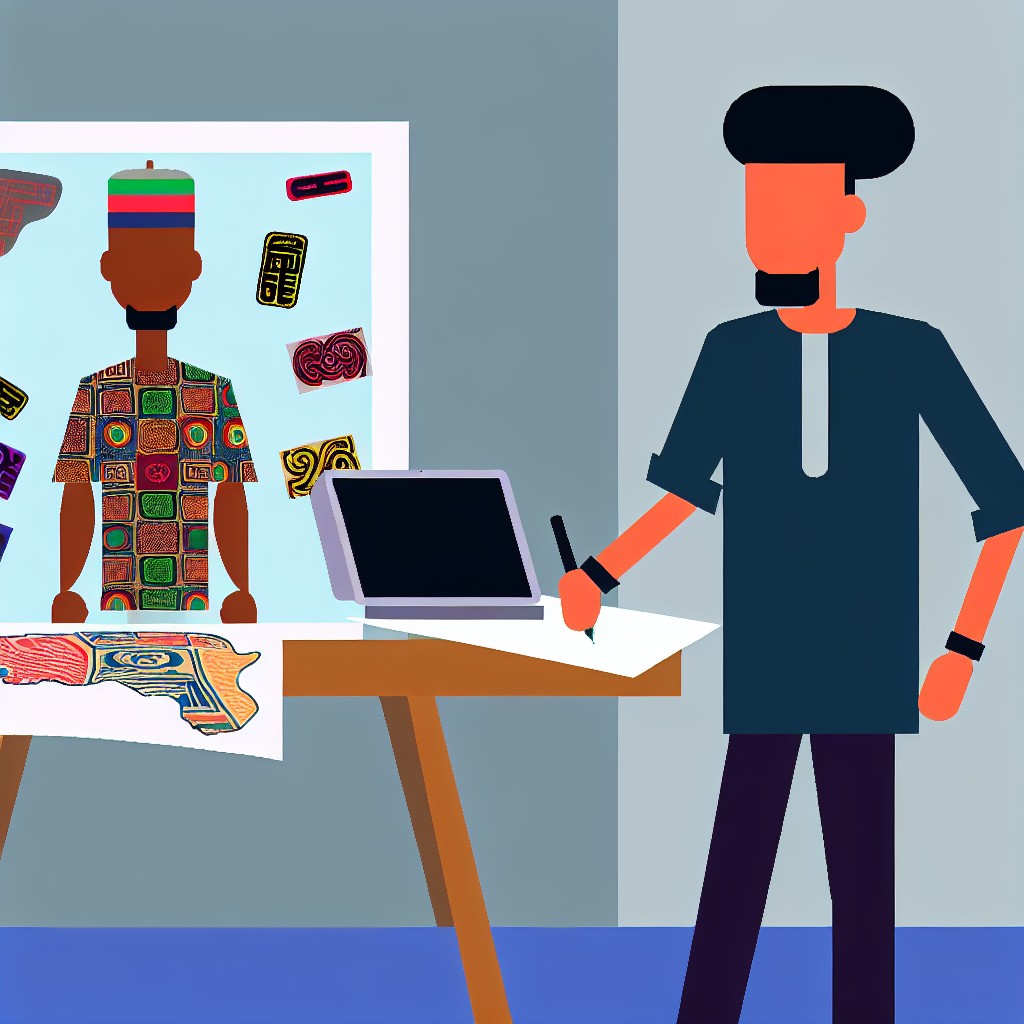
Challenges Faced in Preserving Indigenous Languages Through Art Prints
Limited Accessibility and Distribution
Many indigenous language art prints have limited reach outside local communities.
This scarcity hinders widespread appreciation and awareness of the languages.
Moreover, distribution channels often focus on mainstream art, reducing visibility.
As a result, artists like Amaka Okoye struggle to find wider audiences for their work.
In addition, cost barriers restrict the production and sharing of printed artworks.
Explore Stunning African Digital Art Prints!
Bring the beauty of Nigeria and Africa into your space with high-quality HD digital prints. Browse our collection on Instagram, find what speaks to you, and own a masterpiece today! See something you love? Send us a message on Instagram!
View Collection on InstagramLanguage Standardization and Orthography Issues
Indigenous languages often lack standardized writing systems suitable for prints.
For example, the Igala language has several dialects with different spellings.
This inconsistency complicates the creation of uniform textual content on prints.
Therefore, printers and artists must decide which version to feature, risking exclusion.
Furthermore, inadequate educational resources limit the accuracy of language representation.
High Production Costs and Limited Funding
Producing high-quality art prints requires significant financial investment.
Organizations like the Njideka Print Studio face budget constraints regularly.
As a result, reducing print runs limits how many people can access the language content.
Additionally, government support for indigenous language promotion through art remains low.
Thus, many projects rely on private patrons with narrow interests or short-term goals.
Preserving Cultural Context in Visual Representation
Art prints must accurately reflect the cultural meanings behind indigenous languages.
However, some visual elements lose significance outside native speaker communities.
Jennifer Aluko highlights the risk of misinterpretation by uninformed audiences.
Consequently, artists balance authenticity with making works understandable to broader viewers.
This challenge demands continuous cultural consultation and community involvement.
Technological Constraints and Knowledge Gaps
Many indigenous artists lack access to advanced printing technologies.
This limitation affects the quality and durability of language prints significantly.
Furthermore, some artists have limited training in digital design tools necessary for modern art production.
Hence, workshops led by Tunde Onifade aim to bridge these gaps.
Nonetheless, technology deficits slow progress in preserving languages through art prints.
Case Studies of Prominent Nigerian Art Prints Featuring Indigenous Languages
Oluwaseyi Adeyemi’s Yoruba Proverbs Series
Oluwaseyi Adeyemi creates art prints that celebrate Yoruba proverbs in contemporary styles.
His works combine vivid visual elements with traditional Yoruba script.
Consequently, viewers connect with the cultural wisdom embedded in the language.
These prints have increased interest in Yoruba among younger generations.
Moreover, Adeyemi collaborates with local schools to display his prints.
This partnership promotes literacy and pride in the Yoruba language.
Amina Waziri’s Hausa Calligraphy Collection
Amina Waziri uses Hausa calligraphy to craft striking visual narratives.
She integrates Hausa idioms into her designs, emphasizing indigenous language use.
Her work has featured in galleries across Nigeria and internationally.
Therefore, Waziri’s prints contribute to raising awareness about Hausa linguistic heritage.
Explore Stunning African Digital Art Prints!
Bring the beauty of Nigeria and Africa into your space with high-quality HD digital prints. Browse our collection on Instagram, find what speaks to you, and own a masterpiece today! See something you love? Send us a message on Instagram!
View Collection on InstagramAdditionally, her art incorporates traditional symbols linked to Hausa culture.
This approach educates audiences about the language’s deeper meanings and contexts.
Chinedu Eze’s Igbo Language Heritage Prints
Chinedu Eze produces prints that highlight Igbo proverbs and folklore.
He translates oral traditions into visual art to preserve Igbo expressions.
His work attracts both local and diaspora communities who value language preservation.
Furthermore, Eze’s art supports cultural festivals that celebrate the Igbo language.
Through these efforts, his prints foster pride and continuity of Igbo linguistic identity.
Significance of Indigenous Language Art Prints in Cultural Preservation
These artists help sustain indigenous Nigerian languages through creative expression.
Art prints make languages accessible and engaging to diverse audiences.
They also serve as educational tools in language revitalization programs.
Local communities experience renewed cultural pride through these visual narratives.
Ultimately, art prints contribute significantly to the survival of Nigeria’s linguistic diversity.
The Influence of Indigenous Language Preservation on Nigerian Cultural Identity
Reinforcing Cultural Roots Through Language
Indigenous languages act as vital links to Nigeria’s rich cultural heritage.
They carry traditional wisdom, customs, and social values unique to each community.
Preserving these languages strengthens cultural identity at the grassroots level.
Moreover, art prints incorporating native scripts visually celebrate and revive these languages.
For example, artist Ayoade Bello integrates Yoruba proverbs into her vibrant prints.
Fostering Community Pride and Unity
Using indigenous languages in art cultivates pride among native speakers.
This pride enhances social cohesion within ethnic groups and the broader society.
Furthermore, language preservation through art encourages younger generations to embrace their heritage.
Art collectives like The Kanuri Canvas promote local languages to bridge generational gaps.
As a result, communities feel empowered to maintain cultural continuity and identity.
Promoting Cultural Diversity and National Identity
Nigeria’s vast linguistic landscape represents its diverse cultural fabric.
Supporting indigenous languages highlights the country’s pluralistic nature.
In addition, language-infused art prints create shared cultural narratives accessible to all Nigerians.
Artist Emeka Okafor blends Igbo and Hausa motifs, fostering national cultural dialogue.
Therefore, language preservation through art contributes meaningfully to Nigeria’s collective identity.
Economic and Educational Impacts of Language Preservation in Art
Incorporating indigenous languages in art opens new economic avenues for artists and communities.
Tourists and collectors often seek culturally authentic artwork that tells local stories.
Additionally, educational institutions use such prints as tools to teach language and culture.
Explore Stunning African Digital Art Prints!
Bring the beauty of Nigeria and Africa into your space with high-quality HD digital prints. Browse our collection on Instagram, find what speaks to you, and own a masterpiece today! See something you love? Send us a message on Instagram!
View Collection on InstagramInstitutions like the Abuja Cultural Foundation collaborate with artists on language-based projects.
Thus, art prints play a practical role in sustaining indigenous languages culturally and economically.
Future prospects for Nigerian art prints in sustaining indigenous languages
Expanding digital platforms for wider reach
Digital technology offers new opportunities for Nigerian art prints to reach global audiences.
Consequently, indigenous languages can gain more visibility and engagement worldwide.
Artists like Babatunde Adewale harness social media to promote language-centered prints.
Moreover, online marketplaces provide accessible venues for cultural art sales.
Therefore, digital expansion will strengthen the preservation of native dialects through art.
Collaborations between artists and language experts
Partnerships between printmakers and linguists enhance the accuracy of language representation.
These collaborations ensure that indigenous scripts and phrases are correctly depicted.
For instance, Ngozi Chikere works closely with Igbo language scholars on her prints.
Additionally, language experts contribute cultural context to enrich artistic expression.
Such teamwork promotes authenticity and educational value in art prints.
Educational initiatives leveraging art prints
Schools incorporate Nigerian art prints into curricula to teach indigenous languages creatively.
Educators like Chinedu Eze develop lesson plans featuring local language art visuals.
This approach boosts student interest and improves language retention effectively.
Furthermore, community centers use art exhibitions to engage younger generations.
Thus, art prints become practical tools for language revitalization efforts.
Support from cultural organizations and government
Cultural institutions increasingly fund projects that combine art with language preservation.
The Nigerian Heritage Council sponsors print exhibitions highlighting native tongues.
Government grants encourage artists to produce work in indigenous languages.
These initiatives provide essential resources for sustaining linguistic diversity.
Consequently, institutional support amplifies the reach and impact of art prints.
Innovative artistic techniques to attract new audiences
Printmakers experiment with mixed media to make indigenous language prints more appealing.
For example, digital layering and vibrant colors capture modern viewers’ attention.
Artist Amaka Obi integrates traditional motifs with contemporary design elements.
Such innovation connects younger audiences with cultural heritage through engaging aesthetics.
Therefore, evolving artistic methods help maintain the relevance of indigenous languages.
Additional Resources
Pioneer of Nigerian Cinema and Cultural Visionary Early Life …
Section 12: Religious Discrimination | U.S. Equal Employment …