
The Historical Role of Art Prints in Nigerian Political Activism and Social Change
Origins of Political Art Prints in Nigeria
Art prints emerged as powerful tools during Nigeria’s struggle for independence.
Early artists like Obiora Ani challenged colonial narratives through vivid imagery.
Moreover, grassroots movements adopted prints to spread political messages widely.
Art prints became accessible mediums to express resistance and unity among Nigerians.
Consequently, these visuals played a significant role in mobilizing public opinion.
Art Prints during Post-Independence Political Movements
After independence, prints highlighted issues such as corruption and human rights abuses.
Artists like Nkechi Okoro used bold colors to depict social inequalities.
Subsequently, traditional propaganda shifted towards more nuanced social critiques.
Prints were distributed through local markets and political rallies to maximize impact.
They empowered citizens by visually narrating their struggles and demands for justice.
Role of Art Prints in Social Change and Awareness
Art prints have raised awareness on topics including gender equality and environmental justice.
For example, the works of Adebayo Philips promoted women’s rights through symbolic designs.
Additionally, prints have commemorated significant events fostering collective memory.
Community centers and cultural festivals often showcased politically charged prints.
This exposure helped educate diverse audiences across ethnic and regional lines.
Contemporary Influence and Legacy
Today, Nigerian art prints continue to inspire activism amid modern challenges.
Young artists like Chioma Nwankwo blend tradition with digital techniques for wider reach.
The prints carry forward historical themes while addressing current sociopolitical issues.
Consequently, they sustain an ongoing dialogue between art and civic engagement.
Thus, art prints remain indispensable instruments in Nigeria’s quest for political and social transformation.
How Art Prints Serve as a Visual Medium for Expressing Political Dissent and Social Commentary
Art Prints as Tools for Political Expression
Art prints have historically amplified voices of political dissent in Nigeria.
They offer a direct and accessible means for artists to communicate their views.
Moreover, prints can reach broad audiences beyond traditional art spaces.
For example, artists like Emeka Okoro use bold imagery to criticize corruption.
Prints function as visual slogans that challenge oppressive regimes and policies.
They evoke strong emotional responses, encouraging public engagement in political discourse.
As a result, art prints often become symbols of resistance during protests.
They visually document struggles for democracy, human rights, and justice in Nigeria.
Social Commentary Through Iconic Imagery
Art prints also highlight pressing social issues faced by Nigerian communities.
They illustrate themes such as inequality, gender rights, and environmental concerns.
Explore Stunning African Digital Art Prints!
Bring the beauty of Nigeria and Africa into your space with high-quality HD digital prints. Browse our collection on Instagram, find what speaks to you, and own a masterpiece today! See something you love? Send us a message on Instagram!
View Collection on InstagramArtists like Amina Suleiman portray everyday experiences with powerful symbolism.
Their prints draw attention to marginalized groups often ignored by mainstream media.
Consequently, these visuals inspire awareness and constructive conversation.
By simplifying complex topics into understandable images, art prints educate the public.
Furthermore, they document societal changes and cultural evolution over time.
Role of Distribution and Public Engagement
Effective circulation of art prints boosts their impact on political and social forums.
Street vendors and independent galleries actively distribute these prints across cities.
Additionally, social media platforms allow artists like Chinedu Nwosu to share digital versions.
This wider accessibility ensures that messages reach various demographic groups.
Collaborations with activist groups enhance the prints’ role in mobilizing communities.
Many prints become rallying points at demonstrations and public forums.
Thus, art prints create a shared visual language for collective action and hope.
Art Prints as Historical Records
Art prints serve as valuable historical records of Nigeria’s political and social movements.
They preserve moments of struggle, celebration, and calls for change.
For instance, prints from the June 12 democracy movement capture popular sentiment vividly.
Researchers and educators use these visuals to teach recent Nigerian history.
Hence, art prints contribute to national memory and identity formation.
They remind future generations about past challenges and the power of civic engagement.
The Influence of Traditional Nigerian Symbols and Motifs in Art Prints Addressing Social Issues
Role of Traditional Symbols in Communicating Messages
Traditional Nigerian symbols carry deep cultural meanings across diverse ethnic groups.
Artists incorporate these symbols into art prints to convey complex social and political ideas effectively.
For instance, the Adinkra symbols from the Yoruba culture often represent values like unity and resilience.
Through these motifs, artists raise awareness about issues such as inequality and corruption.
Moreover, the use of familiar icons helps engage communities more personally in social dialogues.
Thus, symbols function as powerful tools for storytelling and mobilization within Nigerian movements.
Common Motifs and Their Social Significance
Several traditional motifs regularly appear in art prints reflecting societal concerns in Nigeria.
One prevalent motif is the talking drum, symbolizing communication and collective voice.
Another is the mud cloth patterns, which often signify heritage and identity in northern Nigerian cultures.
These designs emphasize the importance of preserving cultural roots amid rapid modernization.
Artists also utilize the kola nut motif to represent hospitality and reconciliation during periods of social unrest.
In addition, the depiction of ancient masks highlights the spiritual connection between past and present struggles.
Explore Stunning African Digital Art Prints!
Bring the beauty of Nigeria and Africa into your space with high-quality HD digital prints. Browse our collection on Instagram, find what speaks to you, and own a masterpiece today! See something you love? Send us a message on Instagram!
View Collection on InstagramContemporary Artists Merging Tradition with Activism
Modern Nigerian artists like Amaka Ejiofor and Chibuzo Okoro blend tradition with activism in their prints.
They skillfully integrate indigenous patterns to comment on issues like gender equality and political transparency.
Ejiofor, for example, uses Nsibidi symbols to spotlight women's empowerment in her groundbreaking pieces.
Okoro combines Igbo uli designs with protest imagery to challenge government policies and advocate reform.
This fusion strengthens the cultural relevance of social campaigns and fosters unity across ethnic divides.
Impact of Symbolic Art Prints on Social Movements
Art prints enriched with traditional symbols inspire collective action among diverse Nigerian populations.
These artworks promote dialogue by visually encoding messages that resonate emotionally and culturally.
Activists often distribute such prints during rallies to reinforce shared identity and purpose.
Furthermore, the combination of modern themes with ancient motifs elevates local struggles onto global platforms.
Consequently, traditional symbols in art prints remain vital in shaping Nigeria's sociopolitical landscape.
See Related Content: How Nigerian Art Prints Preserve Indigenous Languages
Key Nigerian Political and Social Movements Shaped or Supported by Art Prints
Art Prints and the Biafra Secession Movement
The Biafra secession movement prominently utilized art prints to share its message.
Artists like Chijioke Nwafor created prints depicting the pain of war and displacement.
Consequently, these prints helped garner international attention and sympathy.
Moreover, printmakers such as Ifeoma Udokwu distributed posters to motivate resistance and unity.
Therefore, art prints became a vital communication tool during this struggle.
Art Prints in the Fight Against Military Rule
Several Nigerian artists challenged military dictatorships through provocative prints.
Groups such as the Zaria Art Society produced works exposing corruption and abuses.
These prints traveled widely across cities like Lagos and Kaduna, sparking public debate.
Additionally, art prints served to document human rights violations under oppressive regimes.
Thus, the prints empowered citizens and sustained calls for democratic governance.
Supporting the Women's Rights Movement through Prints
Feminist artists employed prints to advance women's rights and gender equality.
Artists like Amaka Obi created striking visuals advocating empowerment and education.
Community organizations frequently distributed these prints during rallies and workshops.
Consequently, art prints raised awareness about issues such as violence against women.
This visual advocacy reinforced the movement's demands for legal reforms and social change.
Environmental Activism and Art Print Campaigns
Environmental groups used art prints to highlight pollution and deforestation crises.
The Niger Delta communities especially benefited from prints documenting oil spills.
Activists collaborated with printmakers like Efe Okon to create impactful protest material.
Consequently, these prints educated the public and pressured corporations and governments.
Explore Stunning African Digital Art Prints!
Bring the beauty of Nigeria and Africa into your space with high-quality HD digital prints. Browse our collection on Instagram, find what speaks to you, and own a masterpiece today! See something you love? Send us a message on Instagram!
View Collection on InstagramTherefore, art prints played a crucial role in advancing ecological justice in Nigeria.
Art Prints Encouraging Youth Participation in Democracy
Youth movements embraced art prints to inspire civic engagement and voting.
Collectives such as Art4Change produced vibrant prints promoting transparency and accountability.
Social media amplified the reach of these prints, attracting widespread attention.
Consequently, art became a motivating force for young Nigerians during elections.
Hence, print art remains an essential tool for political awareness among youth today.
Uncover the Details: The Connection Between Nigerian Art and Ancestral Worship
The Impact of Contemporary Nigerian Artists Using Prints to Raise Awareness on Human Rights and Social Justice
Art Prints as a Medium for Social Commentary
Contemporary Nigerian artists actively use prints to express social and political issues.
Printmaking allows them to reach diverse audiences effectively and affordably.
Through bold imagery and symbolism, artists highlight struggles for human rights.
This medium also offers a visual language that crosses literacy barriers.
Consequently, print art becomes a powerful tool in advocating for social justice.
Notable Artists and Their Contributions
Chukwuemeka Obi creates prints focusing on freedom of speech and democracy.
Nia Abu exhibits work addressing gender equality and women's rights.
Oluwaseun Adeniyi tackles police brutality and corruption through striking visuals.
These artists combine tradition with modern themes to engage the public.
Their works spark conversations and encourage civic participation.
Influence on Political and Social Movements
Prints have inspired grassroots movements advocating for policy changes.
They support campaigns demanding transparency and accountability in government.
Art exhibits featuring prints often coincide with protests and rallies.
This synergy amplifies the voices of marginalized communities.
Furthermore, print art helps preserve historical narratives of resistance.
Strategies for Creating Impactful Prints
Artists use vivid colors and strong contrasts to capture attention.
They incorporate traditional Nigerian motifs to evoke cultural pride.
Clear and concise slogans often accompany the imagery for emphasis.
Collaborations with activists ensure the messages remain authentic and relevant.
Social media platforms enable wider dissemination of print artworks.
Challenges Faced and Methods to Overcome Them
Artists sometimes face censorship or political pressure when addressing sensitive topics.
Access to quality materials can be limited, affecting production.
Despite this, they persist through community support and crowdfunding.
Explore Stunning African Digital Art Prints!
Bring the beauty of Nigeria and Africa into your space with high-quality HD digital prints. Browse our collection on Instagram, find what speaks to you, and own a masterpiece today! See something you love? Send us a message on Instagram!
View Collection on InstagramWorkshops and collectives help artists share resources and skills.
International recognition further empowers Nigerian printmakers to continue their activism.
Discover More: The Role of Art in Nigerian Cultural Celebrations
How Art Prints Bridge Generational Gaps and Foster Community Engagement in Political Discourse
Connecting Diverse Generations Through Visual Narratives
Art prints create a shared language that resonates across age groups.
They translate complex political ideas into accessible visual stories.
This accessibility encourages younger and older Nigerians to engage together.
Furthermore, community elders find familiar symbols within the artwork.
Meanwhile, youth connect with bold colors and contemporary styles.
Artists like Chika Eze and Amaka Onwuegbu use prints to highlight common struggles.
As a result, these prints spark conversations that cross generational boundaries.
Facilitating Dialogue in Public and Social Spaces
Art prints are prominently displayed in markets, streets, and social centers.
This visibility invites passersby to pause and discuss pressing social issues.
Community gatherings often feature exhibitions curated by local artist collectives.
Groups such as Lagos Art Advocates organize these events to encourage open dialogue.
Additionally, workshops around these prints teach the meaning behind each image.
These educational sessions engage diverse community members meaningfully.
Through such activities, political awareness spreads organically.
Empowering Community Voices and Shared Activism
Art prints often serve as tools for grassroots campaigns and social causes.
For example, prints inspired by the #EndSARS movement amplified citizen voices.
Social activist Ngozi Okoro praised prints for mobilizing youth participation.
These visuals democratize political messaging beyond traditional platforms.
Moreover, community members co-create prints reflecting their unique experiences.
This collective process strengthens communal ownership of political discourse.
Ultimately, art prints cultivate solidarity and sustained civic engagement.
Uncover the Details: The Impact of Nigerian Art on Global Art Movements
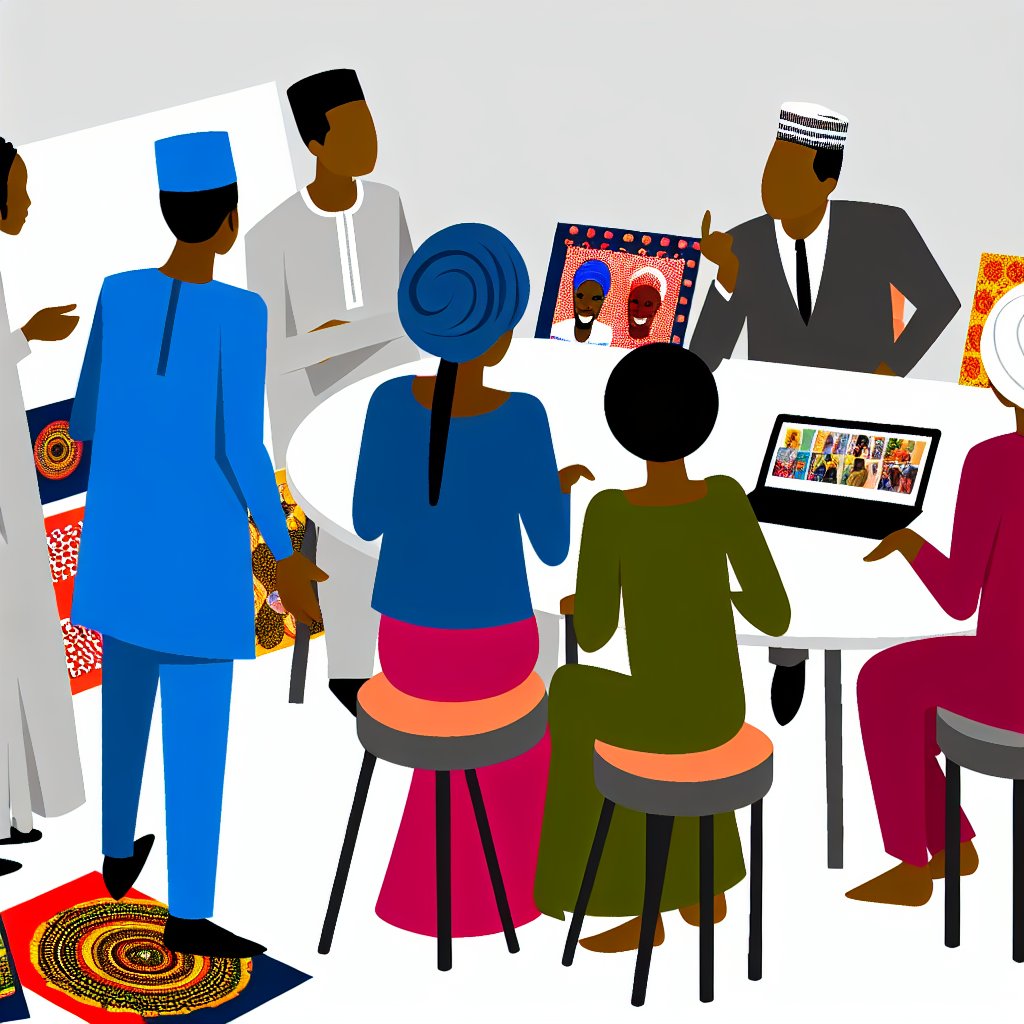
The Role of Art Prints in Documenting and Preserving Narratives of Resistance and Empowerment
Capturing Historical Moments Through Visual Storytelling
Art prints vividly capture significant events in Nigerian political history.
They provide a visual record that complements written and oral histories.
Moreover, these prints highlight moments of public resistance against oppression.
Artists like Tunde Adesina use prints to showcase protests and calls for justice.
Consequently, art prints become accessible archives for future generations.
Explore Stunning African Digital Art Prints!
Bring the beauty of Nigeria and Africa into your space with high-quality HD digital prints. Browse our collection on Instagram, find what speaks to you, and own a masterpiece today! See something you love? Send us a message on Instagram!
View Collection on InstagramAmplifying Voices of the Marginalized and Oppressed
Art prints give voice to communities often excluded from mainstream narratives.
They highlight struggles faced by women, workers, and ethnic minorities.
Through striking imagery, art prints inspire solidarity among diverse groups.
For example, the works of Chiamaka Obi emphasize women’s roles in social movements.
Thus, art prints empower marginalized individuals by validating their experiences.
Fostering Collective Memory and National Identity
Art prints reinforce shared memories of resistance within Nigerian society.
They contribute to a collective identity rooted in resilience and hope.
Artists collaborate with local organizations to create culturally relevant prints.
These collaborations ensure the preservation of indigenous narratives and symbols.
Therefore, art prints serve as cultural touchstones that unite communities.
Mobilizing Action and Encouraging Political Engagement
Art prints often spark conversations around social justice issues.
They motivate viewers to participate actively in political processes.
Exhibitions and street displays of prints reach broad audiences quickly.
Groups like the Lagos Arts Collective use prints to campaign for democratic reforms.
In this way, art prints act as visual calls to action in social movements.
Techniques and Symbolism in Art Prints of Resistance
Artists employ bold colors and strong contrasts to convey urgency and strength.
Traditional motifs intermingle with contemporary symbols to evoke cultural pride.
Common symbols include clenched fists, broken chains, and eagles in flight.
These elements communicate themes of empowerment and liberation clearly.
Ultimately, technique and symbolism amplify the prints’ emotional and political impact.
Preserving Art Prints for Future Generations
Efforts by galleries like the Abuja Print Workshop protect important political artworks.
Digital archiving projects ensure prints remain accessible in the digital age.
Workshops teach young artists to continue this legacy of visual activism.
Additionally, community-led initiatives document and share prints widely.
These preservation acts sustain the influence of art prints beyond their creation.
Challenges and Opportunities Faced by Nigerian Artists in Producing Politically Charged Art Prints
Challenges in Creating Political Art Prints
Nigerian artists face censorship that limits their artistic expression.
Government restrictions often delay or prevent public display of their works.
Political instability creates a risky environment for critical art production.
Additionally, frequent social unrest disrupts access to materials and venues.
Many artists struggle with financial constraints that limit their production capacity.
Explore Stunning African Digital Art Prints!
Bring the beauty of Nigeria and Africa into your space with high-quality HD digital prints. Browse our collection on Instagram, find what speaks to you, and own a masterpiece today! See something you love? Send us a message on Instagram!
View Collection on InstagramMoreover, lack of formal support networks hinders widespread distribution of art prints.
Some artists experience personal threats that compromise their safety and creativity.
Opportunities for Nigerian Artists
Despite challenges, artists harness social media to reach wider audiences.
Online platforms facilitate collaboration and sharing of politically charged art.
Increasing international interest offers new exhibition opportunities abroad.
Creative groups like Umoja Collective provide solidarity and resource sharing.
Furthermore, grassroots movements encourage artists’ participation and funding support.
Art fairs and cultural festivals in Lagos create spaces for political dialogue through art.
Innovations in printmaking technology allow for affordable production of multiple copies.
The Use of Digital Platforms to Amplify the Reach and Impact of Nigerian Art Prints in Social Movements
Expanding Audience Through Social Media
Artists like Chinedu Amaechi actively share their art prints on platforms such as Instagram and Twitter.
This sharing enables wider public engagement beyond traditional galleries.
Consequently, these visuals spark conversations on pressing political and social issues.
Moreover, hashtags related to movements enhance discoverability across communities.
Furthermore, collaboration with influencers boosts the visibility of impactful prints.
Online Marketplaces and Fundraising
Digital marketplaces such as Afrikrea and Jumia provide artists with sales channels.
These platforms allow artists to fundraise and support social initiatives directly.
Therefore, the sale of politically themed prints contributes to movement resources.
Additionally, supporters can easily access and purchase these artworks globally.
This financial backing strengthens the sustainability of activist efforts.
Virtual Exhibitions and Interactive Campaigns
Curators like Amina Gbadebo organize virtual exhibitions showcasing protest art prints.
These exhibitions reach audiences restricted by geography or social barriers.
They also encourage interactive feedback and community dialogue online.
Consequently, the collective voices amplify the narratives within the prints.
Interactive tools like live Q&A and polls deepen audience participation.
Leveraging Multimedia Content
Artists integrate videos and animations alongside prints to tell compelling stories.
Platforms such as YouTube and TikTok host these multimedia expressions.
This approach increases emotional impact and message retention among viewers.
Moreover, multimedia content invites sharing, enhancing viral spread.
Therefore, digital storytelling elevates the role of art in social activism.
Building Online Communities Around Art Movements
Facebook groups and Telegram channels create spaces for artists and activists.
Explore Stunning African Digital Art Prints!
Bring the beauty of Nigeria and Africa into your space with high-quality HD digital prints. Browse our collection on Instagram, find what speaks to you, and own a masterpiece today! See something you love? Send us a message on Instagram!
View Collection on InstagramThese communities exchange ideas, share new works, and mobilize support.
Group moderators like Bayo Oladipo organize themed digital events and challenges.
This organization nurtures sustained engagement and collective action.
As a result, Nigerian art prints become rallying symbols within these networks.
Case Studies of Iconic Nigerian Art Prints Influencing Political and Social Outcomes
Ossi Osunbiyi’s “Liberation Palette” and the End of Military Rule
Ossi Osunbiyi created the powerful print titled “Liberation Palette” in 1998.
The artwork depicted Nigerians united against military dictatorship.
It spread widely through street exhibitions and grassroots organizations.
Consequently, it ignited public discourse demanding democracy and respect for human rights.
The print became a visual symbol for the pro-democracy movement.
Ultimately, it contributed to the transition from military rule to civilian governance in 1999.
Amaka Chukwuma’s “Motherland Mothers” and Women’s Rights Advocacy
Amaka Chukwuma crafted “Motherland Mothers” in 2010 to highlight women’s struggles.
The vivid colors and bold figures celebrated Nigerian women’s resilience and activism.
Moreover, it rallied support for government reforms on gender equality.
The print circulated through community centers and feminist organizations across Nigeria.
Therefore, it elevated public awareness of domestic violence and economic empowerment.
As a result, several states adopted policies protecting women’s rights and access to education.
Lekan Ajayi’s “Voices of the People” and Youth Political Engagement
Lekan Ajayi produced “Voices of the People” in 2015 during election season.
The striking imagery captured young Nigerians demanding transparency and accountability.
Public forums incorporated the print to foster critical discussions among voters.
Thus, it spurred youth registration and participation in the electoral process.
The artwork received endorsement from civil society groups advocating democratic reforms.
Consequently, it helped increase voter turnout among Nigerians aged 18 to 30.
Nneka Obi’s “Climate Call” and Environmental Activism
Nneka Obi unveiled “Climate Call” in 2019 amid rising ecological concerns.
The print illustrated Nigeria’s vulnerability to climate change effects vividly.
It quickly gained traction on social media and activist campaigns nationwide.
Environmental groups used the image to lobby for stronger environmental protection laws.
Also, schools incorporated the print to educate students about sustainability issues.
Therefore, it heightened public urgency regarding deforestation, pollution, and wildlife conservation.
Common Characteristics of Influential Nigerian Art Prints
Strong visual symbolism that resonates emotionally with diverse audiences.
Wide distribution through nontraditional channels such as street art and social media.
Collaboration with activist groups to amplify messages and mobilize communities.
Reflection of current social and political realities inspiring public action.
Accessibility through print techniques that allow mass reproduction.
Additional Resources
Nigerian Civil War – Wikipedia
Diagnosing the Boko Haram Conflict: Grievances, Motivations, and …
Explore Stunning African Digital Art Prints!
Bring the beauty of Nigeria and Africa into your space with high-quality HD digital prints. Browse our collection on Instagram, find what speaks to you, and own a masterpiece today! See something you love? Send us a message on Instagram!
View Collection on Instagram